




Brussels – Kyiv’s allies continue to search for a solution on security guarantees. The day after tomorrow in Paris, the coalition of the willing will discuss yet again how to support Ukraine at the end of hostilities, even though the talks have been at a standstill for weeks. However, the primary problem still needs to be solved: the potential deployment of soldiers on the ground. From Berlin came sharp words to the address of Ursula von der Leyen, who is playing the commander-in-chief of a military force that does not exist.
The menu on the table of the 30 or so participants of the coalition of the willing, who will meet on Thursday (4 September) in the transalpine capital, has been the same for months. The main course is the much-talked-about security guarantees to be offered to Ukraine once the war, which has been going on for more than three and a half years, is over. Even though they have been the object of discussion for some time, no one is yet able to define them clearly, stating precisely on what elements they will be based and, most importantly, who will provide what.
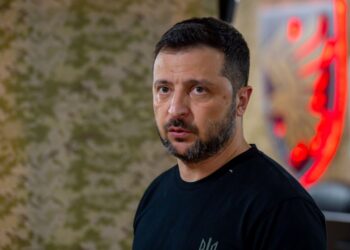
At the Paris meeting the day after tomorrow, co-chaired by Emmanuel Macron and Keir Starmer, Volodymyr Zelensky, Ursula von der Leyen, and NATO Secretary General Mark Rutte are also expected to attend. The Ukrainian president will ask for new aid and will try to push his allies to increase the pressure on Vladimir Putin, who does not seem the least bit interested in sitting at the negotiating table despite the mid-August show put on stage in Alaska with Donald Trump.

The most intricate issue is the deployment of a multinational contingent to Ukrainian soil, which, to be credible, would have to count at least 30,000 soldiers – excluding the organizational framework of such a “reassurance force,” which is essentially different from the classic peacekeeping operation (if only because the troops would not monitor the frontline but would remain in the rear, ready to support Kyiv’s army in the event of new Russian aggression). An opportunity that would seem to make some sense strategically, but remains challenging to digest politically.
No Western head of state or government takes lightly the commitment to send their soldiers abroad, especially outside the NATO umbrella. At the moment, it seems that the only ones willing to send the proverbial “boots on the ground” are Macron and Starmer, although the latter has reportedly cooled the fervors of recent months. Italy, Germany, and, above all, the United States, are against. Washington has agreed to offer an unspecified backstop to Ukrainians and Europeans, and the other chancelleries have made it abundantly clear that without US support, they are going nowhere.
The difficulties on this front clearly emerged yesterday (1 September), when the German Defence Minister Boris Pistorius sharply criticised Ursula von der Leyen‘s premature move on the issue. In a recent interview with
the Financial Times, the EU leader claimed that the willing would draw up “pretty precise plans” with respect to post-war engagement, including a possible land contingent.

A step too far for Berlin, where the the government is engaged in a complex reform of the Bundeswehr. In caustic remarks, Pistorius emphasised that “the EU has no responsibility or competence in the matter of troop deployments, for no one and for no reason,” offering blunt advice for the Berlaymont leader: “I would refrain from confirming or commenting in any way on such considerations,” he warned, deeming it “absolutely wrong” to publicly discuss military plans before the belligerents have concluded a truce. Federal Chancellor Friedrich Merz himself reiterated that at the current stage, “no one is talking about ground troops.”
A more politically acceptable solution for the willing could be to provide air and logistical support, including intelligence sharing and training of the Kyiv armed forces, as EU High Representative Kaja Kallas hinted last week. Indeed, as von der Leyen has been repeating for some time now, the strategy on which everyone agrees is to make Ukraine a “steel porcupine,” strengthening its army to the point of making it “indigestible” to any aggressor.
On the other hand, the diplomatic efforts to achieve an end to hostilities seem to have reached a dead end. The last direct meeting between the negotiating delegations of the belligerents yet again failed, and there are no signs of a breakthrough in the negotiations on the horizon. Moscow continues to bombard its neighbour and came close to hitting the EU delegation headquarters in Kyiv as well.
Specifically, the positions of the belligerents on security guarantees are irreconcilable. Russia only wants to discuss it once there is an understanding on a truce (but the presence of NATO troops is unacceptable to Moscow). Ukraine considers them an essential prerequisite to sit at the table. Moreover, the Tsar is ignoring one Trump ultimatum after another, without the White House having implemented any of the “serious consequences” threatened in recent months.

Meanwhile, the Kremlin’s occupant claimed that he had never opposed Ukraine’s EU membership during a conversation in Beijing with Slovak Prime Minister Robert Fico, one of Putin’s Trojan horses within the European Union. The tsar stated that he “very much appreciates” Bratislava’s autonomy in following an “independent foreign policy.” At the same time, his interlocutor made it clear that “Ukraine must fulfill all the conditions to join the EU,” emphasising that “political criteria cannot take precedence over preparedness criteria.”
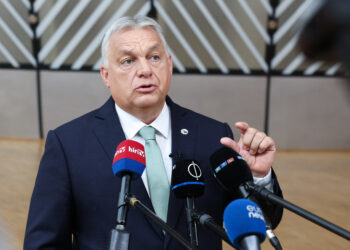
It was the third face-to-face between Fico and Putin in one year, much to the chagrin of Brussels’ claim to have maintained a united front toward Moscow. Putin’s other ally in the Union, Hungarian Prime Minister Viktor Orbán, continues to block both the opening of accession negotiations and the disbursement of aid to Ukraine, systematically putting his foot down even on EU sanctions against the Kremlin (it is preparing the 19th package after effectively defusing Fico’s veto). Budapest and Bratislava have long been locked in a tug-of-war with Kyiv over Russian gas and oil supplies, recently complaining about interruptions following Ukraine’s attacks on the Druzhba pipeline.
English version by the Translation Service of Withub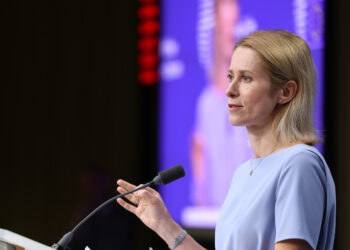






![[foto: Guillaume Baviere/WikimediaCommons]](https://www.eunews.it/wp-content/uploads/2026/01/Cuba_Che-120x86.jpg)
