Brussels – For the first time in over 22 months, the European Parliament has scheduled a resolution on Gaza for the upcoming plenary session, after nearly two years of holding only non-voting debates on the topic in Strasbourg.. The centrist majority groups are working to define the text, which could gain the support of other progressive forces (albeit with the appropriate distinctions). A debate with High Representative Kaja Kallas on the situation in the Strip and the role of the EU will follow the vote.
It does not sound particularly revolutionary, but the news marks a breakthrough nonetheless: after debating the issue for over 22 months with heated debates in the hemicycle, the European Parliament will finally vote on its first resolution on the ongoing slaughter in Gaza. A political change of pace that comes very late in the day, and which, until now, had been blocked by the differences in views of the main political groups in the Chamber.
However, this time, there appears to be a convergence among the three pillars of the pro-European majority. Socialists (S&D), Populars (EPP), and Liberals (Renew) have begun working on a common text that will be put to a vote next Thursday (11 September), on the last day of the plenary session in Strasbourg. The negotiations are still ongoing, parliamentary sources confirm to Eunews, but they are expected to lead to a compromise acceptable to all parties.

While the centrist groups prefer not to take a stance for now, the opposition is coming forward with clearer positions. The 5-Star Movement MEP Danilo Della Valle urged the assembly to “send a strong message of peace and solidarity to the Palestinian people“, announcing that the Five Star delegation will table amendments “to call for an arms embargo on Israel, the suspension of the EU-Israel Association Agreement, and the diplomatic protection of the activists of the Global Sumud Flotilla who risk imprisonment simply because they are transporting foodstuffs to Gaza, denied today by Israel.”
The group to which the M5s belongs, The Left, has long been the most vocal in the hemicycle on the slaughter of Palestinians in the Strip perpetrated by the Jewish state. Co-leader Manon Aubry is collecting signatures to present another censure motion on the Ursula von der Leyen-led EU executive, criticising precisely Brussels’ idleness on the Middle East dossier. Other progressive forces in the House are also expected to give support in principle to the resolution, pending the finalisation of the text. “We aim to emphasise that, in addition to the humanitarian crisis, the very existence of Palestine is at risk,” one of the groups of the centre-left told us.
After the resolution, which will not be binding, there will be a debate with Kaja Kallas on Tuesday (9 September) entitled “Gaza at a breaking point: EU action to combat famine, the urgent need to release hostages, and move towards a two-state solution.” The High Representative, whose role compels her to act as a shield for the member states without entrusting her with any real power, publicly shared her growing personal frustration with the inertia shown by chancelleries.
The 27 member states move in scattered order on Palestine – 11 of them already recognise it, while others have announced they will do so shortly (the latest in chronological order is Belgium). Still others risk government crises simply because they opened this Pandora’s box. A united front at the European level is pure science fiction, as clearly seen by the impossibility of even agreeing on such a cosmetic and symbolic measure as the partial suspension of Horizon+ funds allocated to Tel Aviv.

Speaking at a public event yesterday (3 September), the twelve-star diplomacy chief rejected “the accusation that Europe is inactive” regarding the genocide underway in the Strip and the apartheid regime set up in the West Bank. “We are the most active on this issue,” she replied, claiming that the EU is the leading international donor to the Palestinian National Authority (PNA). However, she acknowledged that this “is not enough to change the situation on the ground,” admitting that this causes her “frustration.” In the Middle East, she conceded, “We are not using our geopolitical power because we are not united.”
The point, she continued, shifting the blame to the transatlantic ally, is that “if America supports everything the Israeli government does, then that is where the leverage they have is.” Perhaps Kallas forgets that there is a group of member countries, led by Germany, that continues to block any concrete move that might confront the Jewish state with its responsibilities. Theoretically, there are many options: from the suspension of the Association Agreement to the sanctions against the government of Benjamin Netanyahu (wanted by the International Criminal Court for war crimes and crimes against humanity).
In the Tel Aviv cabinet, ministers such as Bezalel Smotrich and Itamar Ben-Gvir continually advocate the annexation of the occupied territories and the forced expulsion of Palestinians from their land, suggesting that the activists of the Global Sumud Flotilla, who are sailing toward Gaza despite the adverse weather conditions, be treated as “terrorists.” And it was precisely on the international solidarity mission that the Italian Prime Minister Giorgia Meloni finally spoke out yesterday, breaking the silence of recent weeks.
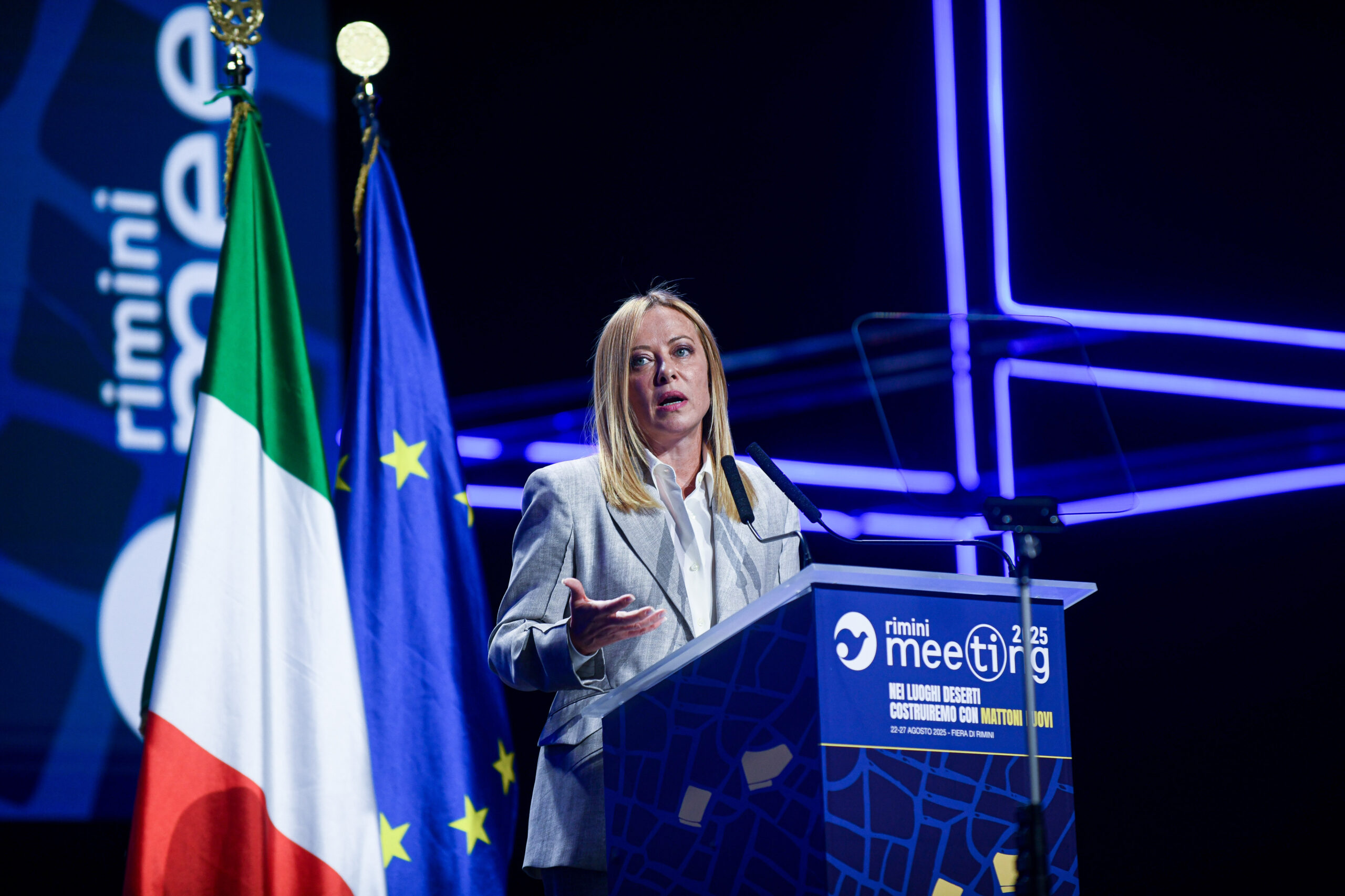
Responding to an open letter from the PD secretary Elly Schlein – on board the humanitarian ships there are also two elected members of her party, MEP Annalisa Corrado and Senator Arturo Scotto, as well as Benedetta Scuderi (AVS) and Marco Croatti (M5S) – the premier guarantees that “the Italian government will ensure to take all measures to protect and ensure the safety of compatriots abroad in similar situations” and suggests that the expedition consider “the possibility of using alternative and more effective channels for delivering aid” to the Gazawis.
“Making use of the humanitarian channels already in place,” Meloni reasons, would avoid exposing the activists to “risks of traveling to a crisis zone and the consequent burden on the various state authorities involved to guarantee protection and security.” In short, according to the occupant of Palazzo Chigi, the Flotilla would be better off not getting into the lion’s den, because the chancelleries will ultimately have to get involved.
Too bad that the participants in the initiative are attempting to fill the void left by the chancelleries around the world, thereby putting their own safety at risk. In the past, Israel has stopped previous humanitarian expeditions by force, blocking them in international waters and even bombing the vessels with drones.
English version by the Translation Service of Withub


![[Copyright: European Union]](https://www.eunews.it/wp-content/uploads/2026/10/euco-261015-120x86.png)