



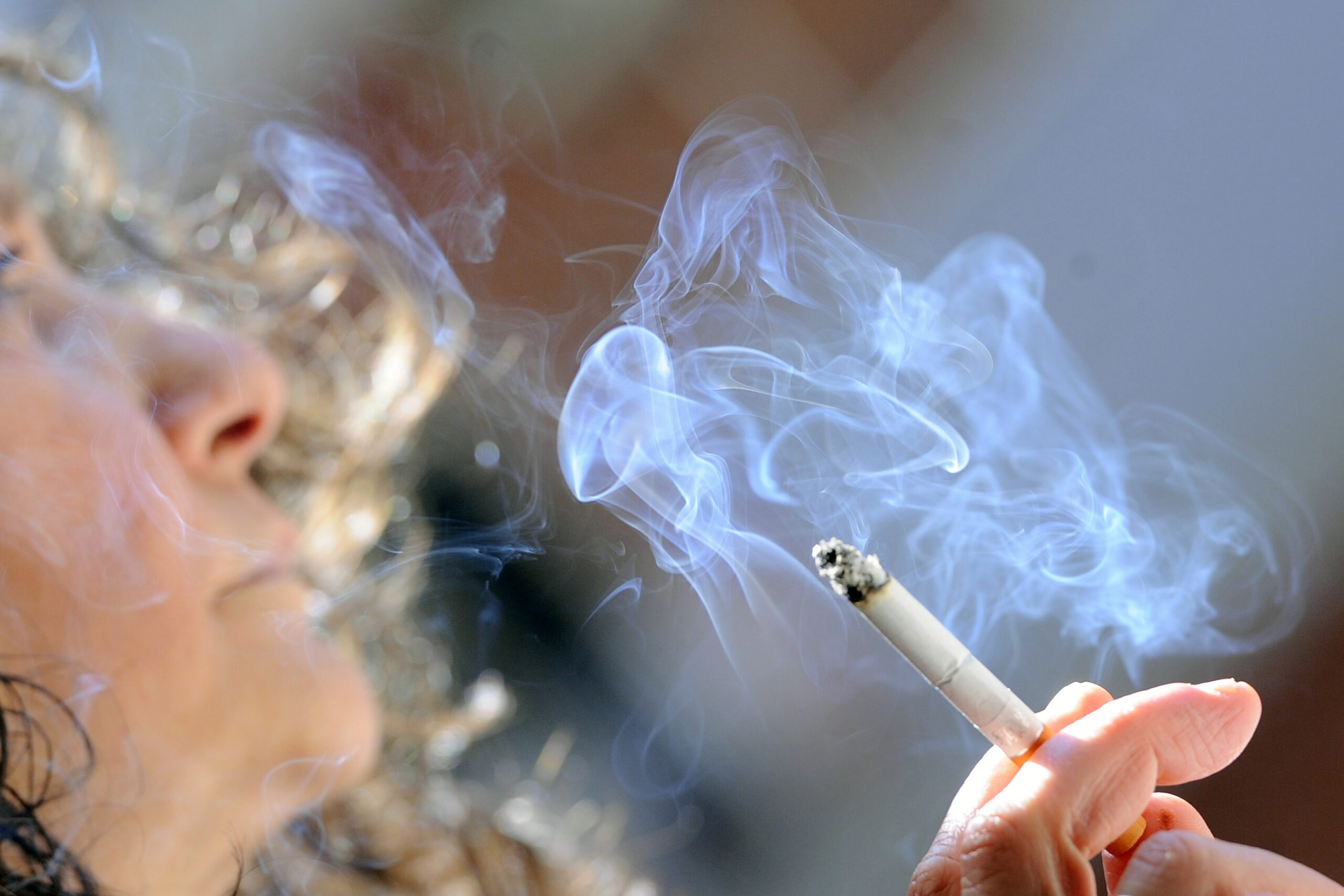
Brussels – The Commission is defending its actions, as is natural and to be expected; however, Member States are holding back on the proposed reform of the tobacco taxation directive. The Ecofin Council meeting in Luxembourg discusses for the first time the ideas that the EU executive produced on July 16, when in the institutional calendar there was neither time nor opportunity for an initial exchange of views, highlighting the gap between the Commission and the Council.
Wopke Hoekstra, Commissioner for Climate and Clean Growth, tries to close ranks in an Ecofin animated by reservations, doubts, perplexity, and opposition. The stance of the von der Leyen team is that reform is necessary and cannot be postponed: “Europe ranks among the highest in the world for the number of smokers,” Hoekstra denounces. Moreover, “there are new products deliberately designed for young people, 15-year-olds, which create a new addiction to nicotine,” he adds. The EU Commissioner points the finger at electronic cigarettes and “vaping” devices, and warns Member State representatives of the counter-information campaign being waged by manufacturers: “We cannot allow the industry to reverse the narrative, spreading lies as it has already done with traditional cigarettes.”
Minimum taxation: the current system and proposed changes
According to the current directive, the excise duty applied to cigarettes must represent at least 60 percent of the weighted average retail selling price (WAP) in each Member State and not be less than EUR 90 per 1,000 cigarettes. The excise duty for cigars and cigarillos is at 5 percent of the WAP and no less than EUR 12 per 1,000 pieces or per kilo. For roll-your-own tobacco, the minimum thresholds are 50 percent of the WAP or EUR 60 per kilo. For other tobacco products, the minimum tax thresholds are 20 percent of the retail price or EUR 22 per kilo.
In its proposal, the Commission is revising and updating these parameters. The excise duty applied to cigarillos increases from 60 to 63 percent of the WAP and from at least EUR 90 to at least EUR 215 per thousand pieces. For cigars and cigarillos, nothing changes until 2029. Then, from 2030, the excise duty increases from 5 percent to 20 percent of the WAP and from EUR 12 per kilo to EUR 71.5 per kilo—thresholds that increase to 40 percent and EUR 143 from 2032, respectively. For rolling tobacco, the minimum excise duty rises from 50 percent to 62 percent of the weighted average retail price and from EUR 60 to EUR 215 per kilo.
The Commission also introduced new thresholds for waterpipe tobacco used in hookahs. For these products, from 2028, the minimum excise duty is 20 percent of WAP or EUR 22 per kilo, rising to 25 percent and 54 euros per kilo from 2030, and to 50 percent and 107 euros per kilo, respectively, in 2032.
The proposed amendment introduces a minimum excise duty for heated unburned tobacco products, the famous electronic cigarettes or “vape.” From 2028, the proposal is a minimum excise duty of 45 percent of WAP or 88 euros per thousand pieces or 125 euros per kilo, rising from 2030 to 50 percent, 98 euros, and 150 kilo, respectively. The same thresholds will then increase to 55 percent, EUR 108, and EUR 155, respectively, from 2032.
 Electronic cigarette [foto: imagoeconomica]
Member States’ reservations





![[foto: Guillaume Baviere/WikimediaCommons]](https://www.eunews.it/wp-content/uploads/2026/01/Cuba_Che-120x86.jpg)
