



Brussels – As European security moves ever more to the centre of EU policymaking, military mobility is assuming a pivotal role just as the Commission prepares to channel billions into transport infrastructure. Yet the drive to strengthen Europe’s defence risks sidelining one of Brussels’ flagship priorities: environmental protection.
“The priority should be to channel this increased budget into rail and electrification projects,” warns MEP Reinier van Lanschot, expert on defence for the Greens/EFA group and member of the Committee on Security and Defence (SEDE), referring to the need to “strengthen both Europe’s security and its commitment to a sustainable, low-carbon future”.
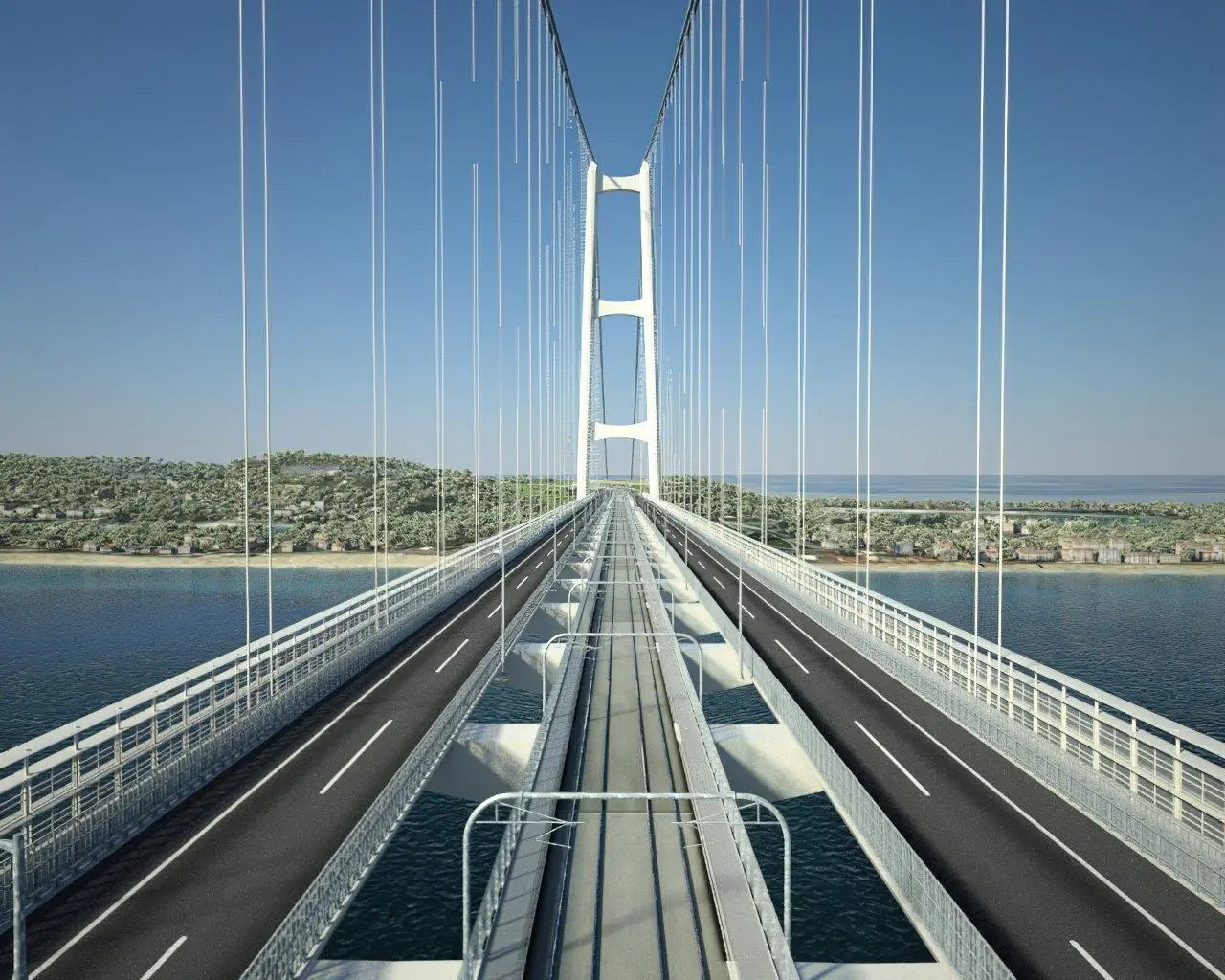
However, Member States could set aside Green Deal targets by exploiting the EU’s new focus on defence. Italy is perhaps the most striking example. The government has justified derogations from environmental rules for the construction of the Sicily Bridge by citing its supposed dual-use function and potential inclusion in the TEN-T network. In response, the Commission has formally requested further clarification on the project’s environmental impact.
Meanwhile, opposition is growing on the ground against initiatives that critics argue deliver little or no climate benefit to the Union. But where such resistance has not already been muted, it faces mounting political and financial pressure from Brussels to fast-track infrastructure designed to facilitate troop movements, under the banner of energy security and the promotion of low-carbon transport solutions.
A fragile balance
Both military mobility and environmental protection feature in the “Competitiveness, Prosperity and Security” pillar of the Commission’s proposal for the 2028–2034 Multiannual Financial Framework (MFF). Of the overall €1.9 trillion budget, €590 billion is allocated to this pillar, which includes a vast range of priorities—including clean transition, decarbonisation, digital transition, and defence.
According to the next MFF proposal, what was previously considered part of the Green Deal is included within the new €409-billion European Competitiveness Fund (ECF). Overall, €26 billion is earmarked for “clean transition and industrial decarbonisation,” while €20 billion is earmarked for “health, biotech, agriculture and bioeconomy.”
Meanwhile, around one quarter of the €81.5-billion Connecting Europe Facility (CEF) is dedicated specifically to military mobility: the proposed €17.7 billion in the new EU budget represents a tenfold increase compared with the current CEF Transport military mobility budget (€1.7 billion). As the Commission notes, after Russia’s invasion of Ukraine, “the last funds were allocated at the beginning of 2024, leaving no resources for the four remaining years of the current MFF.”
“It is possible to achieve both strong military mobility and positive environmental outcomes with this investment,” says Greens MEP van Lanschot, commenting on the Commission’s proposal. However, “the key is how the money is spent,” he adds. Keeping the focus on road expansion or fossil fuels “would risk undermining the Green Deal and environmental goals.”
The Greens argue that the Green Deal must become an essential element in closing the gaps in the EU’s defence readiness—in short, overcoming the supposed trade-off between sustainability and defence. Reducing reliance on Russian gas and oil—or even on US LNG—and investing more in European solar, wind, and nuclear energy “would make us less vulnerable and more resilient,” MEP van Lanschot concludes. Yet he warns that dual-use projects must be “planned carefully to avoid harm to sensitive natural habitats.”
Controversy over the Sicily Bridge
However, the way member states are proceeding could risk going in the opposite direction. The EU request for clarification regarding the Messina Bridge was sent just one month after the Italian government approved the project. The whole project should be completed by 2032.
The Sicily bridge, though, is facing strong resistance from local communities. One particularly vocal group is No Ponte (No Bridge). The main point of the local opposition is the environmental impact of the Bridge, and the exploitation by the Italian government of the dual-use nature of the project to overcome environmental regulation. To speed up the approval of the project, in April, Rome approved the so-called “IROPI Report,” which states that, for “Imperative Reasons of Overriding Public Interest” (IROPI, for short), the bridge is essential despite its environmental impact.
The report states that the project is linked to the “European Commission (2024) Military Mobility Action Plan” and argues that the bridge over the Strait “would further consolidate Italy’s strategic role as a transit hub for joint NATO and EU operations”. However, there are no references to the bridge over the Strait in any NATO document, nor is there a European Commission (2024) Military Mobility Action Plan.
“Even before the current debate, the Italian Armed Forces had said that the project was unsustainable from a military point of view because it would have been indefensible”, explains Antonio Mazzeo, No Bridge activist and Defence researcher. “On the one hand, the government justifies the relaunch of the bridge from a strategic and military point of view, within the NATO framework; on the other hand, there is a void in terms of engineering analysis, military impact assessment, defensibility, and sustainability”. As Mazzeo explains, the government has focused on the military aspect to ensure that the EU includes the project in the TEN-T network and to put its cost in the NATO budget. In both cases, Rome has been proven wrong.
Despite that, in August, the Italian government went even further. The Law n.73/2025 on public infrastructures states that certain projects may be excluded from the Environmental Impact Assessment (EIA) if they are labelled as “National Defence projects” and if the EIA could compromise their realization. Mazzeo disagrees. “As for the primacy of military value over environmental value, there have been countless rulings by the Court of Cassation stating that environmental relevance is not secondary to defense”.
The German-Danish tunnel
In other countries, the local opposition wasn’t equally successful in stopping Military Mobility projects. As the largest construction project in Danish history, the Danish Fehmarn Tunnel is one of the key projects of the TEN-T Scandinavian-Mediterranean Corridor. The submerged tunnel is planned to connect Rødby on the southern Danish island of Lolland with Puttgarden in Germany and is expected to be completed in 2029.
In Germany, one of the most vocal critics of the tunnel has been the Nature and Biodiversity Conservation Union of Germany (NABU). “This example underlines the need to consider environmental impact assessment outcomes more thoroughly during decision-making and permitting procedures,” said Anne Böhnke-Henrichs, NABU’s Deputy Team Leader.
On the Danish side of Fehmarn, the project has faced little organised public resistance. In a 2020 survey, 77% of Danes interviewed were unaware that the Fehmarn connection was planned. “The result does not surprise us,” commented Karin Neumann, spokesperson for the German environmental group Beltretter, citing the years of effort and funds invested “in creating the vision of an environmentally friendly tunnel” for the Danish population “in order to gain their acceptance.”
The contractor Sund & Bælt says the project will be “a major contribution to Europe’s future sustainable transport network,” including for military mobility along the TEN-T corridor. However, an analysis by the consulting firm Kraka Economics debunked the environmental impact of this dual-use project. “Climate neutrality could only be achieved after 181 years from its construction.”
This article was produced as part of the Thematic Networks of PULSE, a European initiative that supports transnational journalistic collaborations.
Federico Baccini
Futura D’Aprile
Emma Louise Stenholm


