



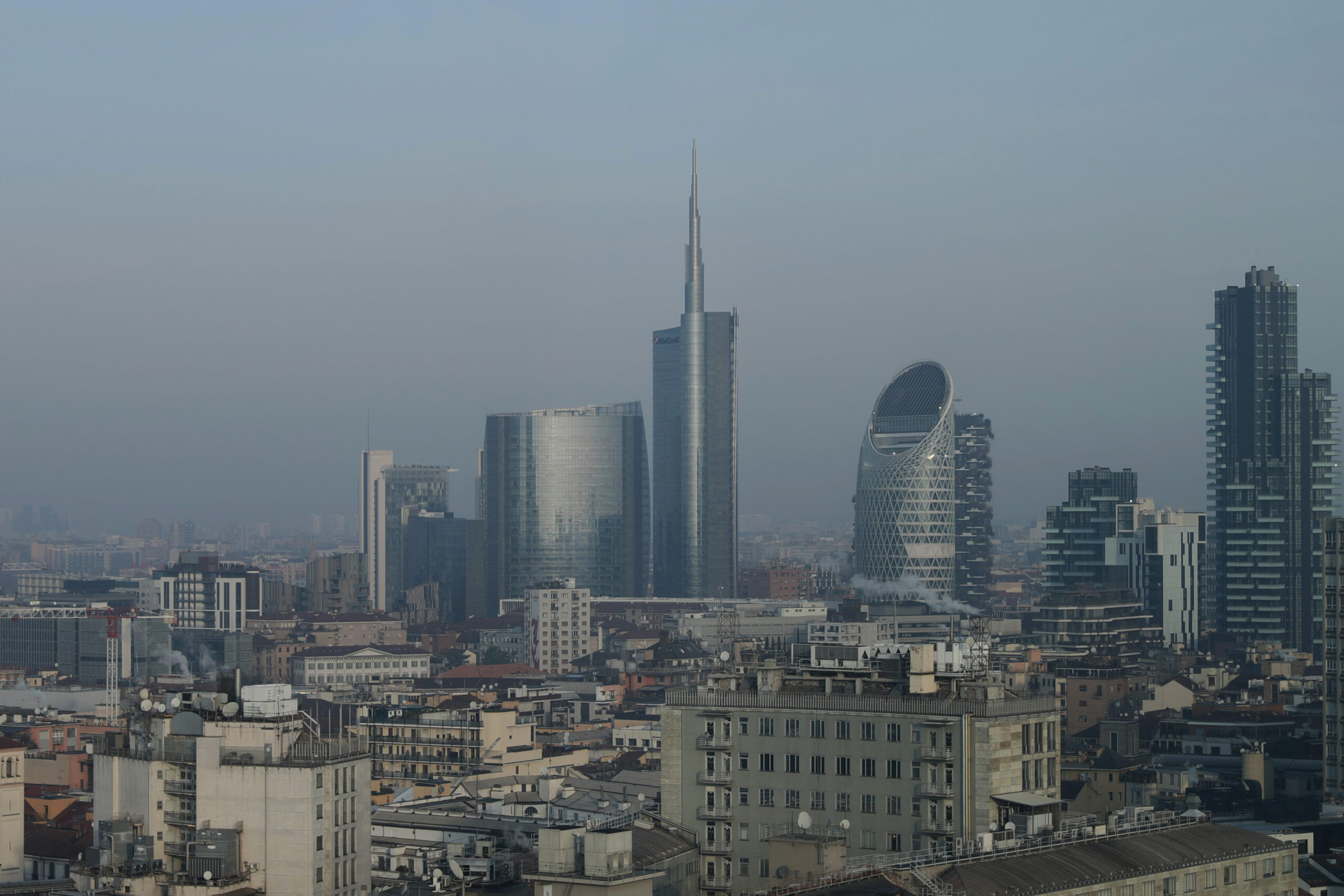
Brussels – From 2005 to 2023, premature deaths attributable to fine particulate matter—the most dangerous air pollutant—have decreased by 57 per cent across the European Union. The 20-year trend has also been confirmed in the EU Environment Agency’s latest report, updated to 2023. It also concerns the health impact of the two other most lethal and widespread gases, nitrogen dioxide and ozone.
The report points out that the net reduction in deaths from exposure to PM2.5 indicates that “the EU Action Plan’s goal of zero pollution, i.e., a 55 per cent reduction in impact, has been achieved by 2023.” But all that glitters is not gold: almost all of Europe’s city dwellers—95 per cent—are still exposed to air pollution levels “considerably higher” than those recommended by the World Health Organisation.
According to EEA estimates, if the EU bloc had followed the WHO guidelines, it could have prevented 182,000 deaths attributable to exposure to fine particulate matter (PM2.5), 63,000 to exposure to ozone (O3), and 34,000 to exposure to nitrogen dioxide (NO2) in 2023 alone.
The revised Air Quality Directive, which came into force last year, brings EU standards closer to WHO recommendations, encouraging a further reduction in the health impact of air pollution in the coming years. The EU—after a fierce battle in both the European Parliament and the EU Council—has chosen to aim to cut emissions of key pollutants by 2030 across all member states, with the possibility of 10-year derogations for territories with “specific climatic and orographic conditions.”

Unfortunately, it is often in those areas, precisely because of their particular geographical and climatic, but also economic and industrial, situations, that the greatest number of deaths attributable to air pollution occur, such as the Po Valley in Italy, Lower Silesia in Poland, and the Ruhr basin in Germany. And indeed, although the mortality rate has fallen by 43.4 per cent over the last twenty years, in 2023, Italy still had the highest number of deaths caused by exposure to PM2.5. The total number of Italian victims of fine particulate matter was 43,083. In the sad count, Poland came second (25,268) and Germany third (21,640).
In 2023, Italy was also first in the EU for deaths attributable to nitrogen dioxide (9,064) and second only to Germany for deaths attributable to ozone (11,230). In addition to premature deaths, the report also highlights the significant effects of living with air pollution-related diseases. These include asthma, but also ischemic heart disease and lung cancer. According to the EEA, “new evidence suggests that air pollution may also cause dementia.”
English version by the Translation Service of Withub






![La video riunione dell'Eurogruppo [27 marzo 2026. Foto: European Council]](https://www.eunews.it/wp-content/uploads/2026/03/eurogruppo-260327-120x86.jpg)
