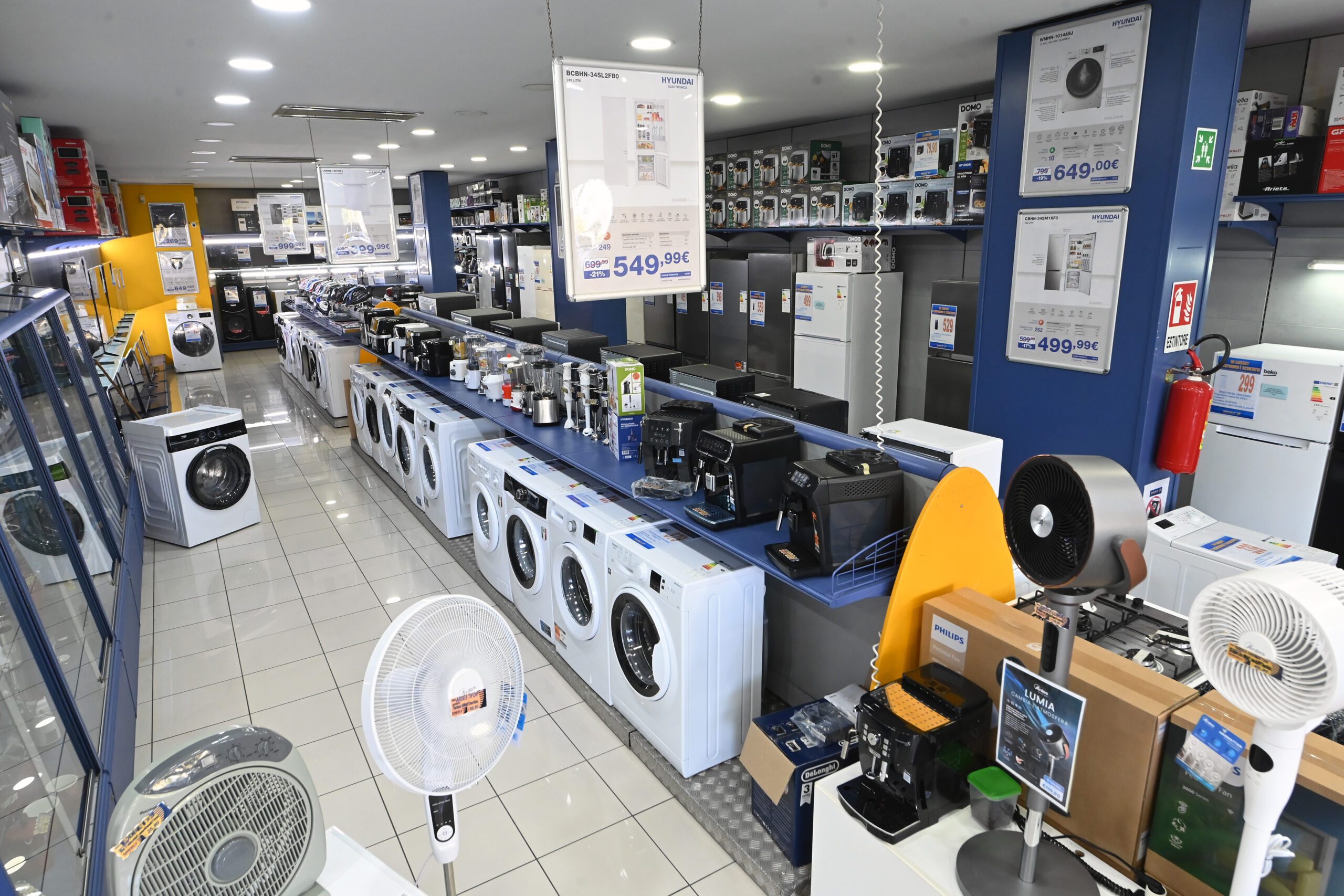
from the envoy in Strasbourg -Refrigerators, washing machines, dishwashers: with the arrival of 2028, the EU’s Carbon Border Adjustment Mechanism (CBAM), which imposes taxes on greenhouse gas-intensive products, will also apply to imported household appliances. This is the novelty introduced by the proposed reform of the regulation presented in July 2021 by the first von der Leyen commission, on which states have reached an agreement after almost a year of debate.
Extension to industrial by-products
The EU’s Carbon Border Adjustment Mechanism currently focuses on basic materials such as aluminium, cement, electricity, and steel. From 1 January 2028, importers will pay a carbon price for emissions associated with these commodities, levelling the playing field with materials produced in the EU subject to the Emissions Trading Scheme (ETS), a particular system of buying and selling emission rights.
In practice, the EU executive intends to extend the scope of the CBAM to include 180 steel and aluminium-intensive products, such as machinery and household appliances, ensuring that emissions are reduced rather than transferred. Thus, everything for the home that is produced abroad and imported will be subject to the EU’s clampdown. The same will apply to industry regarding metal supports, cylinders, industrial radiators, or casting machines. These are goods with “a high risk of carbon leakage and a high percentage of steel or aluminum content,” the Commission documents specify. On average, they consist of 79 percent steel or aluminum.
“This is a firm request from our industry to ensure a level playing field among competitors,” explains Executive Vice-President for Industry Strategy, Stéphane Séjourné, at a press conference, who says he is convinced that with these proposals, “we are creating a level playing field for all; it will be the end of inequality towards competitors.” With the extension of the scope of the CBAM, “we will treat everyone equally, we will not exempt anyone,” said the Commissioner for Climate and Sustainable Growth, Wopke Hoekstra. Considering that the United States “accounts for less than 1 percent of the total value of imports” into the EU, the message appears to be mainly directed towards China and India.

New calculation methods and more controls
The changes introduced by the European Commission in the CBAM reform proposal also include the possibility of incorporating pre-consumer aluminium and steel scrap in CBAM calculations. “This ensures fair carbon pricing for both EU-made and imported goods,” the EU executive argues.
Stricter reporting requirements are introduced for imports to better trace CBAM goods and to counter misdeclaration of emissions intensity. Along the lines of what happens in competition law infringement cases, the Commission gains authority to tackle evidence-based abuses that circumvent CBAM’s financial responsibilities, requiring additional evidence when actual values are unreliable, and defaulting to country values in such cases.
Temporary Compensation Fund for European Manufacturers
To temporarily support EU producers of goods subject to CBAM rules and mitigate the risks of carbon leakage, the European Commission has launched a temporary compensation fund, available for 2026 and 2027. The special fund addresses the competitiveness loss in third-country markets where EU goods might be supplanted by cheaper, more emission-intensive alternatives, potentially increasing global emissions.