



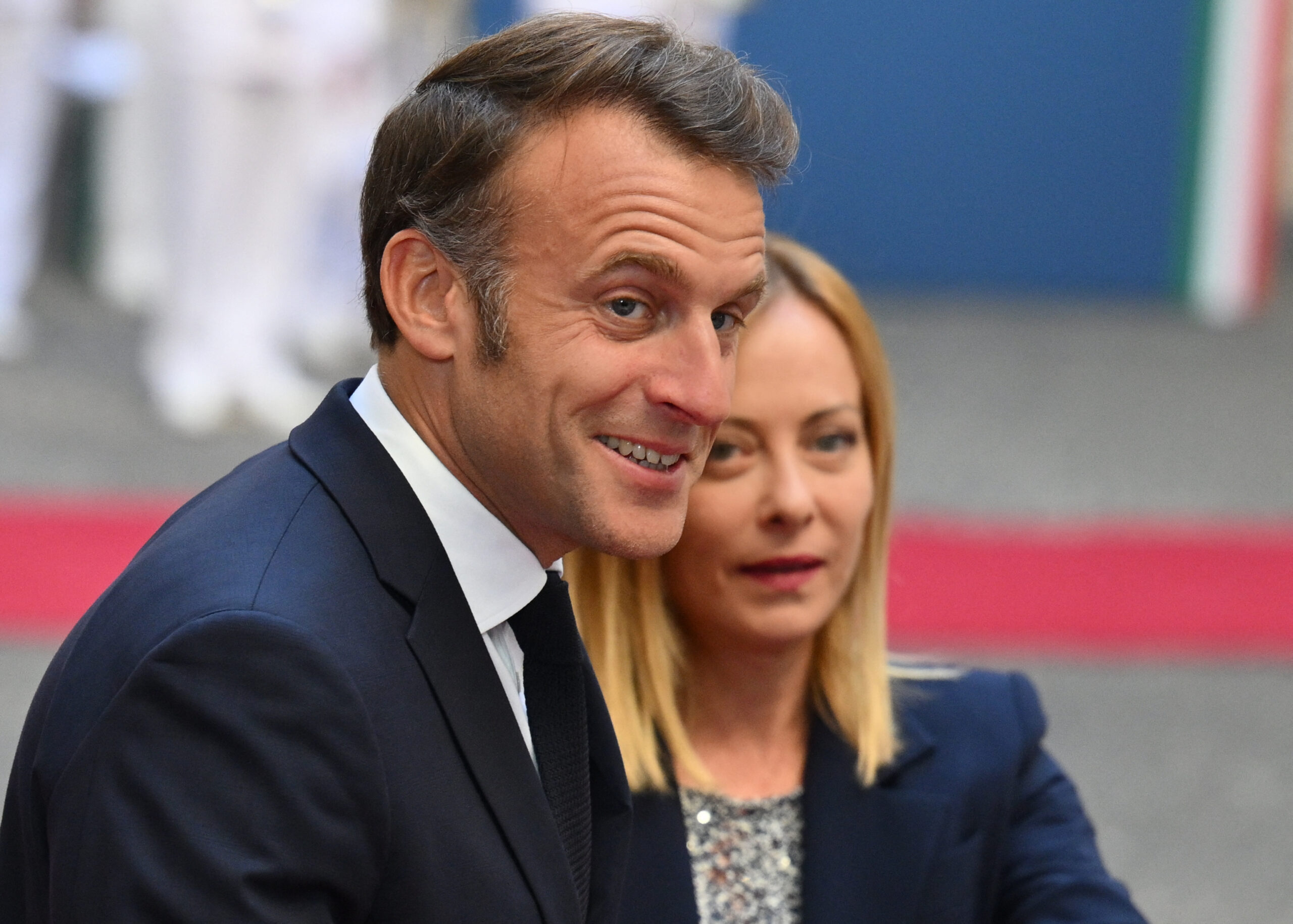
Brussels – At the European summit convened to break the deadlock over EU funding for Ukraine, another negotiating table is at risk of collapsing. The Mercosur trade pact, celebrated a year ago as a political breakthrough, now faces renewed uncertainty. Ursula von der Leyen would like to get on a plane to Brazil as early as Saturday to finally close the deal. President Lula is waiting for her, but has made it clear that he will not wait any longer. First, however, the EU leader needs the approval from the heads of state and government of the 27 member states. However, two major players are standing firm: France and Italy.
The topic is not formally on the agenda of the European Council, but thanks to the thousands of tractors that arrived in Brussels to protest European agricultural policies, it is a bulky elephant in the room. “It will certainly come up during the discussion,” confided a diplomatic source. Already upon arrival at the Europa Building, several leaders made their positions clear.
Starting with von der Leyen, who stressed the geopolitical value of the agreement, at which both the United States and China have in fact frowned, and “the enormous importance of securing approval and being able to complete the signatures” for the deal. Along the same lines is German Chancellor Friedrich Merz, who said, “The only possible decision is for Europe to accept, allowing the President of the Commission and the President of the European Council to travel to South America tomorrow to sign this agreement.” A decision that “must be taken now,” insisted Merz.

The main obstacle so far has been the fears of European producers, particularly in the agricultural sector. At the last minute, late yesterday evening, the European Parliament and the member states reached an agreement on the regulation that will guarantee a series of safeguards for farmers should there be a surge in imports of sensitive products – such as poultry and beef from Argentina, Brazil, Paraguay, and Uruguay. The suspension of preferential tariffs would be triggered if the import volume increased by more than 8 percent compared to the three-year average. However, the final text does not mention the “reciprocity clause” included in the European Parliament’s negotiating position. This is an element deemed indispensable by Italy and France, and one that could jeopardize the safeguard regulation’s approval by the Strasbourg plenary, scheduled for January.
The President of the European Parliament, Roberta Metsola, said she was ‘confident’ that the House would support the text. Provided that the safeguards in the regulation “are a sufficient signal to trigger a qualified majority in the European Council.” And that, on the other hand, they will be accepted by the Mercosur four, who are beginning to get impatient: Brazilian President Lula remembered yesterday that “we have been waiting 26 years for this agreement, and it is an agreement that favours Europe more than Mercosur.” If “Macron doesn’t want to sign because of the farmers,” Italy “doesn’t understand why it doesn’t want to sign,” Lula added before issuing an ultimatum: “If it is not done now, Brazil will not sign the agreement during my presidency.”
If Macron vouches for Meloni, the foreign minister and vice-premier, Antonio Tajani clarified the Italian government’s position this morning at the pre-summit of the European People’s Party. “There are problems concerning the agricultural world that have not yet been completely resolved. Once those are solved, Italy is ready to support Mercosur, which, in principle, is a choice that we 100 percent share,” he said. Italy continues to be half in and half out, but the issues will inevitably come to a head. For Tajani, the agreement on the agricultural safeguard clauses “is a sign that goes in the right direction, but we will see during the Council what guarantees will actually be given to farmers. It’s a step forward, but I don’t know if it’s enough,” he pointed out.
English version by the Translation Service of Withub![[foto: Rr Gimenez/Wikimedia Commons]](https://www.eunews.it/wp-content/uploads/2025/11/ue-350x250.png)






![[foto: Guillaume Baviere/WikimediaCommons]](https://www.eunews.it/wp-content/uploads/2026/01/Cuba_Che-120x86.jpg)
