



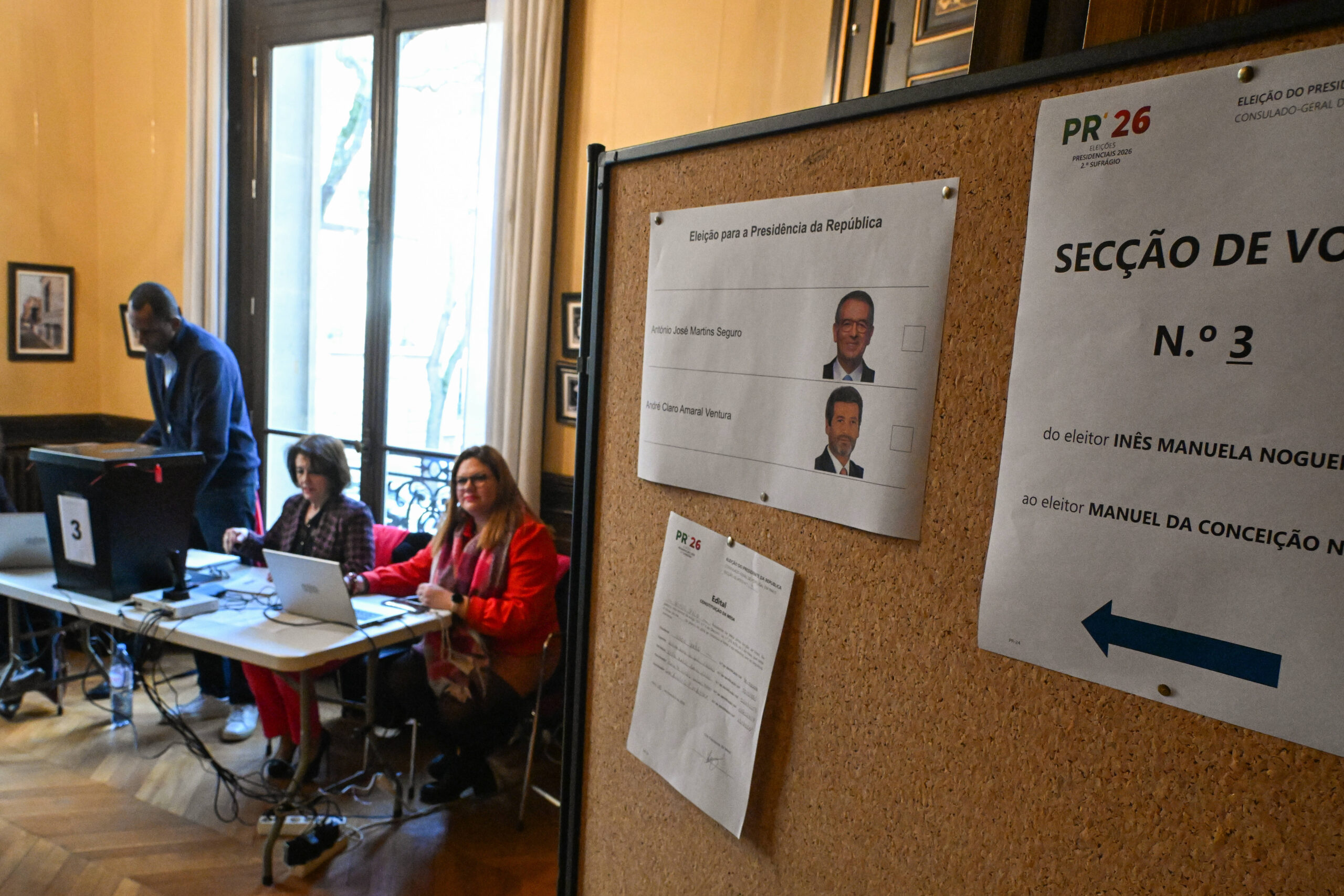
Brussels – António José Seguro, candidate for the Socialist Party, is the new president of Portugal. In the second round of the presidential elections, he obtained approximately 67 per cent of the votes, double that of far-right candidate André Ventura. The result is in line with the poll predictions and is historic for two reasons: on the one hand, Seguro obtained the highest number of votes in the country’s history, almost 3.5 million; on the other, the polls confirm that far-right voters are also on the rise in Portugal.
Despite the torrential rain that has been battering the south of the country for weeks – and the state of emergency declared in 69 municipalities – turnout reached around 50 per cent. Seguro, a veteran of the Portuguese socialist family, won 66.6 per cent of the vote against 33.4 per cent for Ventura, leader of the extremist party Chega! (which means ‘Enough!’ in Portuguese), founded in 2019 and growing steadily since. Seguro won by a landslide because he could count on the support of the traditional parties: most moderate and conservative voters preferred him to Ventura.
Prime Minister Luís Montenegro, of the centre-right Social Democratic Party, praised the “great civic maturity” of Portuguese citizens and promised to work with Seguro “for the future of Portugal.” In Portugal, a semi-presidential parliamentary republic, the president has mostly representative powers, but still plays a very important role in ensuring national cohesion at a time when the Lisbon Parliament is highly fragmented. Seguro will replace Marcelo Rebelo de Sousa, from the same party as the prime minister, who has been head of state since 2016.
I congratulate António José Seguro on his election as President of the Portuguese Republic and wish him every success in the exercise of his mandate.
Today, the Portuguese people demonstrated their commitment to democracy, reaffirming Portugal as a pillar of European humanism.
— António Costa (@eucopresident) February 8, 2026
Seguro, a former MEP from 1999 to 2004, contested the leadership of the Portuguese Socialist Party in 2014 with the then mayor of Lisbon – and current President of the European Council – Antonio Costa. From Brussels, the leaders of the EU institutions congratulated the new president: “I wish him every success in his term of office. Today, the Portuguese people have demonstrated their commitment to democracy, reaffirming Portugal’s role as a pillar of European humanism,” Costa commented. “Portugal’s voice in support of our shared European values remains strong,” wrote European Commission President Ursula von der Leyen on X. “I know that Europe can count on your experience and commitment to our common project, especially as a former MEP, just as Portugal can continue to count on Europe,” said European Parliament President Roberta Metsola.
English version by the Translation Service of WithubThe other side of the coin is the slow but steady growth of the Eurosceptics of Chega!, who in Brussels are part of the sovereignist group Patriots for Europe, together with France’s Rassemblement National, Italy’s League, and Viktor Orbán’s Hungarian party Fidesz. Ventura surpassed the party’s total vote in the May 2025 legislative elections, when it had about 22 per cent, already its best result to date.






![La video riunione dell'Eurogruppo [27 marzo 2026. Foto: European Council]](https://www.eunews.it/wp-content/uploads/2026/03/eurogruppo-260327-120x86.jpg)
