From our correspondent in Strasbourg – After more than a year of analysis, inspections, and discussions, the European Parliament’s Housing Crisis (HOUS) special committee has adopted its own recipe to guarantee European citizens the right to housing. This battle was fought and won by the Socialists and Democrats (S&D) group, but—thanks to the shift to the right in European politics—it is ultimately the conservative bloc, led by the People’s Party, that has left its mark. So much so that, paradoxically, it was the groups on the left of the European Parliament that most vigorously rejected the proposals for an EU plan for affordable housing.
“The main problem is clear: supply has not kept pace with demand. Europe must build and renovate more housing,” said the rapporteur of the report voted on today (10 March) in Strasbourg, the Spanish People’s Party member Borja Giménez Larraz.
With this interpretation, the solution is obvious: to reverse a trend that has been going on for at least fifteen years, in which housing prices in the EU have risen by 61 per cent and rents by 30 per cent, there is a need to build more, cut red tape and speed up the granting of licences, while making the construction sector more attractive to private investors.
The report, which aims to contribute to the drafting of the EU housing plan the European Commission is working on, was approved by the chamber with 367 votes in favour, 166 against, and 84 abstentions. The negotiator for the S&D group, Aodhán Ó Ríordáin, had already made it clear before the vote that “this report is the result of difficult negotiations and, like any negotiated result, it is not perfect.” Comparing it with the starting point, the first draft by the EPP and submitted to the HOUS committee in September, “it is clear that we have come a long way.” Dem Irene Tinagli, chair of the special committee established last January, said that “the report obviously reflects the majority consensus within the committee.” And the majority in the European Parliament is determined by the People’s Party as it sees fit.
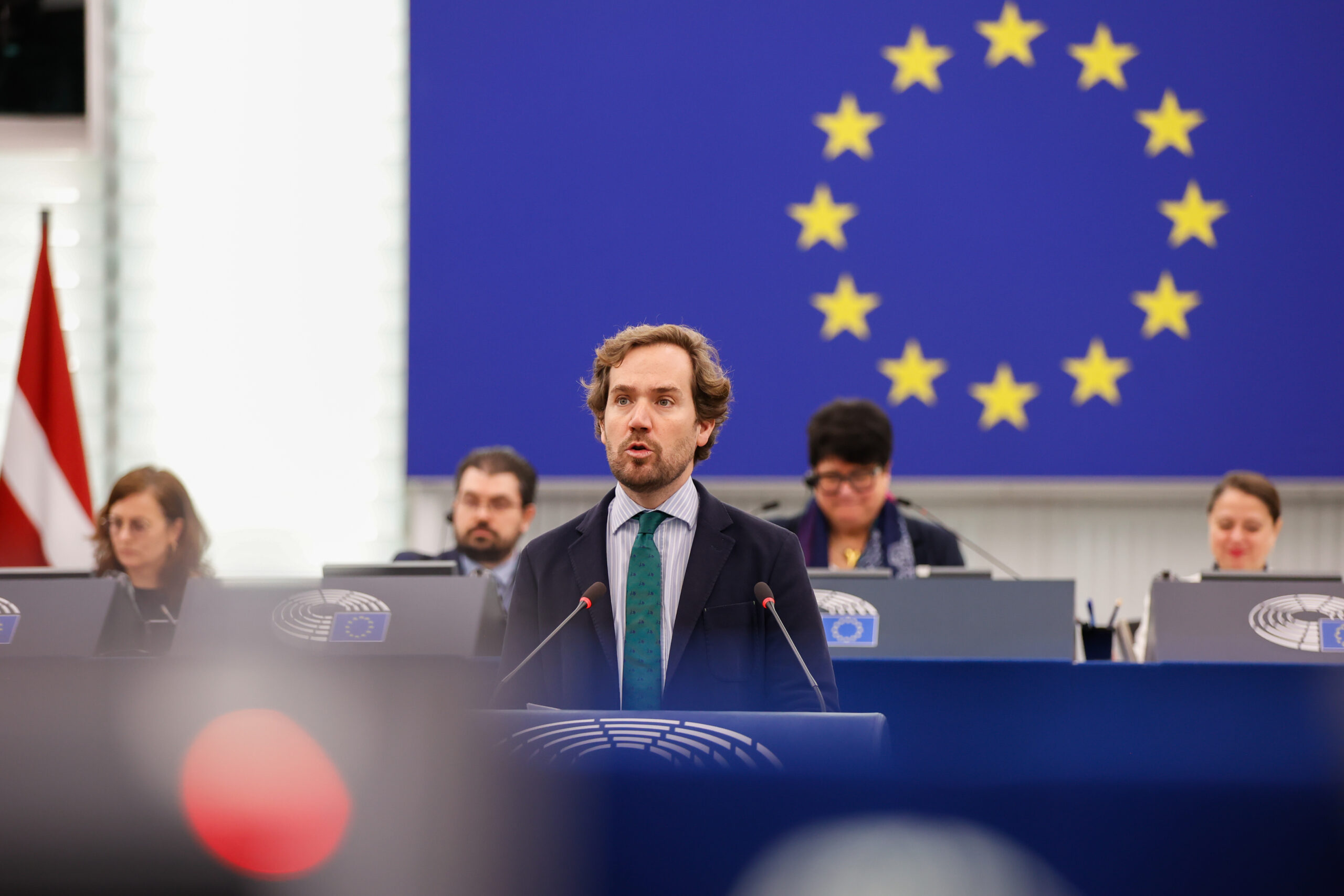
Instead of trying to break down the resistance of member countries—Tinagli asked “some governments”, including Italy’s, to “wake up” and stop “procrastinating”—the report starts from the full affirmation of the principle of subsidiarity: what Europe can do is “act as a catalyst, remove obstacles and facilitate investment,” said Giménez Larraz. The focus is not on excessive financial speculation and the need to rein in market forces, from which not only the most vulnerable groups but also students and essential workers are now excluded, but on “insufficient housing supply, limited investment in public and affordable housing,” or even, as the report states, “infrastructure bottlenecks, lengthy authorisation procedures and population growth.”
“We need to simplify, which is why we want a European simplification package for housing, with less bureaucracy and faster licences within 60 days,” insisted Giménez Larraz. And “lower taxes” by revising the VAT directive so that “reduced rates are applied to construction and renovation.” Marco Falcone, MEP for Forza Italia and member of the special committee, called for the inclusion of VAT cuts on construction work in the report, a proposal “strongly supported” by the FI delegation. For Falcone, “the European Parliament’s first-ever report on the housing crisis bears the clear mark of Forza Italia: simplification of rules and lower taxes on investment to increase the supply of housing.”
Not that the socialist group lacks ideas. In a press briefing following the vote, Tinagli highlighted “the revival of public housing policies, with a request for dedicated funds at European level as early as the next programming period,” a “strong focus on the most vulnerable groups, and therefore on public housing,” including “the middle class, with low to medium incomes, who do not meet the criteria for access to social housing but can no longer afford market prices.” The focus is not only on housing, but on “affordable housing,” Tinagli assured. In addition, the report calls for “support for new social housing projects, including innovative models, with the involvement of the private sector, but not speculative,” she insisted.

The real elephant in the room is the issue of touristification of housing and short-term rentals. The European Commissioner for Housing, Dan Jorgensen, announced in December that he will present a legislative initiative that goes beyond the current regulation, which merely requires to register and share data of the landlords who use online platforms . Despite “very thorough work” on the issue, the HOUS committee’s report provides little guidance to the EU executive. “The aim of such an initiative should be to ensure a fair balance between the development of tourism and the accessibility of housing,” and “it should set common objectives at EU level, while leaving Member States, regions, and local authorities the flexibility to develop and implement measures appropriate to their specific territorial realities and property markets,” the report cautiously states.
Pressed on the issue, Tinagli explained that “there cannot be a rigid rule that applies to everyone, because short-term rentals have a different impact on cities and regions.” What is needed at EU level is rather “a regulatory framework that allows cities and regions experiencing this problem to intervene with restrictive measures without risking being dragged before a court,” insisted the chair of the HOUS committee. The idea, which Jorgensen is also working on, is to use the concept of “areas under high housing pressure”, with criteria that are as objective as possible, to make it possible to intervene “on the number of licences, where they can be granted, and the parameters for distinguishing between professional and individual operators.”
However, this is the socialist line. A line that goes well beyond the recommendations in the report, which reflect the sensibilities of liberals, populars, and even ECR conservatives. For this and other reasons, the text was rejected by the other two progressive groups. For the Greens, the report, which “fails to address the root causes of the housing crisis”, was “led by the EPP, which is using it to promise its continued support for greedy landlords, Airbnb magnates, and property speculators.” The environmentalist group denounced the collaboration between conservatives and the far right to “promote an agenda that benefits the rich and does nothing to help those struggling to find affordable housing.” Benedetta Scuderi, MEP for the Green and Left Alliance, speaking in the chamber, called the report “an insult to European citizens, a gift to builders and speculators thanks to the usual tricks of the right.”
The Left group also opposed a text “that exploits a serious social crisis to promote deregulation, weaken social and environmental standards and criminalise those living in inadequate housing”. For Gaetano Pedullà, MEP for the Five Star Movement, the solution proposed by the HOUS committee “does not break the market logic on which this crisis depends.”
English version by the Translation Service of Withub![L'Ue presenta ai governi la proposta di riforma per gli aiuti di Stato. Serve a rispondere alle politiche Usa [foto: imagoeconomica]](https://www.eunews.it/wp-content/uploads/2023/02/Imagoeconomica_1796672-scaled.jpg)

![[foto: imagoeconomica]](https://www.eunews.it/wp-content/uploads/2022/06/Imagoeconomica_294644-scaled.jpg)