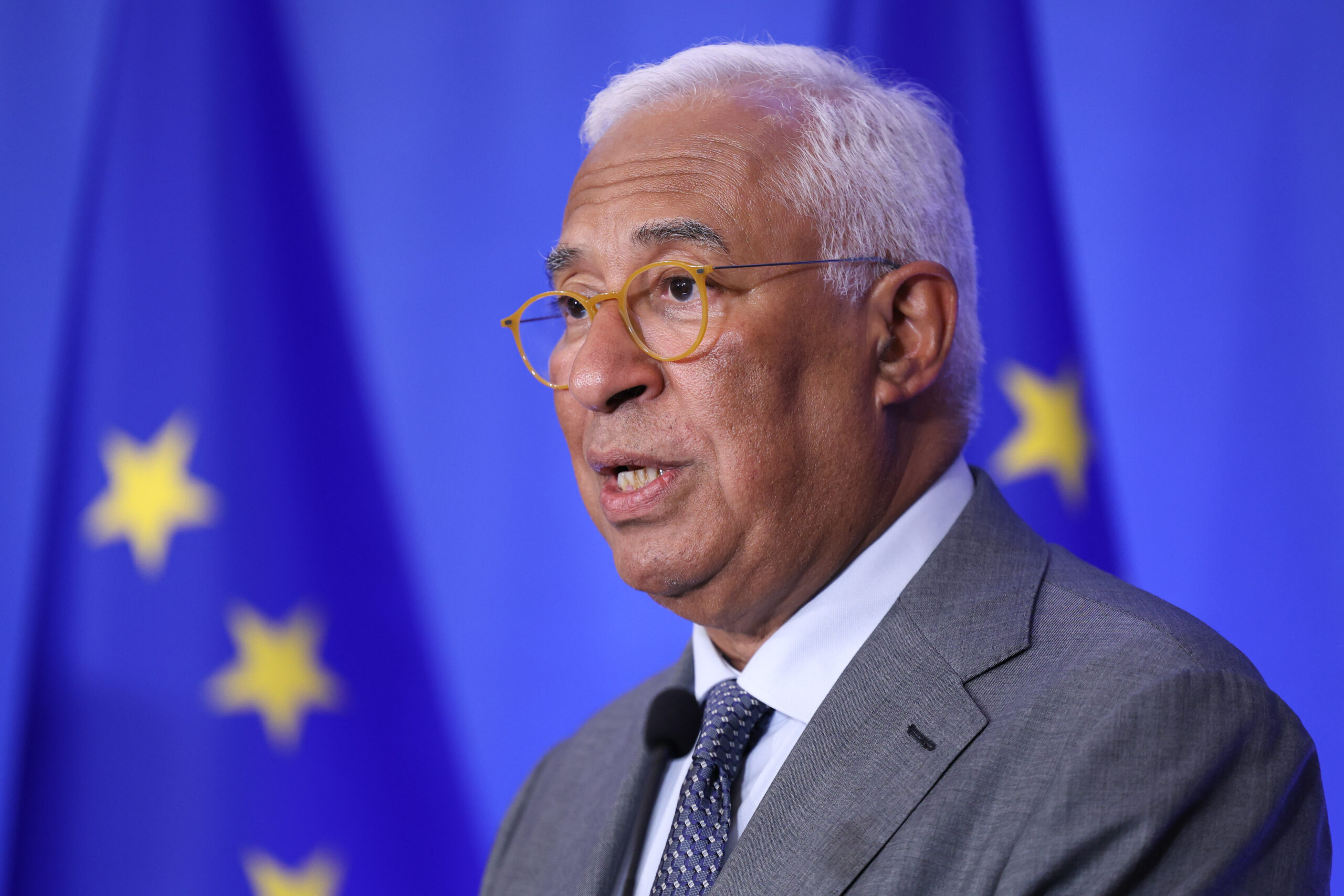
Brussels – “This multipolar world requires multilateral solutions. Not spheres of influence, where power politics replace international law.” This is how the President of the European Council, Antonio Costa, opened his speech this morning (10 March) at the annual conference of European Union ambassadors, which began yesterday in Brussels and will conclude on 13 March.
At yesterday’s inauguration, the High Representative of the Union for Foreign Affairs and Security Policy, Kaja Kallas, emphasised the need for Europe not to be caught unprepared in the face of an increasingly unstable international situation.
Costa condemned Iran as jointly responsible for the complex situation in the Middle East and called for an end to attacks on neighbouring countries and military bases. He praised the deployment of military forces by Greece, France, Italy, and Spain in support of Cyprus, describing it as “European autonomy and steadfast solidarity.”
Costa expressed Europe’s support for the thirteen countries of the Persian Gulf and the Middle East yesterday during a video conference with the President of the EU Commission. Today, he reiterated his solidarity with the Iranian people. “We support their right to live in peace and determine their own future. We believe their human rights and freedoms must be fully respected. But freedom and human rights cannot be achieved through bombs. Only international law upholds them.” He therefore reiterated the need for all parties involved to return to the negotiating table.
Multilateral cooperation, protection of international law, bilateral agreements, and European enlargement: these are the objectives that, according to Costa, Europe must continue to pursue.
Regarding the conflict in Eastern Europe, the President confirmed the Union’s commitment to supporting Ukraine through a strategy encompassing the financial, political, and security domains. In particular, he referred to the 90 billion euro common loan approved by the European Council last December, which is considered essential to the country’s stability and future reconstruction. At the same time, Costa reiterated the importance of maintaining strong diplomatic pressure on Russia to achieve a peace that complies with international law.
With veiled criticism of the United States, the speech touched upon the need to reform the United Nations. While acknowledging the need for renewal, the president described the UN as the “cornerstone” of the international system, the only forum with universal legitimacy.
“We must continue expanding our global network of partners,” Costa continued, noting that the European Union aims, in this context, to consolidate itself as a “reliable and predictable” partner, strengthening ties with like-minded democracies such as the United Kingdom, Norway, Canada, and Japan. A central pillar of the European strategy concerns the network of trade agreements, which now involves 80 global partners. Recent treaties with India and Mercosur have been described as turning points, capable of extending an area of cooperation to almost 3 billion people. The stated goal is to replace customs tariffs with stable partnerships, countering the logic of spheres of influence in favour of “shared prosperity.”
Finally, the President indicated that expanding the Union was the main priority for the near future. Described as the “best geostrategic investment,” the accession process is experiencing “new dynamism”, driven by Ukraine’s application but also extended to Moldova and the six Western Balkan partners. Costa concluded by emphasising that the entry of new members, based on meritocratic criteria, is essential to make Europe more autonomous and resilient in a radically changing international system.
English version by the Translation Service of Withub