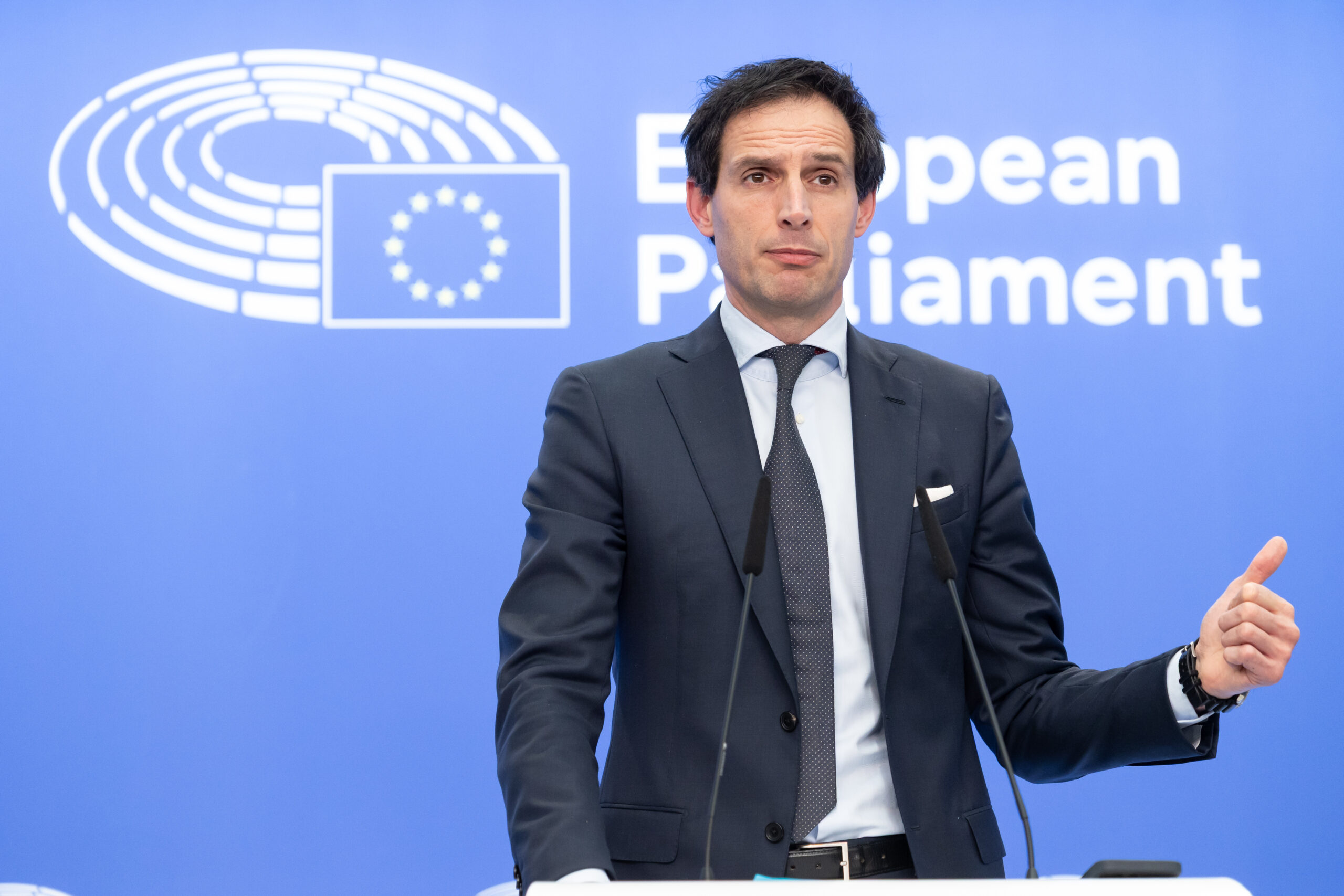
Brussels – What is the current status of the revision of the Tobacco Taxation Directive? Commissioner for Climate Action and Taxation, Wopke Hoekstra, gave a brief update on the situation yesterday (17 March) at the 2026 Tax Symposium. “on the modernisation of the Tobacco Taxation Directive, our new proposal taxes more products, like e-cigarettes, previously not in scope,” summarised Hoekstra, emphasising that “This makes so much sense from a public health perspective” because “these new nicotine products are highly addictive, especially for teenagers and kids, who are getting hooked from a young age.” The Dutch Commissioner reiterated that the EU is “looking into increasing EU tax rates on tobacco,” given that those “we have today have become pretty much meaningless. Current minimum rates are just not enough to tackle cross-border traffic, counterfeit goods and tax evasion – costing us EUR 13 billion every year,” the Commissioner stated.
Work is therefore underway, but the path towards revising the EU Tobacco Taxation Directive remains an uphill struggle. Following the European Commission’s proposal for a review adopted on 16 July 2025, EU institutions have been busy defining their positions, but the debate is encountering significant obstacles in public consultations. The divide is clear: on the one hand, those who see the reform as a fundamental pillar for the Union’s health objectives; on the other, those who believe the proposal has structural flaws.
The proposal, presented last May by Commissioner Hoekstra, aims to radically overhaul the rules by increasing excise duties and extending taxation to products previously excluded, such as e-cigarettes and nicotine pouches. The stated aim is to reduce the proportion of European smokers from the current 24 per cent to 5 per cent by 2040, a target which the European Commission also intends to support by cracking down on raw tobacco to combat the illicit market.
Although Brussels expects that updating the now “obsolete” minimum rates will lead to “a 15 billion euro increase in tax revenue across the EU,” and a reduction in healthcare spending – it is noted that these measures have already “contributed to a 40 per cent drop in smoking rates over the last decade” – the European Parliament’s Subcommittee on Taxation fears counterproductive effects. According to several MEPs, excessive taxation could fuel smuggling and penalise less harmful alternatives, creating dangerous “internal market distortions.”
In this climate of uncertainty, Commissioner Hoekstra is attempting to broker a compromise. At a press conference on the sidelines of the 2026 Tax Symposium, which concluded yesterday, 17 March, he firmly pointed out that “a quarter of Europeans smoke, and half of them die as a result of tobacco and cigarettes”. Describing the effects of addiction as “enormous”, the Commissioner stressed the importance of finding “a compromise that harmonises tax rules while ensuring the necessary flexibility for Member States.”
The geography of dissent currently sees four EU countries — Italy, Greece, Romania, and Luxembourg — openly opposed to the proposal. In contrast, 13 countries have already signed a letter in support of the new directive: these are Austria, Belgium, Bulgaria, Cyprus, the Czech Republic, Denmark, Estonia, Finland, Ireland, Spain, Slovakia, the Netherlands, and Latvia. A further ten Member States remain in a wait-and-see mode and have not yet signed the document, including major nations such as France and Germany. Hoekstra has planned a series of official visits to European capitals to advance the matter, seeking to “bear in mind the needs of EU countries” and “enhance the single market” through the harmonisation of tax rules across the EU. For the Commission, the introduction of minimum rates for these products will enable better controls, whilst giving Member States the flexibility to adapt their tax rules to market developments in their own countries.
English version by the Translation Service of Withub



![Da sinistra: il presidente del Consiglio europeo, Antonio Costa; il presidente dell'Ucraina, Volodymir Zelensky: la presidente della Commissione europea, Ursula von der Leyen [Bruxelles, 18 giugno 2024. Foto: European Council]](https://www.eunews.it/wp-content/uploads/2026/06/euco_ua260618-120x86.jpg)
![[foto: Saverio De Giglio/imagoeconomica]](https://www.eunews.it/wp-content/uploads/2026/10/cpt-120x86.png)