



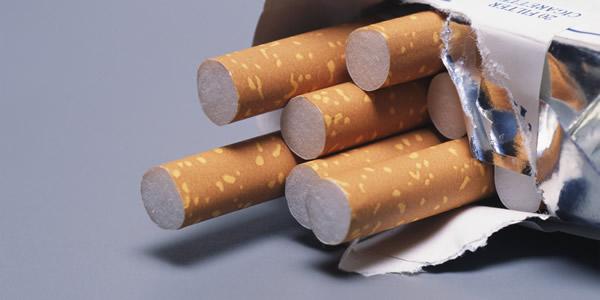
Brussels – The European Union should “follow Sweden’s example closely” when it comes to tobacco and cigarette alternatives. So says Dr. Mark Tyndall, a public health expert and professor of medicine at the School of Population and Public Health at the University of British Columbia. In an interview on the sidelines of the World Nicotine Congress (WNC) in Brussels, Dr. Tyndall also spoke about the UK’s relationship with e-cigarettes: “2025 was the first year in which e-cigarette consumption in the UK exceeded that of traditional cigarettes.” As a result, Tyndall continued, “I expect that in a few years’ time, 80 per cent of smokers will be using e-cigarettes and 20 per cent will be smoking cigarettes and tobacco.”
The congress is spread over three days of plenary sessions and includes discussions on the topic of nicotine: where we stand, how we can address the risks, how to best regulate the use of these products, and what alternatives there are to traditional smoking. Some countries are finding a solution. Dr. Tyndall explained that the United Kingdom “has offered smokers an alternative to help them quit, and the British have embraced it.” These are e-cigarettes, also known as “vaping,” which have been available since 2003. According to the public health expert, vaping is designed precisely as “the healthy alternative to cigarettes,” in which “the harmful chemicals that cause all diseases are removed from the product.” So, “it is impossible for vaping to cause lung cancer, strokes, and heart attacks”. The research conducted by Tyndall demonstrates “the effectiveness of the programme” and that “we are at the point where we can say that vaping is safe.” Therefore, “if you vape, you can rest assured that you will not get cancer.”
The European Union, on the other hand, “is not taking into account the facts and the impact its decisions have on people.” According to Tyndall, “the EU is taking a step backwards on smoking.” As a doctor who has direct contact with people who smoke cigarettes, “I think it is an ethical imperative to tell people that there is no longer any need to smoke,” because there are alternatives. “There is something even better than smoking: it comes in different flavours, you don’t have to burn it, and it doesn’t smell. There are so many benefits for people, and the main benefit is that it won’t kill you, so I think the decision on legislation should be considered from a public health perspective, and the focus should be on keeping people away from cigarettes. Right now, what is killing people is smoking cigarettes. Last week, I was in the Netherlands, and there were cigarette butts everywhere, people smoking everywhere, and there were posters against people vaping, and it seems ridiculous to me,” he observed.
On the subject of tobacco taxation, the second issue the European Union is addressing alongside that of tobacco products, Tyndall commented that “if the way to ban things is to make them inaccessible, and if cigarettes are cheaper than alternative products such as vaping, people will continue to smoke.” Furthermore, given that vaping “is 95 per cent safer, I think taxes should be 95 per cent lower.”
Sweden is the only EU Member State to be classified as ‘smoke-free‘. Tyndall described Stockholm as “a unique example”, which could “serve as a model for other countries.” However, “each country will probably have to find its own way.” Finally, according to Tyndall, “what is striking about the Swedish data is the impact on health outcomes: 15–16 per cent fewer cancer cases compared to the rest of the EU.” For the professor, this is “pretty solid evidence that getting rid of cigarettes really does reduce the risk of cancer,” and that “Sweden should be carefully listened to.”
English version by the Translation Service of Withub





![La video riunione dell'Eurogruppo [27 marzo 2026. Foto: European Council]](https://www.eunews.it/wp-content/uploads/2026/03/eurogruppo-260327-120x86.jpg)
