



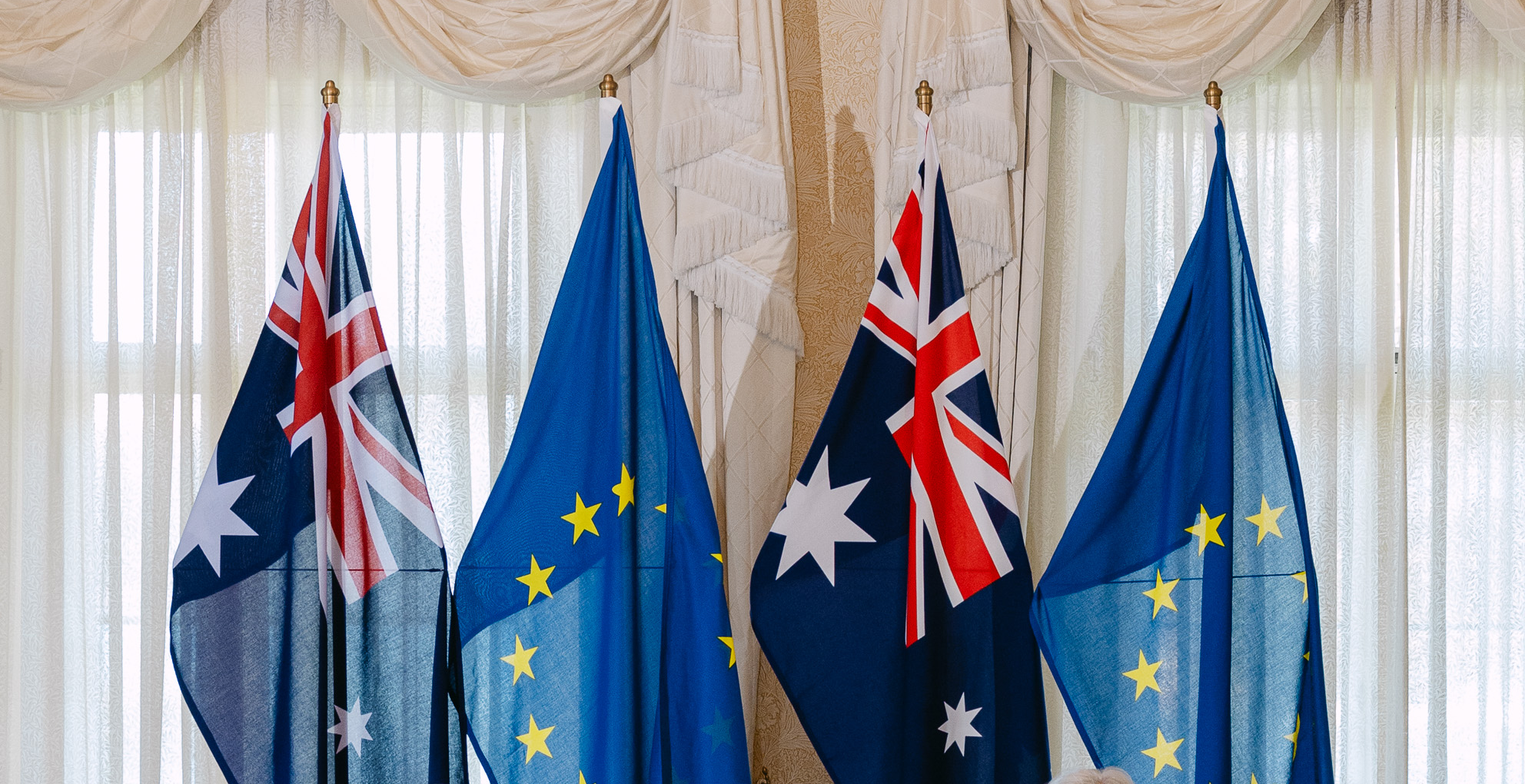
Brussels – Businesses are celebrating, farmers are holding back: the EU-Australia free trade agreement is dividing the business community. The dynamics and positions already seen during the trade deal with Mercosur – strongly supported by the secondary sector and rejected by the primary one – are resurfacing. BusinessEurope, the confederation of European industry associations, therefore welcomes the signing. “This agreement is a win for both sides,” said the association’s president, Fredrik Persson. “With EU Foreign Direct Investment in Australia already being close to €123 billion, we expect that the agreement will open the door to further investment across a diverse range of sectors, including security and defence,” he added enthusiastically.
The automotive sector is also pleased. ACEA, the European Automobile Manufacturers’ Association, notes that the reduction in tariffs on vehicles “will put EU exports on an equal footing with other major auto exporting countries, who already enjoy duty-free access to the local market.” Furthermore, “automotive parts will also be fully liberalised.” Overall, therefore, the European automotive industry “supports the EU-Australia free trade agreement.” To truly benefit from it, however, it will need to come into force. “We ask the European Commission and, in their turn, EU member states and the European Parliament, to give their timely approval to allow for its implementation as soon as possible,” ACEA added.
The reaction from Copa and Cogeca, the European agricultural confederations, was quite different. The conclusion of the free trade agreement between the EU and Australia “raises multiple and strong concerns for European agriculture, which is clearly and once again the bargaining chip of the EU strategy to secure broader trade and political objectives,” the organisations said in a statement. According to the agricultural sector, the signing of the free trade agreement reflects “a vision that responds to the emergencies of the moment, but whose medium-term consequences will be unsustainable for many sensitive farming sectors.”
Politicians, on the other hand, were jubilant. The Chair of the European Parliament’s Committee on Foreign Affairs Committee, David McAllister (EPP), highlights the geostrategic significance of an agreement through which “We are reinforcing our commitment to the Indo-Pacific,” a region where the People’s Republic of China is highly active and present. Given today’s world, “in an increasingly complex security environment, we continue to invest in multilateralism and strong, democratic partnerships,” the EPP MEP said. The chair of the Committee on International Trade, the socialist Bernd Lange: “At times of geopolitical rivalry and protectionism, the EU stands for certainty, predictability and economic opportunities for its workers, producers and consumers.” For the EU, he insists, “expanding our network of reliable partners is an economic and geopolitical necessity.” A clear reference to Donald Trump’s America. Now, Lange concludes, “It is crucial that the European Parliament and Council have their say soon on this free trade agreement.”
English version by the Translation Service of Withub




![La video riunione dell'Eurogruppo [27 marzo 2026. Foto: European Council]](https://www.eunews.it/wp-content/uploads/2026/03/eurogruppo-260327-120x86.jpg)
