![Il commissario per l'Energia, Dan Jorgensen [Bruxelles, 31 marzo 2026. Foto: European Council]](https://www.eunews.it/wp-content/uploads/2026/03/jorgensen-260331.jpg)
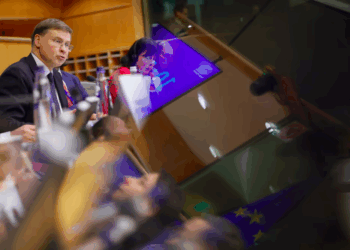
Brussels – “The situation is very serious.” The Energy Commissioner, Dan Jorgensen, acknowledges that the effects of the war of the United States and Israel against Iran are such that they will require sacrifices from some and decisive responses from governments. “We must achieve energy independence, which is of strategic importance not only from a climate perspective,” he emphasised at the end of the informal meeting of energy ministers, convened to discuss the impacts of the conflict in the Arabian Peninsula. The impacts are real.
“The price of gas has risen by 70 per cent” compared to pre-war prices, and “the price of oil has risen by 60 per cent”, notes Jorgensen. “In 30 days, our imports of fossil fuels have risen by €14 billion, with repercussions for diesel and aviation fuel, and effects on electricity costs.” This is the situation; these are “figures that paint a very serious picture” from which we are unlikely to emerge any time soon.
“We must not delude ourselves into thinking that the consequences for the energy market will end soon, because that won’t happen“, continues the Energy Commissioner. “Because even if peace were to be achieved tomorrow, the energy infrastructure has nevertheless been damaged,” he explains, and it will take time to return to normality.
The European Commission is beginning to work on managing the crisis, because “no one can say how long this crisis will last” but, Jorgensen warns, “it will not be short.” The motto of the von der Leyen team, he explains, is “better safe than sorry”, and so in the meantime the Commission has sent a letter to Member States with guidelines to help tackle the situation, such as reducing demand for diesel and encouraging alternative forms of transport, involving more public transport and fewer private cars, and an incentive for car sharing. He then announces that Brussels will shortly present a package of measures designed to help the most vulnerable households pay their bills. “We do not envisage a windfall tax as was done in 2022“, he clarifies.
Cyprus’s Presidency of the Council of the EU urges European partners to press ahead with the agreed agenda of reforms and sustainable transition: “Decarbonisation and diversification remain the priority,” explains Cyprus’s Energy Minister, Michael Damianos, who seeks to reassure: “The Union’s security of supply remains guaranteed,” because overall the EU’s “imports from the Gulf states are limited” and thanks to diversification and the import of liquefied natural gas (LNG). If anything, “we must start preparing for winter” to ensure we have sufficient stocks.
English version by the Translation Service of Withub