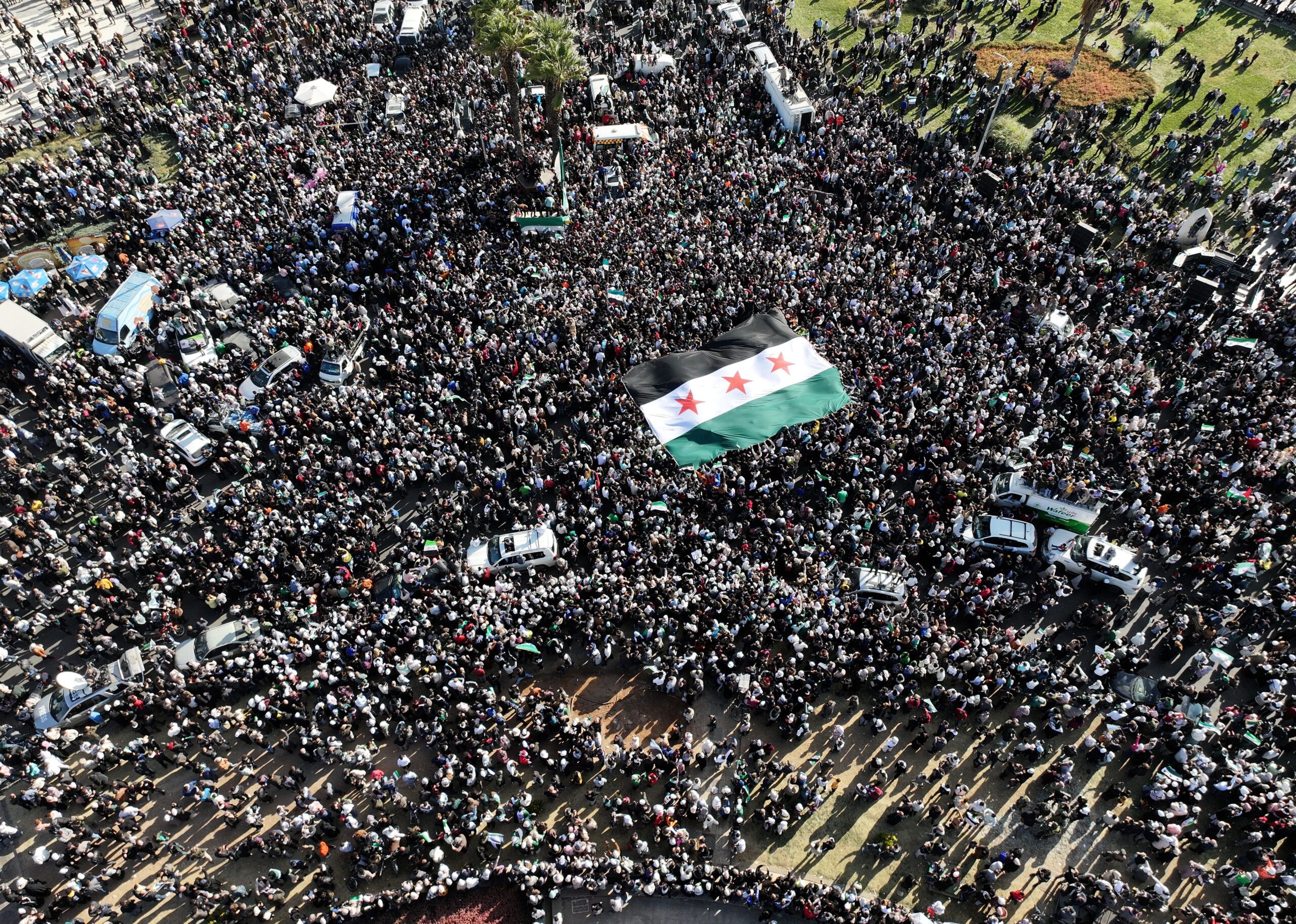
Brussels – The European Commission has taken another step towards restoring relations with Damascus by officially presenting a proposal for a Council decision on the full resumption of the historic cooperation agreement with Syria, which dates back to 1978. A move that brings to an end the partial suspension initiated in 2011 when the text governing trade relations between the two parties was frozen in direct response to the repression and systematic human rights violations perpetrated by Bashar al-Assad’s regime.
The Commission notes that the Cooperation Agreement has served as the framework for cooperation between the EU and Syria for over three decades, supporting the country’s economic and social development and promoting fair and lawful trade relations. It abolishes customs duties on most industrial products originating in Syria for imports into the EU and prevents either party from imposing quantitative restrictions. Before the conflict, the EU was among Syria’s main commercial partners, with trade peaking at over €7 billion in 2010. However, in response to widespread violations of human rights and international humanitarian law, the EU adopted restrictive measures against the country in 2011, including an oil embargo, trade restrictions, and the freezing of certain Syrian assets (sanctions that do not include trade in food, medical equipment or medicines). As a result, trade has plummeted: in 2024, the total volume of goods trade stood at just €368 million, concentrated mainly in humanitarian aid rather than commercial transactions. In 2023, EU exports to Syria amounted to €265 million, whilst imports stood at €103 million.
“By ending the partial suspension of the cooperation agreement, even though this is a formality, the Union can send a political signal of support for the normalisation of relations with Syria and for the country’s socio-economic recovery,” explains the Berlyamont Palace. The current proposal, therefore, emphasises that the lifting of the suspension is primarily of great political significance, serving as an unequivocal signal for the normalisation of EU-Syria relations, rather than aiming for an immediate economic impact: between 2011 and 2012, the Union had suspended specific provisions of the agreement that prohibited quantitative restrictions on imports from Syria, but only for those products then subject to restrictive measures, such as oil, gold, precious metals, and diamonds.
However, the regime’s final collapse in December 2024 has opened what Brussels’ leaders have described as a “new window of opportunity” for a democratic, peaceful, and inclusive transition. This new diplomatic phase follows the visit to Damascus by the President of the Commission, Ursula von der Leyen, and the President of the European Council, Antonio Costa, last January. Against the backdrop of clashes between government forces and the Kurds of the Syrian Democratic Forces, EU leaders met with Syrian President Ahmad al-Sharaa to outline the three pillars of the future relationship: a renewed political partnership, strengthened economic cooperation, and a substantial financial aid package of around €620 million for the two-year period 2026–2027.
From a technical point of view, the lifting of sanctions refers to “the formal removal of quantitative restrictions on Syrian imports into the Union.” However, the Commission clarifies that the immediate impact on trade flows will be limited: heavy economic sanctions were already lifted in May 2025, effectively removing the real barriers to trade. In this context, the Union has already “lifted all economic sanctions against Syria, with the exception of those based on security grounds.”
The Commission’s proposal is now awaiting adoption by the Council before it can be officially notified to the Syrian authorities, ahead of the bilateral meeting already scheduled for 11 May.

![Il ministro dei Trasporti, Matteo Salvini [Bruxelles, 5 dicembre 2024. Foto: Emanuele Bonini per Eunews]](https://www.eunews.it/wp-content/uploads/2024/12/salvini241205-350x250.jpeg)



![Il ministro dei Trasporti, Matteo Salvini [Bruxelles, 5 dicembre 2024. Foto: Emanuele Bonini per Eunews]](https://www.eunews.it/wp-content/uploads/2024/12/salvini241205-120x86.jpeg)