
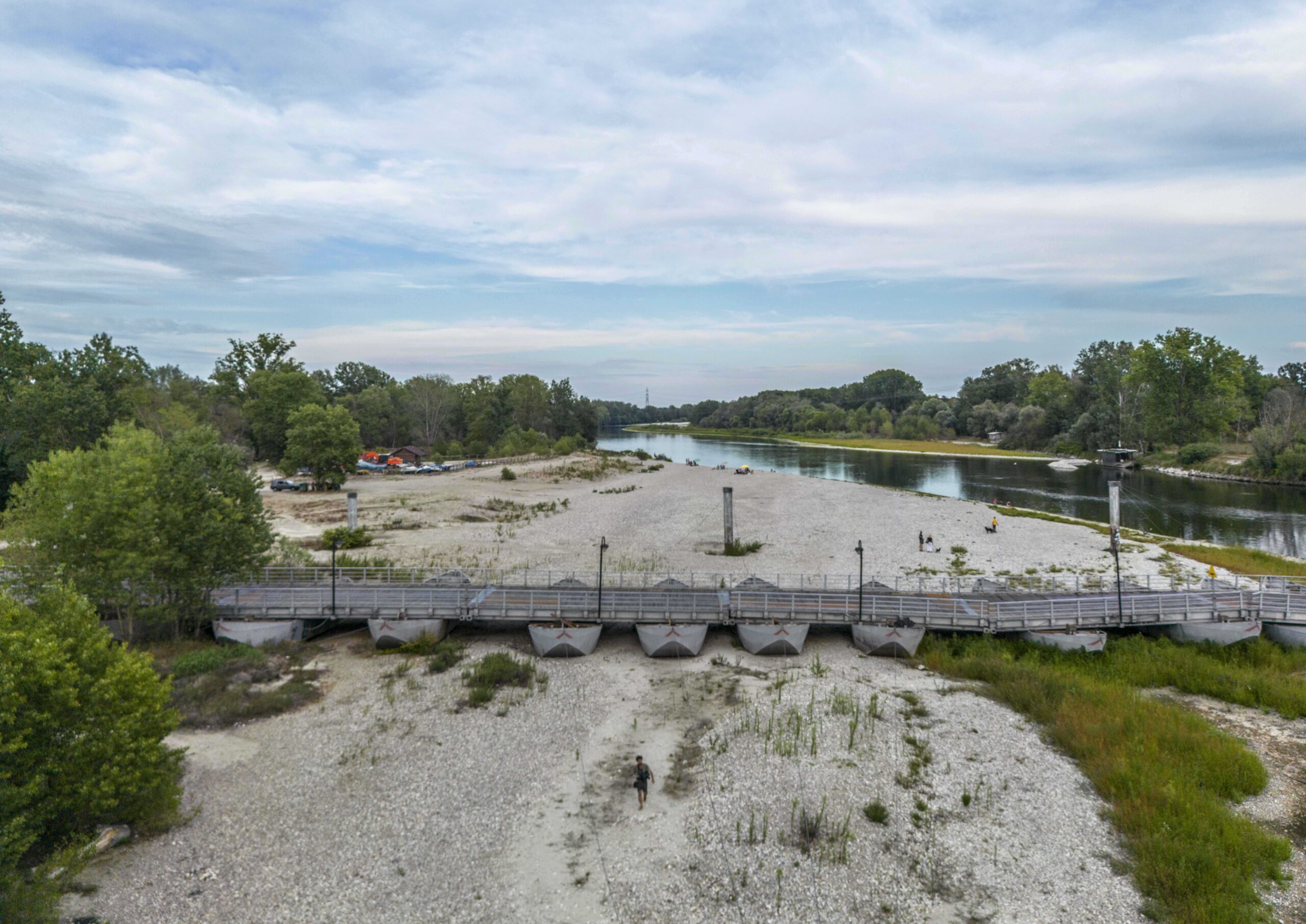
Brussels – Climate change, with its extreme weather events, is—and will increasingly be—a problem. With inflation at risk of being driven steadily upwards, and by no small margin, and banks potentially ceasing to grant credit, the succession of droughts, fires, floods, and various types of severe weather will increasingly put the eurozone economy under severe strain. This is the warning contained in the thematic studio by the European Central Bank on the role of heatwaves and droughts in the EU’s regional economies.
There is no point looking for projections of the economic fallout; the ECB’s economists do not think in terms of billions of euros lost. This is because, they point out, “despite their increasing frequency, the economic impacts of droughts and heatwaves remain insufficiently quantified, particularly for advanced economies.” It is of little use and highly misleading to provide figures that are not well-established but merely approximate. It is therefore better to rely on certainties. In this regard, “the evidence shows that extreme droughts can depress gross domestic product (GDP) growth for several years, with regional output in Europe potentially remaining up to three percentage points (pp) lower four years after a severe
drought event.”
Here, then, is a non-economic and non-financial indicator that helps to give an idea of the scale of the phenomenon of climate change. To this, further considerations must be added: “Droughts and poor harvests have substantial inflationary effects,” the ECB’s economists continue. Specifically, “crop shocks account for around 30 per cent of medium-term inflation volatility in the euro area, and a single crop shock can cause food prices to rise by double-digit percentages, with persistent inflationary consequences.”
https://www.eunews.it/en/2026/06/16/climate-refugees-in-2024-the-highest-number-ever-recorded-one-of-the-eus-key-political-issues-resurfaces/
The European Central Bank is once again emphasising the importance of the issue of food inflation, which is increasingly linked to extreme weather. But there is more: as well as agriculture, “the disruptions caused by drought in river transport, electricity generation, water-dependent manufacturing, and tourism are spreading further through production networks and supply chains, driving up costs and limiting output.” Hence, the risk of stagflationary pressures (high inflation and low growth) for EU countries using the single currency.
All these factors “may also affect financial institutions through increased credit risk, a reduction in the value of collateral, operational disruptions and market volatility,” warn Eurotowter’s analysts. There is a risk of a slowdown in lending to businesses, with repercussions for production, competitiveness, and growth. Moreover, risks linked to natural factors, particularly water scarcity, are increasingly recognised as dominant transmission channels for the euro area economy and its banking sector.
“Over 40 per cent of bank loans are concentrated in businesses highly exposed to drought and dependent on surface water supplies, with particularly high levels of exposure in southern and western Europe,” notes the recently published special study. Southern Europe refers to the Mediterranean basin and also includes Italy, which is explicitly mentioned. “The data show that most European regions have recorded an increase in the average annual number of days with heatwaves” during the hottest months (May–September). “The largest increases were observed in the Spanish Mediterranean region, in southern Italy and across northern and eastern Europe.”
English version by the Translation Service of WithubGiven the current situation and outlook, the implicit advice to governments is to work towards measures to counter and mitigate risks to safeguard agricultural production, inflation, and access to credit. Otherwise, the EU and its eurozone will be facing an uncertain and far from rosy future. However, to resolve this problem, data must be collected and the information gap bridged—one that currently makes it impossible to calculate the real impact of droughts, extreme heat, wildfires, floods, and the wider consequences of climate change.


![Da sinistra: il presidente del Consiglio europeo, Antonio Costa; il presidente dell'Ucraina, Volodymir Zelensky: la presidente della Commissione europea, Ursula von der Leyen [Bruxelles, 18 giugno 2024. Foto: European Council]](https://www.eunews.it/wp-content/uploads/2026/06/euco_ua260618-120x86.jpg)
![[foto: Saverio De Giglio/imagoeconomica]](https://www.eunews.it/wp-content/uploads/2026/10/cpt-120x86.png)