
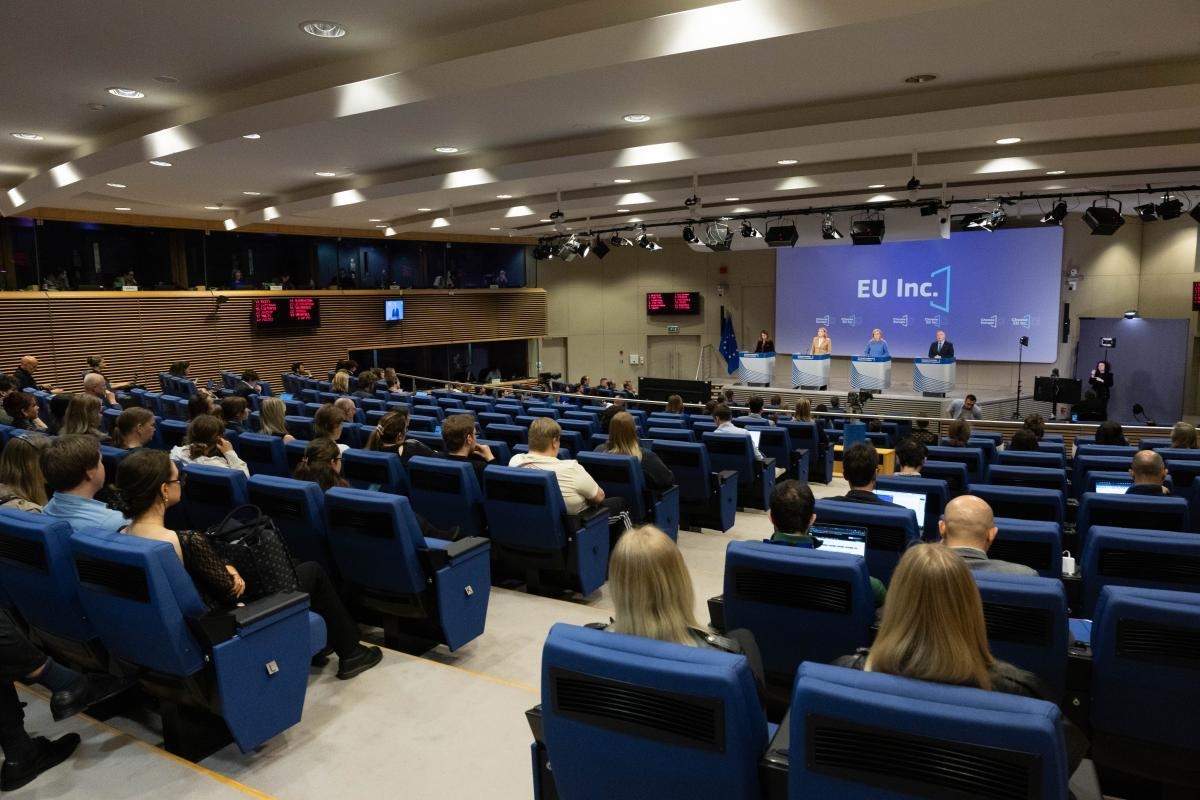
Brussels – Moving forward with European rules that apply to all and a single corporate model, but with greater simplification and more safeguards: the Council of the EU reached agreement on EU Inc., the European Commission’s proposal also known as the “28th regime”, aimed at boosting competitiveness. Representatives of the Member States support the framework and the initiative’s main objectives, but are introducing simplifications in the areas of regulation, digitalisation, and employees.
The 28th regime – the set of pan-European rules designed to supersede the 27 national frameworks of the various Member States – is the set of rules through which the EU aims to facilitate cross-border business and investment, particularly for start-ups (newly established businesses with high innovation potential) and scale-ups (the industrial expansion of start-ups). Companies will be able to choose between the 27 existing national company law regimes and this new 28th regime, EU Inc. Companies that choose to operate under this framework will be able to register online within just two days, at a maximum cost of 100 euros, and will be able to operate throughout the EU’s single market.
Changes made by the Council: Member States grant themselves more powers
The Council’s negotiating mandate, as set out in the agreement reached between the representatives of the Member States, leaves unchanged the fact that an EU Inc company will be subject to the rules on employee participation of the Member State in which it has its registered office, as proposed by the Commission. However, the Council position includes an optional mechanism to ensure compliance of national employee participation rules in case an EU Inc company registered in one Member State exceeds employee participation thresholds in another EU country where it also operates. The mandate gives companies flexibility on how to achieve compliance.
There are also changes regarding ‘stock options’ – the right for company employees to purchase or subscribe to shares at a fixed, pre-determined price within a specified timeframe: the Board is introducing a reduction in the scope of application to small mid-caps, i.e. companies with 750 employees and an annual turnover of 150 million euros.
Furthermore, the Council’s position strengthens controls at every stage of an EU inc. company’s existence to protect the internal market from abuse: Member States have the option to refuse to register a company on grounds relating to anti-money laundering and the fight against the financing of terrorism or other criminal activities, in accordance with national law.
More time for Member States to implement the provisions
The Council has extended the timeframe for the full implementation of the corporate law reform. While the European Commission recommends 12 months to implement the regulation, the Council’s position grants governments 21 months.
Peter Burke, Minister for Industry in Ireland – a country whose government holds the rotating presidency of the Council of the EU – is delighted. “EU Inc. has been a key file for the Irish Presidency, and I have been working to secure an ambitious EU-wide corporate framework to help unlock the full potential of the Single Market,” he stressed. Now, he adds, “ I look forward to forthcoming negotiations with the European Parliament.”
English version by the Translation Service of Withub