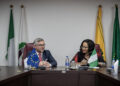
Brussels – The Seveso disaster, fifty years ago, “taught Europe to change its rules in order to better protect its citizens. Today, that same Europe must demonstrate that it knows how to listen to those who know and govern the regions.” This is the message that the President of the Lombardy Region, Attilio Fontana, delivered in Brussels at the event marking the 50th anniversary of the Seveso disaster, held at the ICMESA plant in Meda.
Today (11 November), at a press briefing with the President of the European Committee of the Regions, Kata Tüttő, on the sidelines of the anniversary conference, Fontana emphasised that “the lesson from Seveso shows just how vital it is to prevent risks and protect people. But this protection must go hand in hand with policies capable of providing concrete support for the European production system.” In other words, “Europe must be rigorous in demanding the application of strict standards, because they safeguard people’s health, but also in supporting businesses in their transition towards sustainability and the elimination of all types of risk” to people’s health and lives. “We cannot afford to have a European industry that is weaker, that is not competitive with the rest of the world, that loses ground on the global stage,” observed the President of the Lombardy Region. Therefore, “industrial development and environmental sustainability must proceed in parallel, not to the detriment of one another, nor should one be considered more important than the other. Otherwise, our regions would suffer further, equally serious consequences,” he added.
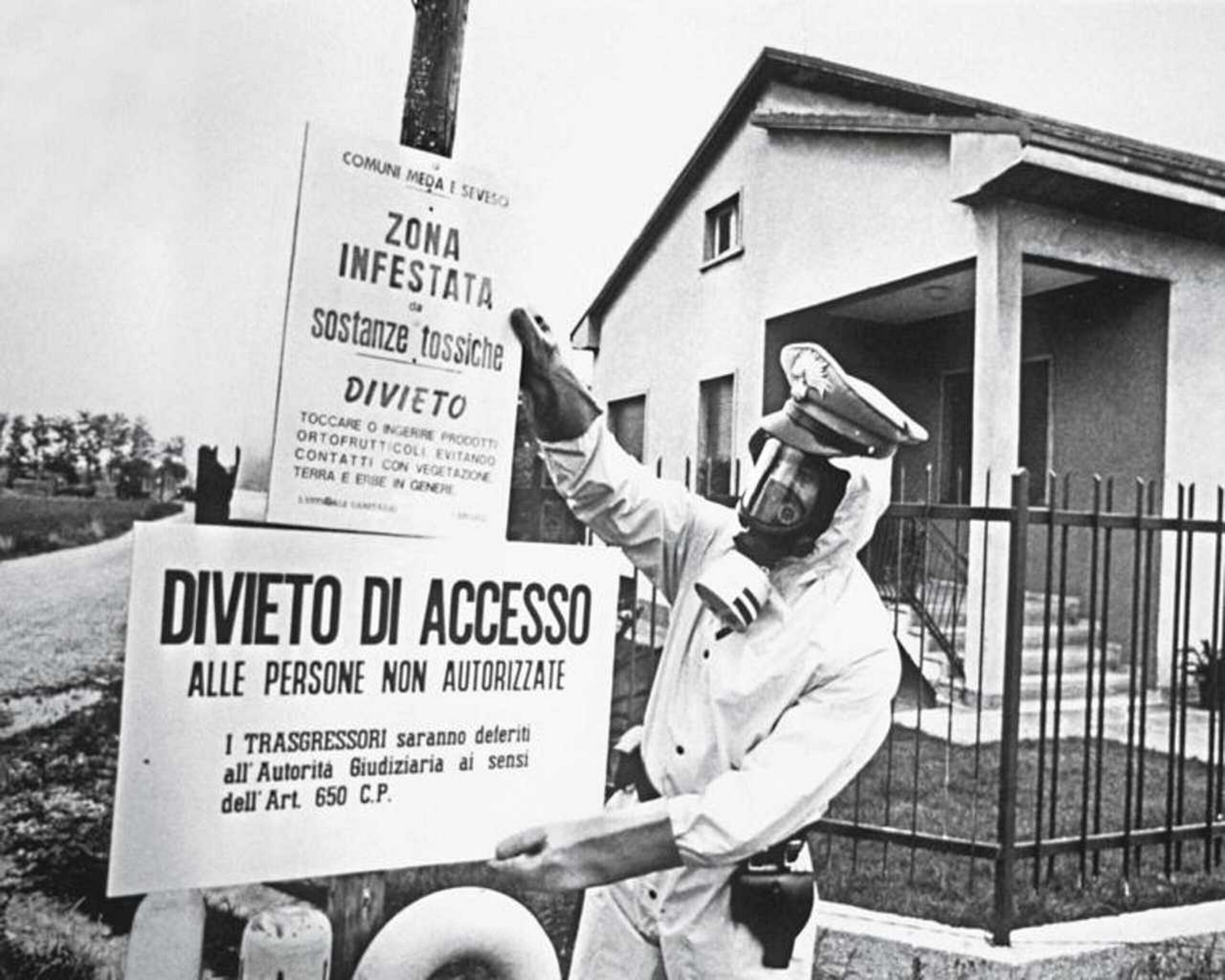
On 10 July 1976, an accident in one of the plant’s reactors led to the release and dispersion into the atmosphere of a cloud of TCDD dioxin, an extremely toxic man-made substance, which affected a vast area of land in the neighbouring municipalities of the lower Brianza region, particularly Seveso. The short-term consequences included hundreds of people suffering from poisoning, cases of chloracne – a skin condition – and cancers, as well as over 700 people being evacuated, 3,300 animals dying and a further 76,000 being culled. However, in the long term, for the Italian National Institute of Health, “the effects of the Seveso accident are not limited to cancers: in zones A and B, increases were also observed in mortality from circulatory diseases in the first few years following the accident, as well as from chronic obstructive pulmonary disease and diabetes mellitus amongst women.” As the ISS notes, this was “one of the most serious environmental accidents in Italian history” and a watershed moment in the history of European industrial safety: that disaster led to the first EU directive of 1982 on the prevention of major industrial accidents, subsequently updated to the current Seveso III, shifting Europe from a model of responding to emergencies after they have occurred to a system based on risk prevention, on controls, planning and the protection of communities.
According to the President of the European Committee of the Regions, Kata Tüttő, “Europe’s strategic autonomy must go hand in hand with risk assessment.” Because “if we build a battery factory, for example, we don’t just do it on a map, but in a real location: people should not be afraid of new infrastructure but learn to tolerate it.” Therefore, “we want resilience and preparedness,” Tüttő emphasised, “but we must always take the costs into account. Over the years, Europe has outsourced its mining, critical materials, textile, and data centre production: as international cooperation dwindles, the risks also increase,” the president emphasised, pointing out that “in this process, the regions and cohesion policies must also be at the heart of risk assessment.”
Fontana agreed, emphasising “the importance of the participation of the regions and local authorities in decisions that need to be taken at a local level” because “they are the only institutions that know the local area and the various economic activities, and who understand the problems that arise.” But this approach “runs counter to the direction the Commission has been taking to date, which is moving towards centralisation,” Fontana reiterated. Centralisation is “the opposite of subsidiarity and is, in my view, the worst choice that could be made for this great, excellent Europe which draws its very essence and one of its strengths from its environmental, cultural, and entrepreneurial diversity,” concluded the President of the Lombardy Region.
And while Brussels commemorates the Seveso disaster, in Turin, Italy, the Supreme Court delivered a harsh blow last night regarding another tragedy – one which, too, has European implications and is not merely a national issue – that has claimed the lives of workers and innocent victims for decades: the asbestos crisis. The Fourth Criminal Division of the Court of Cassation has quashed the nine-and-a-half-year prison sentence handed down to Stephan Schmideiny, the Swiss tycoon and last owner of Eternit in Casale Monferrato, in the province of Alessandria, and has ordered a new appeal trial in relation to over 60 cases. Furthermore, the statute of limitations has been declared to have expired for a further 25 asbestos victims, who will thus be left without justice. During the hearing, the Attorney General’s Office had requested that Schmideiny’s sentence of nine years and six months be upheld and that the defence’s appeal be declared inadmissible, on the grounds that the judgement handed down by the Court of Assizes of Appeal was “well-reasoned” and had “successfully fulfilled its obligations with great scrupulousness and logical consistency.” Before the hearing began, a delegation from Afeva, the association of relatives of asbestos victims, had pointed out that the trial “had begun for 392 mesothelioma victims, the vast majority of whom were citizens,” and that “only 91 remained on appeal, mainly due to the expiry of the limitation periods”. At the protest, the association reiterated its demand for justice, truth, and the clean-up of the area. Something for which, in 2026, we still have to fight too hard and for too long.
English version by the Translation Service of Withub