
- Europe, like you've never read before -
Thursday, 26 November 2026
No Result
View All Result
  • en ENG
  • it ITA
Eunews
  • Politics
  • World
  • Business
  • News
  • Defence
  • Health
  • Agrifood
  • Other sections
    • Culture
    • Rights
    • Energy
    • Green Economy
    • Finance & Insurance
    • Industry & Markets
    • Media
    • Mobility & Logistics
    • Net & Tech
    • Sports
  • Eunews Newsletter
  • European 2024
    Eunews
    • Politics
    • World
    • Business
    • News
    • Defence
    • Health
    • Agrifood
    • Other sections
      • Culture
      • Rights
      • Energy
      • Green Economy
      • Finance & Insurance
      • Industry & Markets
      • Media
      • Mobility & Logistics
      • Net & Tech
      • Sports
    No Result
    View All Result
    Eunews
    No Result
    View All Result

    Home » Business » Eurozone: the recommendations for 2027 confirm the failure of the Green Deal

    Eurozone: the recommendations for 2027 confirm the failure of the Green Deal

    Seven years on from the launch of the sustainability agenda, attention is being drawn to the need for a skilled workforce in the energy, clean energy and digital sectors – the cornerstone of the twin transitions. The Commission has been forced to set up a skills observatory

    Emanuele Bonini</a> <a class="social twitter" href="https://twitter.com/emanuelebonini" target="_blank">emanuelebonini</a> by Emanuele Bonini emanuelebonini
    24 November 2026
    in Business, Green Economy
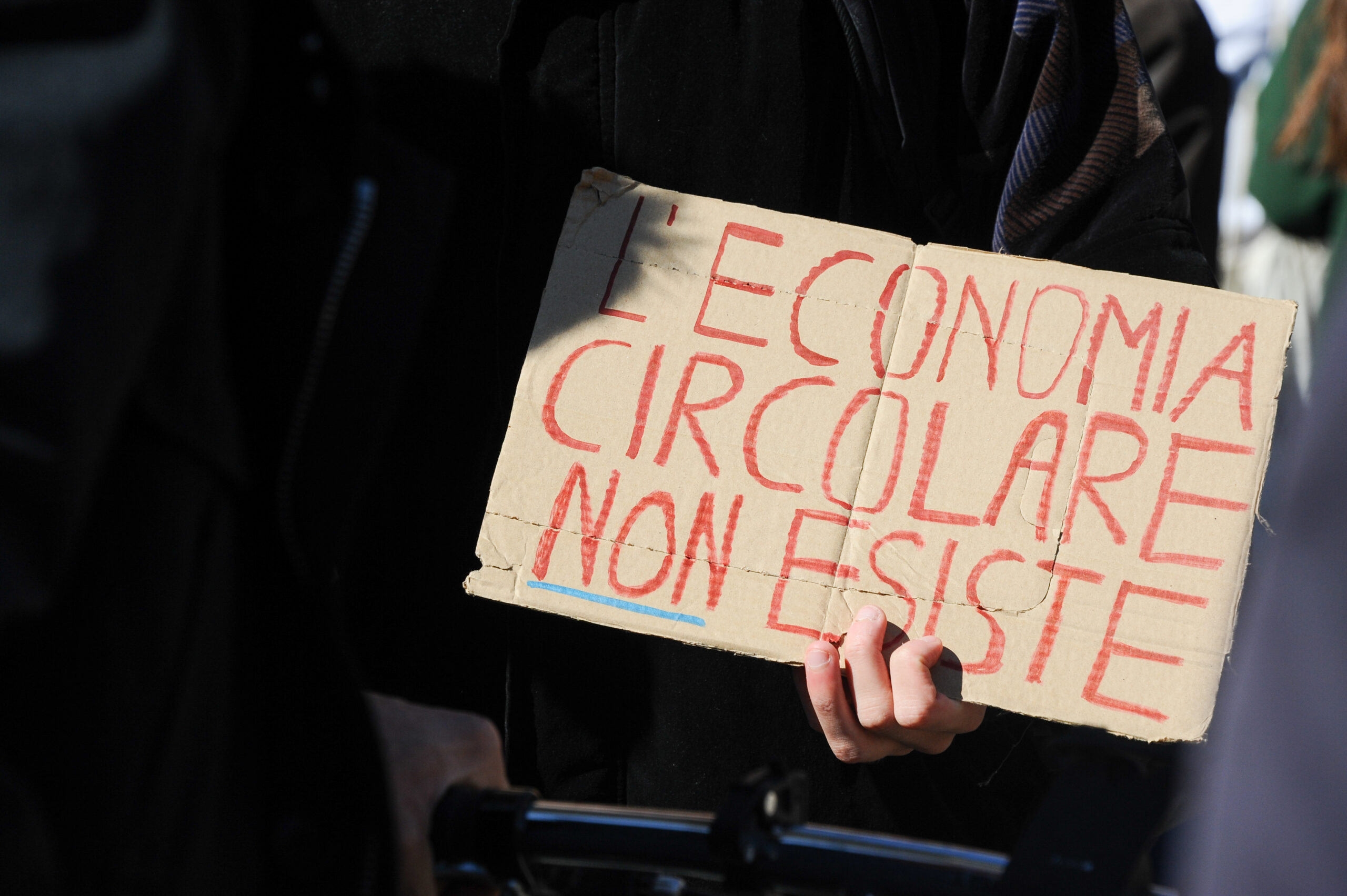
    MANIFESTAZIONE FRIDAYS FOR FUTURE STUDENTI RAGAZZI RAGAZZE PROTESTACARTELLO L'ECONOMIA CIRCOLARE NON ESISTE

    MANIFESTAZIONE FRIDAYS FOR FUTURE STUDENTI RAGAZZI RAGAZZE PROTESTACARTELLO L'ECONOMIA CIRCOLARE NON ESISTE

    Brussels – The Green Deal has failed, or at best has remained largely a dead letter. This is confirmed by the recommendations for 2027 drawn up by the European Commission, which are, on the whole, a series of “recycled” guidelines already addressed to Member States, but with one new element: with regard to human capital and vocational training, “this year’s recommendation emphasises the skills shortages in the sectors of clean energy, digital technology, and defence (including space), given their importance for the EU’s strategic autonomy,” states the document drawn up by the European Commission. 

    The point is that clean energy and digitalisation, even before being a source of strategic autonomy, are at the heart of the European Green Deal – the agenda for sustainable, competitive and innovative growth that underpins the mandate and political work of the first von der Leyen Commission. Launched at the end of 2019, seven years on, this agenda is showing its limitations and delays in implementation, particularly when one considers the shortage of key professionals. It is, in essence, an acknowledgement of a collective failure, perhaps also due to boycott by national governments with the complicity of the far right. 

    Seven years on from the launch of the Green Deal, the European Commission is calling on Member States to “promote fair and successful transitions towards clean energy and the digital economy, facilitating the shift from declining sectors to professions in high demand, including through careers guidance.” Furthermore, it reiterates “the urgency of taking action to improve education and training systems, stepping up efforts to strengthen basic skills, the quality of teaching and training, skills in artificial intelligence and the sciences”. In short, the EU of the dual transition appears to have done little or nothing to bring about the epoch-making transformation it promised.

    The Skills Observatory: so that Member States no longer have any excuses

    “It is up to the governments of the Member States to act on the basis of our findings,” summarises the Commissioner for Skills and Quality Employment, Roxana Mînzatu, in remarks that straddle the line between criticism and shifting the blame for the meagre results achieved in relation to the twin transitions. 
    With governments failing to act as they should, the Commission is stepping in by launching the European Skills Observatory, which gathers data, analyses, and evidence on current and future skills needs, alongside skills shortages, employment trends, job quality and working conditions. Rather than a tool for governments, it is a tool by the Commission for the Commission, intended to support the work of the EU executive within the framework of the European Semester, the coordination of economic policies. 
    Mînzatu has no doubts: “The launch of the European Skills Observatory, a key resource for understanding the skills Europe needs, will help us take steps in the right direction.”

    Banking and energy union: moving forward with what is (still) incomplete

    The rest of the recommendations for 2027 in The Eurozone and its Member States continue to be based on the principle of “spend less, spend better”: they call for a prudent fiscal policy, particularly for highly indebted countries such as Italy (but also Belgium, France, and Greece, with debt-to-GDP ratios exceeding 100 per cent), and efficient spending of whatever limited resources are available. 
    The to-do list also includes a recommendation to boost competitiveness by increasing investment in research and innovation, decarbonisation, and the development and adoption of artificial intelligence. Furthermore, it emphasises the need to invest in defence and to complete the Energy Union. Therefore, “the euro area, and the European Union as a whole, must also promote the single market, advance the Savings and Investment Union and complete the Banking Union.” In short, the recommendations for 2027 contain little that is new and a great deal – perhaps too much – that is old.

    English version by the Translation Service of Withub
    Tags: double transitioneurozonegreen dealrecommendationsskillswork

    Related Posts

    Il sindaco di Torino, Stefano Lo Russo, interviene al Torino Global Skills Summit 2026 [Torino, 24 novembre 2026. Foto: Emanuele Bonini]
    Industry & Markets

    Skills at the heart of EU competitiveness; the struggle to secure funding

    24 November 2026
    map visualization
    Photo de Andrey Metelevsur Unsplash

    Network tariffs: the principle of subsidiarity and the independence of energy regulatory authorities

    by Carlo Cambini - Luca Lo Schiavo *
    26 November 2026

    Why should the requirements governing the structure of tariffs across Europe be set in Brussels? Our view is that, within...

    L'eurodeputata (S&D), Annalisa Corrado, durante il dibattito in sessione plenaria. Crediti: Parlamento europeo

    Corrado (PD) commends the EU: “Its rejection of the COP31 final document is to be welcomed”

    by Iolanda Cuomo
    26 November 2026

    This year’s Climate Conference ended without an agreement, due to divisions over fossil fuels. The MEP (S&D) said, “We are...

    Massimiliano Giansanti, presidente di Confagricoltura e del COPA, alla manifestazione a Bruxelles. 26 Novembre 2026. Source: Confagricoltura

    EU budget: Confagricoltura sounds the alarm – without a strong agricultural sector, there is no future for Europe

    by Redazione eunewsit
    26 November 2026

    President Giansanti at the demonstration in Brussels: “Farmers contribute to Europe’s security. We need more safeguards”

    Coldiretti protesta contro i tagli proposti da Costa. Prandini: "Evitare che si creino agricolture di serie A e di serie B"

    Coldiretti protests against Costa’s cuts to the EU budget. Prandini: “We must not create a ‘first-class’ and ‘second-class’ agricultural sector”

    by Annachiara Magenta annacmag
    26 November 2026

    Hundreds of young farmers from across Europe took to the streets in Brussels to defend the Common Agricultural Policy and...

    • Director’s Point of View
    • Opinions
    • About us
    • Contacts
    • Privacy Policy
    • Cookie policy

    Eunews is a registered newspaper
    Press Register of the Court of Turin n° 27

    Copyright © 2025 - WITHUB S.p.a., Via Savona 127/B, 20144 Milano
    VAT number: 10067080969 - ROC registration number n.30628
    Fully paid-up share capital 50.000,00€


    No Result
    View All Result
    • en ENG
    • it ITA
    • Politics
    • Newsletter
    • World politics
    • Business
    • General News
    • Defence & Security
    • Health
    • Agrifood
    • Altre sezioni
      • Culture
      • Rights
      • Energy
      • Green Economy
      • Gallery
      • Finance & Insurance
      • Industry & Markets
      • Media
      • Mobility & Logistics
      • Net & Tech
      • News
      • Opinions
      • Sports
    • Director’s Point of View
    • Draghi Report
    • Eunews Newsletter

    Attention