- Europe, like you've never read before -
Thursday, 16 April 2026
No Result
View All Result
  • it ITA
  • en ENG
Eunews
  • Politics
  • World
  • Business
  • News
  • Defence
  • Health
  • Agrifood
  • Other sections
    • Culture
    • Diritti
    • Energy
    • Green Economy
    • Finance & Insurance
    • Industry & Markets
    • Media
    • Mobility & Logistics
    • Net & Tech
    • Sports
  • Newsletter
  • European 2024
    Eunews
    • Politics
    • World
    • Business
    • News
    • Defence
    • Health
    • Agrifood
    • Other sections
      • Culture
      • Diritti
      • Energy
      • Green Economy
      • Finance & Insurance
      • Industry & Markets
      • Media
      • Mobility & Logistics
      • Net & Tech
      • Sports
    No Result
    View All Result
    Eunews
    No Result
    View All Result

    Home » Director's Point of View » The European Union’s desperate need for foreign policy

    The European Union’s desperate need for foreign policy

    Lorenzo Robustelli</a> <a class="social twitter" href="https://twitter.com/@LRobustelli" target="_blank">@LRobustelli</a> by Lorenzo Robustelli @LRobustelli
    3 September 2024
    in Director's Point of View
    \

    There’s the Green Deal to be implemented (“without forgetting the needs of business,” as everyone is now reciting), the Banking Union to be done, and the agricultural and migration policies… there is a long list of important things that the EU must be able to accomplish in the coming years. But there is one without which all the others risk becoming details, in an EU that may become increasingly marginal, even on the trade front, one in which it is still a real player in the world. It is foreign policy.

    In foreign policy—careful protagonists and observers of the European one explain to us—the Union is racking up a series of defeats and humiliations that are before anyone’s eyes, no longer the stuff of professionals in the field. In the tragic war being waged by Israel against Palestine (for the West Bank is hit as well), the voice of Brussels is not even a background buzz. Individual initiatives by leaders that have gone (and are going) in the most diverse directions do not help build credibility in an area where it can be said that the EU counts for nothing.

    Russia’s war in Ukraine has so far been a good test of compactness, it is true, but the cracks are becoming more evident every day. Not only the Hungarian one; now there is also Italy refusing the use of its (fortunately for Ukrainians) few weapons outside the invaded country. So far, it was “easy”; it was defending a friendly country from blatant aggression. But “today, some political leaders within our Union, and even in this part of Europe, are muddying the waters of our discussion on Ukraine. They are blaming the war not on the aggressors but on the aggressed. They are blaming not Putin’s thirst for power, but Ukraine’s thirst for freedom,” Ursula von der Leyen had to admit last Friday, speaking in Prague.

    The Ukrainian issue is of primary interest to the Union, and so much of the future of the Twenty-Seven also passes from there. A defeat in Ukraine would be ruinous for the Twenty-Seven, but the problem is not only there. It is no mystery that national governments want to keep their foreign policy as an exclusive matter; it is no secret that, although frequently defending wholly legitimate ideas, one group of countries or another will eventually drive Josep Borrell, who has never really demonstrated remarkable mediation abilities and possibly not even political foresight, out of his mind.

    The Union needs foreign policy not to be crushed as an economic power. Until a few years ago, the world was relatively quiet for us in the centre/west of the Old Continent: we had the US as a reference point in foreign policy, we had economic understandings that allowed us to remain the largest market in the world and to grow (without exaggeration); China was a problem for stall pants with Mickey Mouse drawings on them, made without paying the rights to Disney perhaps, but in the end the problem was minimal, everyone had their own space.

    Now, things have changed. Since the time of Obama at least, the US has begun to manifest a willingness to shrug off the responsibility of managing our security, and the financial crises and COVID-19 have also fueled considerable trade tensions. Tensions fueled also by China, which has decided to expand its economic power in the world, which has taken advantage of various crises to get into the vital ganglia of so many economies, which is slowly eating the succulent Russian dish and which has also begun to sharpen the bayonets at its disposal. Then there is India, and there are the BRICS countries, which count new associates every day.

    Our military force is what it is, not really scarce, but scarcely operational; we have dozens of different weapons systems, different aircraft, different Armed Forces structures, and defence policies that, also rightly, are kept as national as possible. On this point, we don’t really scare anybody.

    On the other hand, we still have something to say and, more importantly, to defend on the knowledge, technology, industry, and trade front. Along with a desperate need for raw materials that, to be honest, we don’t know where to find.

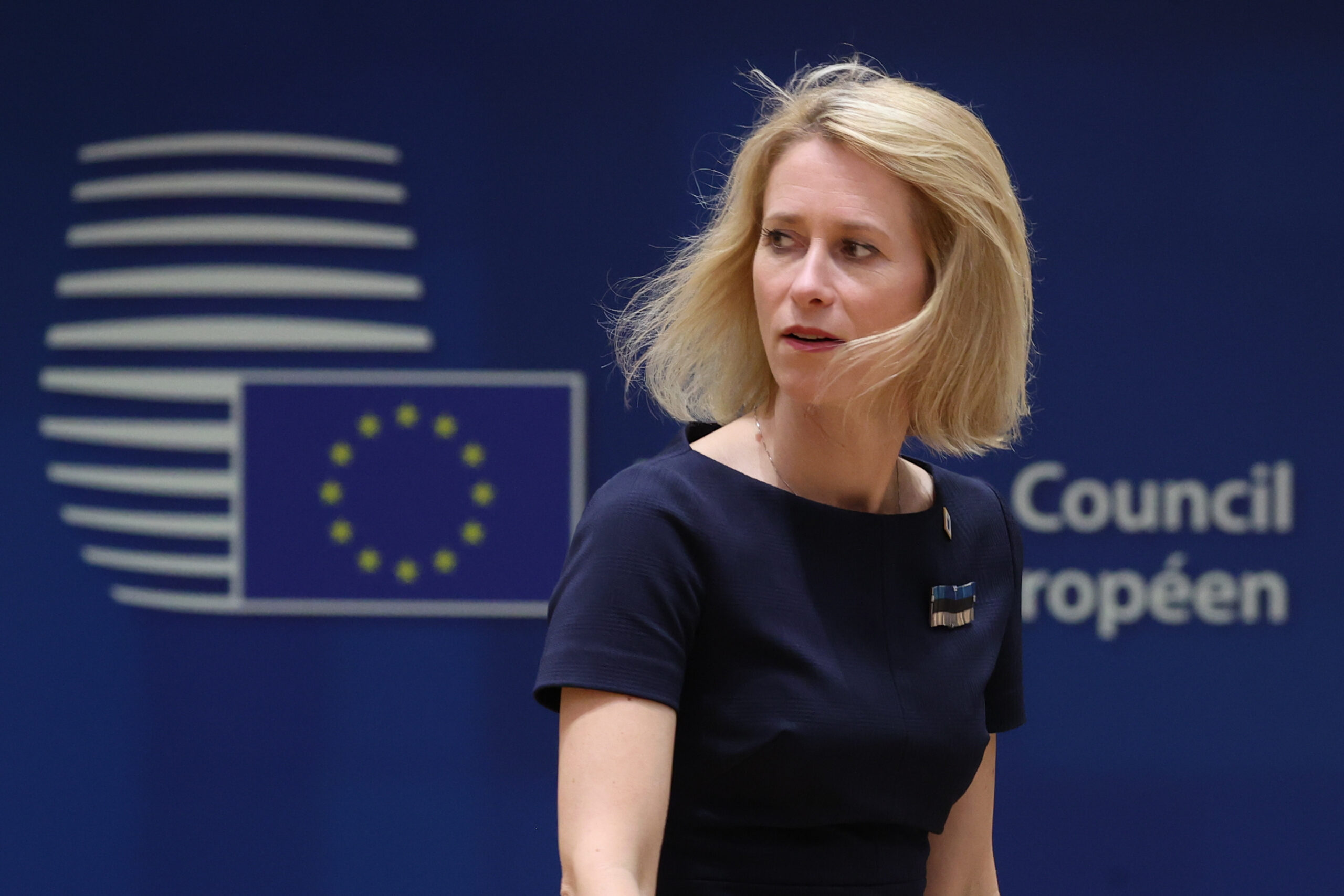
    To preserve our level of living and growth, we must have a meaningful role in the world, one that could, in theory, be very powerful, but even if it is only marginally relevant, it could still be valuable. The problem is not Kaya Kallas, her specific weight. Even if, in her place, there was a “Mario Draghi” of Foreign Policy, the problem is not solely with the person in charge (always competing with the President of the Commission, as we have seen).

    The theme is always the same: understanding the long-term common interest and working to defend it.


    English version by the Translation Service of Withub
    Tags: foreign policykaya kallas

    Related Posts

    Von der Leyen, Kallas alla Conferenza annuale ambasciatori 2026
    World politics

    Top officials sound the alarm to EU ambassadors: “We are in a new world, we need faster decisions”

    9 March 2026
    World politics

    Hungary blocks EU sanctions on Israeli settlers in the West Bank. Kallas: “It is not the majority that decides, but a single country”

    23 February 2026
    Difesa
    World politics

    Defence and foreign policy: European Parliament stands united against US threats

    21 January 2026
    Kaja Kallas
    World politics

    Tight budget and high inflation undermine EU foreign policy effectiveness

    26 February 2025
    Metsola Ucraina Febbraio 2022 Politica Estera
    World politics

    Parties’ election programs/ 4: Ukraine, Middle East, China and peace. The knots in EU foreign policy

    15 May 2024
    map visualization
    Da sinistra: l'ex-premier bulgaro, Boyko Borissov, il presidente russo, Vladimir Putin, l'omologo turco, Recep Tayyip Erdoğan, e serbo, Aleksandar Vučić, all'inaugurazione del gasdotto TurkStream nel 2020

    War in Iran boosts Russia: March oil and gas exports surge, driven by China and India

    by Emanuele Bonini emanuelebonini
    16 April 2026

    The CREA think-tank: "Exports up 52 percent in a month, generating revenues of 713 million euros a day". The EU...

    Terza conferenza umanitaria per il Sudan, Berlino, 15 aprile 2026. Fonte: Imagoeconomica via Esteri.it

    EU, member states pledge over 812 million euros to ease Sudan crisis

    by Giulia Torbidoni
    16 April 2026

    The Commission’s contribution amounts to 360.8 million euros, while 16 countries, including Italy, pledged the remaining Team Europe funds

    SCOMMESSE GIOCO D'AZZARDO MINORE MINORENNE GIOVANE LUDOPATIA LUDOPATICO GENERATE AI IA MINORI MINORENNI RAGAZZO RAGAZZI ON LINE ONLINE LUDOPATICI

    Online gambling: players may recover losses from games banned in their country

    by Ezio Baldari @eziobaldari
    16 April 2026

    A Member State may ban online casino games, including slot machines, as well as certain forms of online betting. The...

    SALVATAGGIO MIGRANTI AD OPERA DI MEDICI SENZA FRONTIERE GEO BARENTS ONG SOPRAVVISSUTO SOPRAVVISSUTI MIGRANTE MIGRANTI PROFUGO PROFUGHI

    Brunner: “The Middle East poses significant challenges, including on migration”

    by Emanuele Bonini emanuelebonini
    16 April 2026

    The Commissioner for Home Affairs: "For the time being, there are no increased migratory flows to the EU, but the situation...

    • Director’s Point of View
    • Opinions
    • About us
    • Contacts
    • Privacy Policy
    • Cookie policy

    Eunews is a registered newspaper
    Press Register of the Court of Turin n° 27


    Copyright © 2025 - WITHUB S.p.a., Via Rubens 19 - 20148 Milan
    VAT number: 10067080969 - ROC registration number n.30628
    Fully paid-up share capital 50.000,00€


    No Result
    View All Result
    • it ITA
    • en ENG
    • Politics
    • Newsletter
    • World politics
    • Business
    • General News
    • Defence & Security
    • Health
    • Agrifood
    • Altre sezioni
      • Culture
      • Diritti
      • Energy
      • Green Economy
      • Gallery
      • Finance & Insurance
      • Industry & Markets
      • Media
      • Mobility & Logistics
      • Net & Tech
      • News
      • Opinions
      • Sports
    • Director’s Point of View
    • Draghi Report
    • Eunews Newsletter

    No Result
    View All Result
    • it ITA
    • en ENG
    • Politics
    • Newsletter
    • World politics
    • Business
    • General News
    • Defence & Security
    • Health
    • Agrifood
    • Altre sezioni
      • Culture
      • Diritti
      • Energy
      • Green Economy
      • Gallery
      • Finance & Insurance
      • Industry & Markets
      • Media
      • Mobility & Logistics
      • Net & Tech
      • News
      • Opinions
      • Sports
    • Director’s Point of View
    • Draghi Report
    • Eunews Newsletter

    Attention