- Europe, like you've never read before -
Wednesday, 23 September 2026
No Result
View All Result
  • it ITA
  • en ENG
Eunews
  • Politics
  • World
  • Business
  • News
  • Defence
  • Health
  • Agrifood
  • Other sections
    • Culture
    • Rights
    • Energy
    • Green Economy
    • Finance & Insurance
    • Industry & Markets
    • Media
    • Mobility & Logistics
    • Net & Tech
    • Sports
  • European 2024
    Eunews
    • Politics
    • World
    • Business
    • News
    • Defence
    • Health
    • Agrifood
    • Other sections
      • Culture
      • Rights
      • Energy
      • Green Economy
      • Finance & Insurance
      • Industry & Markets
      • Media
      • Mobility & Logistics
      • Net & Tech
      • Sports
    No Result
    View All Result
    Eunews
    No Result
    View All Result

    Home » Energy » Czechia ends its dependence on Russian oil

    Czechia ends its dependence on Russian oil

    After nearly six decades of operation, Prague is shutting off the tap on the Druzba pipeline that transports Moscow's crude oil to Central and Eastern European countries. It will now import it from the German-Italian infrastructure

    Francesco Bortoletto</a> <a class="social twitter" href="https://twitter.com/bortoletto_f" target="_blank">bortoletto_f</a> by Francesco Bortoletto bortoletto_f
    18 April 2025
    in Energy, Politics
    Oleodotto Druzhba

    This picture taken on May 19, 2022 shows a pressure gauge at an endpoint of the oil pipeline Druzhba in Slovak refinery Slovnaft in Bratislava, Slovakia. Slovakia’s government on May 18, 2022 backed a proposal for a special tax on Russian oil processed in the country. (Photo by VLADIMIR SIMICEK / AFP)

    Powered by powered by evolution group

    Brussels – Goodbye, Russian oil. After decades, Czechia has ended its dependence on Moscow’s crude. After completing work on the TAL pipeline (running from Italy), Prague can now supply itself entirely through Western routes.

    “After about 60 years, our dependence on Russia is over,” Czech Prime Minister Petr Fiala told reporters yesterday (April 17) while speaking at the depot in Nelahozeves, about 25 kilometers north of the capital. “For the first time in history, the Czech Republic is fully supplied with non-Russian oil, and entirely via Western routes,” the premier, an ally of Giorgia Meloni in Europe in the ranks of the Conservatives and Reformists, added.

    After 60 years we are independent from Russian oil! pic.twitter.com/FHPN7K9Rjm

    – Petr Fiala (@P_Fiala) April 17, 2025

    In Nelahozeves, the arrival of the first supplies via the Transalpine Pipeline (TAL) was being celebrated. The pipeline connects the port of Trieste with Karlsruhe and Neustadt an der Donau in Germany, passing through Austria. Following work completed at the end of last year by the Czech operator Mero, the TAL is now connected to the Ingolstadt-Kralupy-Litvínov (IKL) pipeline, which transports crude oil from Germany into the Czech Republic.

    As a result of this connection, Prague’s annual capacity has risen to 8 million tons of oil, a figure in line with the Central European country’s energy needs. This infrastructure became necessary after Prague decided, following the large-scale Russian invasion of Ukraine, to no longer purchase oil from the Federation.

    Since the 1960s, Czechia has been receiving crude oil from Moscow via the Druzhba (literally “Friendship”) pipeline, which in the days of the USSR supplied Western members of the communist bloc and is still the world’s longest pipeline, a snake of metal that winds some 4,000 kilometers across the Eurasian continent. However, Prague stopped purchasing from the Druzhba in March, resorting to domestic reserves while awaiting the TAL upgrade.
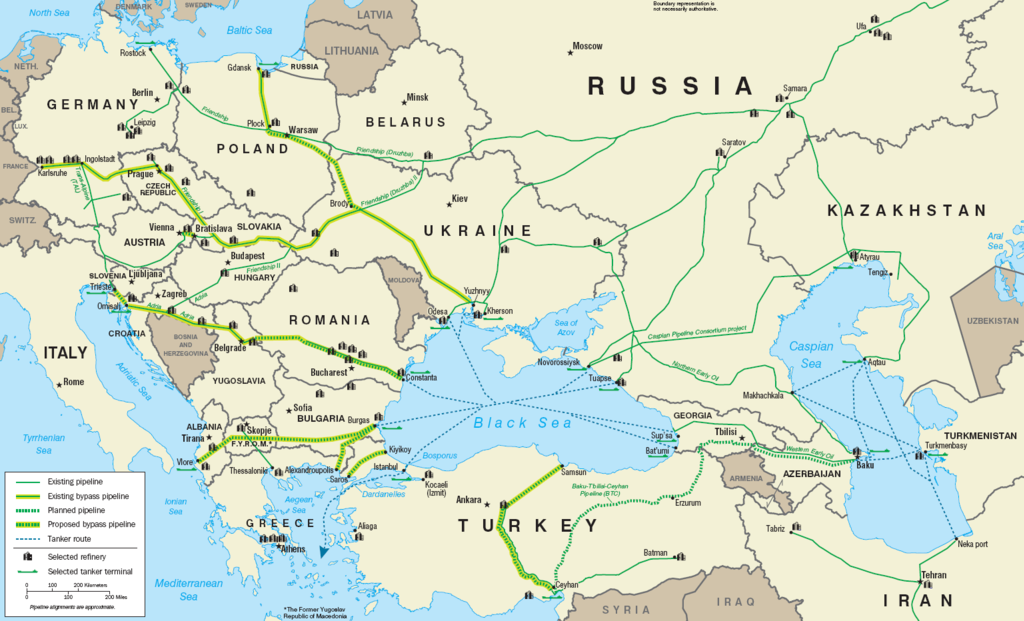
    Druzhba
    The Druzhba pipeline and oil distribution network (photo: Wikimedia Commons)

    According to figures provided by the Ministry of Industry in Prague, Czechia imported approximately 6.5 million tons of oil in 2024, of which 42 percent came from the Druzhba (a figure down from 58 percent in the previous two years). According to the national operator Mero, Druzhba is still functioning, and operations could resume in the future, but their feasibility is currently under exam.

    To date, Druzhba still supplies Hungary and Slovakia, the two most pro-Russian members of the EU, who have long been engaged in a battle with Brussels and Kyiv on supplies from Moscow.

    English version by the Translation Service of Withub
    Tags: czechiadruzbapeter fialarussiarussian oiltal

    Eunews Newsletter

    Related Posts

    Kaja Kallas
    World politics

    Ukraine, the Twenty-seven at work on 17th sanctions package against Moscow

    14 April 2025
    Oleodotto Druzhba
    Politics

    Ukraine stops Lukoil transit, Hungary and Slovakia rise up

    23 July 2024
    map visualization
    Il presidente russo Vladimir Putin e l'oligarca Aliser Usmano, ex presidente della Federazione di scherma. Source: Imagoeconomica

    EU countries reach an agreement on sanctions against Russia: a three-year extension, but the oligarchs Usmanov and Fridman remain excluded

    by Giulia Torbidoni
    22 September 2026

    The Irish Presidency of the Council commented: "To maintain the scheme, we have reached a difficult compromise"

    Pieno di benzina. Crediti: Erik Mclean via Unsplash

    Eurostat: fuel prices in the EU up 23.8 per cent in August 2026 compared with the previous year

    by Iolanda Cuomo
    22 September 2026

    Brussels – Fuel prices are soaring. According to Eurostat, the European Union’s statistical office, in August 2026, the price of...

    Emmanuel Macron

    Macron writes to von der Leyen: exemptions from EU rules are needed to tackle high fuel prices

    by Annachiara Magenta annacmag
    22 September 2026

    Paris aims to “strengthen” its import and production capacity in the short term, thereby curbing price rises. But it makes...

    Banchi di scuola. Crediti: Haseeb Modi via Unsplash

    Education: less than 30 per cent of EU teachers receive training in artificial intelligence

    by Iolanda Cuomo
    22 September 2026

    Today, the European Commission published two reports on the implications of AI and digital technologies in schools across Europe. Mînzatu...

    • Director’s Point of View
    • Opinions
    • About us
    • Contacts
    • Privacy Policy
    • Cookie policy

    Eunews is a registered newspaper
    Press Register of the Court of Turin n° 27

    Copyright © 2025 - WITHUB S.p.a., Via Savona 127/B, 20144 Milano
    VAT number: 10067080969 - ROC registration number n.30628
    Fully paid-up share capital 50.000,00€


    No Result
    View All Result
    • it ITA
    • en ENG
    • Politics
    • Newsletter
    • World politics
    • Business
    • General News
    • Defence & Security
    • Health
    • Agrifood
    • Altre sezioni
      • Culture
      • Rights
      • Energy
      • Green Economy
      • Gallery
      • Finance & Insurance
      • Industry & Markets
      • Media
      • Mobility & Logistics
      • Net & Tech
      • News
      • Opinions
      • Sports
    • Director’s Point of View
    • Draghi Report
    • Eunews Newsletter

    No Result
    View All Result
    • it ITA
    • en ENG
    • Politics
    • Newsletter
    • World politics
    • Business
    • General News
    • Defence & Security
    • Health
    • Agrifood
    • Altre sezioni
      • Culture
      • Rights
      • Energy
      • Green Economy
      • Gallery
      • Finance & Insurance
      • Industry & Markets
      • Media
      • Mobility & Logistics
      • Net & Tech
      • News
      • Opinions
      • Sports
    • Director’s Point of View
    • Draghi Report
    • Eunews Newsletter

    Attention