Brussels – Camps, warehouses for armored vehicles, shelters for fighter planes, and helicopter bases. In the past few days, these structures have begun to appear along the Russian side of the border with Finland, which stretches over 1,300 kilometers. The satellite images, published May 19 by the New York Times and confirmed by NATO sources, clearly show a reinforcement of Russian military infrastructure close to the Finnish border.
In Kamenka, only 60 kilometers from the border, over 130 military tents have been set up, capable of housing some 2,000 soldiers. In Petrozavodsk, 160 kilometers further south, three large sheds capable of housing dozens of armored vehicles have appeared. At the same time, the reopening and upgrading of the Severomorsk-2 base in the Arctic Circle marks a further step towards the remilitarisation of the region.

Finland, which abandoned historic neutrality to join NATO in 2023, is now the new and largest frontline of the Atlantic Alliance. Helsinki’s response was swift. In addition to closing its land border with Russia in November 2023, in reaction to Moscow’s alleged attempt to create an artificial migration crisis, Finland accelerated the construction of a defensive barrier along its eastern border. The project involves the construction of a 200-kilometer-long barrier equipped with cameras and sensors that can distinguish between humans and animals. At the moment, 35 kilometers have already been completed.
General Sami Nurmi, head of the strategic department of the Finnish Defense Forces, stated that the country monitors Russian movements ‘very closely’ and that the goal, as part of NATO, is “to prepare for the worst.” According to Nurmi, there is no immediate military threat, but it is clear that Moscow is preparing for a post-Ukraine phase in which it could bring back to the Finnish border some of the troops now deployed in the conflict. Despite the still moderate extent of the Russian movements, the area’s strategic significance is relevant. The Finnish border puts Russia in direct contact with NATO along a line that passes close to St. Petersburg and the crucial military node of the Murmansk peninsula, home of the Northern Fleet and nuclear forces.
Faced with these threats, Finland chose to take a decisive approach. The government announced the increase in defense spending to 3 percent of GDP by 2029 and the extension of the maximum age for reservists to 65, aiming to be able to mobilize one million citizens by 2031. An impressive army capable of deploying 284,000 soldiers in an emergency, supported by one of the most powerful artilleries in Europe and extensive ammunition depots. In addition, Helsinki has ordered 64 F-35 fighters worth EUR 8.4 billion to replace the F/A-18 fleet. The first deliveries are scheduled to arrive this year, further strengthening Finnish deterrence and fully integrating it into NATO’s operational strategies. The civil society has not been idle either. Interest in emergency preparedness courses has increased, with hundreds of Finns, particularly women, enrolling in training programs on survival, first aid, and the use of weapons, a sign of a population that, although accustomed to the threatening presence of its eastern neighbor for decades, has realized that the time for neutrality is over.
Therefore, Finland prepares itself with lucidity and determination in this tense but not yet explosive context. The future will tell whether this will remain merely a line of mutual deterrence or if the boundary between prevention and open confrontation will grow even thinner. In the meantime, Europe is entrenching itself in the north.
English version by the Translation Service of Withub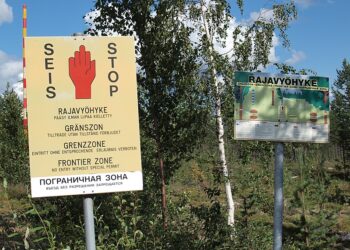

![[foto: European Council]](https://www.eunews.it/wp-content/uploads/2026/03/euco-260319-120x86.jpg)