Brussels – A new report from the European Commission highlights a positive shift in education funding in the EU, providing a boost to the Union’s competitive advantage. Entitled “Investing in Education 2025,” the study (full text available at this link) details the multiple economic and social benefits, showing that public investment in education is recovering after the setbacks caused by the COVID-19 pandemic. However, it has not yet returned to pre-crisis levels. This increase supports the objectives of the Union of Skills strategy and suggests promising benefits for the region’s economy and society.
In 2023, EU countries spent a total of EUR 806 billion on education, according to the report. National expenditure on education averaged 9.6 percent of total public spending and 4.7 percent of gross domestic product, with differences between member states.
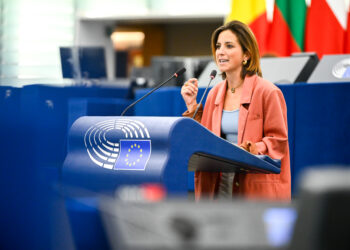
The Commission’s executive vice-president in charge of social rights and skills, Roxana Mînzatu, explains that “spending on education is an investment, not a cost. And the EU has to be ready for the future. The upward trend evidenced in the report shows that across the EU, education is again a driver of competitiveness and economic resilience. That is why the proposed next Multi-annual Financial Framework, presented on 16 July 2025, supports increased funding in education and skills, through National and Regional Partnership Plans, a new European Competitiveness Fund, and a reinforced Erasmus+ program.”
Recent estimates suggest that if more people had sufficient levels of basic skills by 2030, the GDP of European countries could increase by 8-10 percent compared with current projections. Moreover, people with higher levels of education tend to earn more: just one extra year of schooling can raise a person’s income by 7 percent in Europe.
What the Union is doing
The EU’s New Economic Governance Framework and Union of Skills open the door for more strategic education investment. While the primary responsibility for education financing lies with national governments, EU funding in the sector plays a crucial role in developing an adaptable and high-skilled workforce, particularly in preparation for the green and digital transitions. Approximately 148 billion euros has been earmarked for education and skills from 2021 to 2027 through EU instruments such as Erasmus+ and the European Social Fund+. A further 75 billion euros has been made available for investment under the Recovery and Resilience Facility for the period 2021-2026. Additional support to educational research is available through Horizon Europe.
English version by the Translation Service of Withub