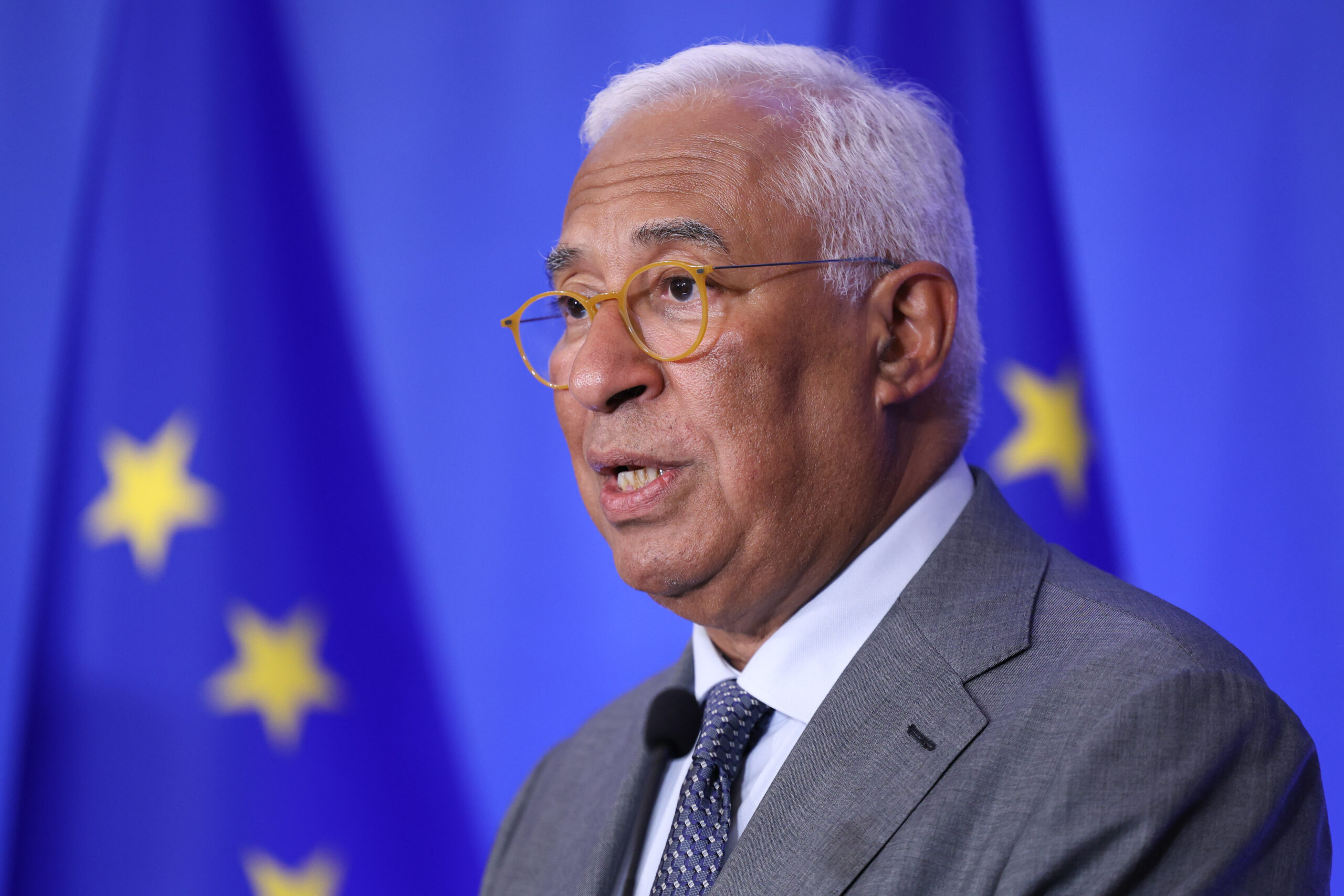
Brussels – The tour of the capitals of the President of the European Council, António Costa, has begun. A journey across the continent that will take him over the next three weeks to visit the chancelleries of all the member states, sounding out the political mood of governments as they return from their summer break, especially on the hottest topics of EU and global current affairs.
The Tour des Capitales, as it has been called, will allow gathering of views from the heads of state or government of the 27 member states and prepare the ground for upcoming European Councils and international summits that António Costa will have to preside over between now and the end of the year. He will begin with the informal European Council on 1 October (organized in Copenhagen by the Danish EU Presidency), followed by the formal ones on 23-24 October, and 18-19 December in Brussels, and the European Political Community summit on 2 October (also in Copenhagen).
Then, on 8 and 9 November, there will be the EU-CELAC summit in Colombia, between the 27 member states and the members of the Community of Latin American and Caribbean States (co-chaired by Colombia’s President Gustavo Petro), while on 24 and 25 it will be the turn of the EU-AU summit with the African Union in Angola, co-chaired by Costa and the host João Lourenço. Additionally, the President of the European Council will also attend the United Nations General Assembly, scheduled for 23-29 September in New York, and the COP30 in Brazil between 10 and 21 November.

“These conversations will help shape our common agenda for the coming months,” Costa said, stressing that his duty was to “listen and understand the priorities of all leaders” and to “build consensus” among the Twenty-Seven. It has been “an eventful and difficult summer,” notes one European official. Constant dialogue with leaders, primarily face-to-face, is therefore crucial: “The Tour des Capitales comes as the world is changing at incredible speed and we have to react,” the same source adds. Indeed, the heated — or, better, boiling — fronts have only multiplied in recent months, and in many cases, the EU is struggling to find its space.
For example, regarding Ukraine: While the US administration approves new military aid for Kyiv worth $825 million, Europe is grappling with the 19th package of sanctions against Moscow and cannot reach an agreement on the security guarantees with which the Old Continent should monitor a possible ceasefire (“they have not yet been entirely defined,” admits the official). After all, following the sudden acceleration in mid-August, negotiations have stalled again.
Moreover, a crucial component of these guarantees should be Kyiv’s entry into the twelve-star club. Brussels has long designated enlargement as a geostrategic priority, but there is one member state—Viktor Orbán‘s Hungary—that keeps getting in the way and blocking everything, from accession negotiations to aid for Ukraine to sanctions on the Kremlin. When he travels to Budapest, Costa will attempt to break the impasse, also counting on the pressure allegedly being exerted by the White House occupant on the Hungarian premier.

Another sensitive issue on the European agenda is the Middle East. “We have not been able to reach unanimity and not even a qualified majority on several dossiers,” the official acknowledges, and “the EU should be able to act in the face of disproportionate use of force from Israel.” However, at the moment, “there is no total agreement” – as clearly illustrated by the lack of decision on the partial suspension of Horizon+ funds for Tel Aviv – although, he says, there has been an “evolution” in the position of the leaders.
Regarding trade, the main issue is undoubtedly US tariffs. For the EU official, the agreement made with Washington is “far from ideal,” of course, but still “the best we could get.” In the European Council’s reading, the response from Brussels was “smart and rational,” and now the Twenty-Seven expect the new framework to be “respected and implemented by both sides” in a way that ensures stability and predictability.
In short, Costa will need all the unity he can muster from the chancelleries. And not only on foreign policy, but also on the Union’s domestic agenda. For example, the former Portuguese prime minister aims to come out of the informal summit in early October with a clearer idea of the positions of the 27 member states on defense, to immediately start working on the roadmap for 2030 – which the Commission should produce in the following weeks – and to exploit the European Council at the end of the month to provide a more precise political direction.
The same applies to the negotiations on the next EU budget (2028-2034): we are still at the beginning, it is true, but Costa intends to “listen to the reactions of the capitals to the Commission’s proposal, draw up an indicative timetable, and put it on the agenda of the December summit,” the official confirms. The ambitious goal is “to reach a conclusion by the end of 2026.”
Kicking off my #tourdescapitales around the 27 EU member states in Brussels with a meeting with @Bart_DeWever.
In the EU, every voice matters, and proximity is essential to understand each country’s priorities and concerns. These working meetings with the leaders will help shape… pic.twitter.com/iePSZalM9p
– António Costa (@eucopresident) August 27, 2025
Costa’s tour began on 27 August in Brussels, where he met with Belgian Prime Minister Bart De Wever. The next stop, scheduled for Monday (1 September), is Slovenia: the President of the European Council will attend the Bled digital forum on the same day. The next day, he will see the Prime Minister Robert Golob in Ljubljana.
On the same day, Costa will travel to Zagreb for talks with Croatian Prime Minister Andrej Plenković, while on 3 September, he will meet Austrian Chancellor Christian Stocker in Vienna. On 4 September, it will be the turn of Romanian President Nicușor Dan in Bucharest and Bulgarian Prime Minister Rossen Jeliazkov. Costa will conclude the first part of his tour in the Czech Republic and the Netherlands, where he will meet with the respective heads of government, Petr Fiala and Dick Schoof. The detailed ‘line-up’ will be announced week by week.
English version by the Translation Service of Withub


![Da sinistra: il presidente del Consiglio europeo, Antonio Costa; il presidente dell'Ucraina, Volodymir Zelensky: la presidente della Commissione europea, Ursula von der Leyen [Bruxelles, 18 giugno 2024. Foto: European Council]](https://www.eunews.it/wp-content/uploads/2026/06/euco_ua260618-120x86.jpg)
![[foto: Saverio De Giglio/imagoeconomica]](https://www.eunews.it/wp-content/uploads/2026/10/cpt-120x86.png)