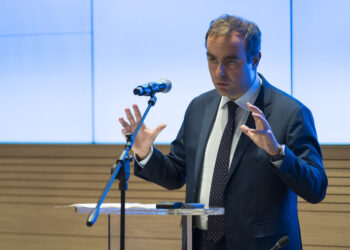
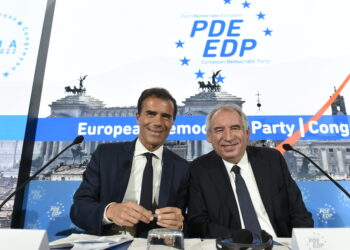
Brussels – The government of the French Prime Minister Sébastien Lecornu lasted very little, nothing at all. This morning, October 6, the abrupt resignation occurred, despite the presentation of the new government’s composition only yesterday. “There were no conditions to remain prime minister,” he told the press after resigning.
The Macron loyalist and former Minister of the Armed Forces, who in September had been appointed by President of the Republic Emanuel Macron as the occupant of the Palais Matignon, appeared to have secured an agreement with other political forces for his government. An appeal for dialogue accompanied yesterday’s announcement of the 18 ministers: “We must be negotiators,” Lecornu had stated. A phrase that turned against him, given the heavy criticism of the appointments that came from across the parliamentary spectrum.
Whoever succeeds the prime minister with the shortest mandate in the history of the Fifth Republic – his executive lasted 27 days – will have to find a balance in a few months to present a budget law. A far from ideal scenario, especially considering the economic situation: political uncertainty has dragged down the Paris CAC stock exchange index by around -1.50 percent this morning.
Lecornu’s negotiations
It was already clear last night that Lecornu’s hard line would not have paid off. The former Defense Minister presented a government team two-thirds similar to the previous one of the centrist François Bayrou. The choice sent the Socialists, who were supposed to support him, into a rage. The leader of the Socialist Party (PS) in the National Assembly, Boris Vallaud, had given clear indications, denouncing the obstinacy of Macron loyalists, who “every day plunge the country a little more into chaos,” rendering the chances of support for the government null and void.
The most extreme fringes of the Assembly also employed warlike tones, with Jean-Luc Mélenchon, leader of the left-wing La France Insoumise party, labeling the 18 ministers as “a procession of revivals.” Marine Le Pen, on the right, leader of the Rassemblement National, called for the dissolution of the National Assembly: “We are at the end of the road. The farce has gone on long enough,” calling for a return to the polls
Macron vs Francia
France’s fifth political U-turn in the Macron II era captures the mood of the moment and reflects the decline in popular support for Le Président’s cause. France has forgotten what stability means since the dissolution of the National Assembly after a significant failure in the 2024 European elections, with five governments in three years. Sébastien Lecornu’s experience was only the most tragic example of the insoluble divide between the elected parties and the Elysée leadership.
There are now three options for Macron: forming a sixth coalition close to him, appointing a politician further away, or resigning early, which would pave the way for new elections. The President of the Republic has consistently rejected the latter option, declaring that he intends to remain in office until his term expires in 2027.
English version by the Translation Service of Withub