![[Bruxelles, 10 dicembre 2025]](https://www.eunews.it/wp-content/uploads/2025/12/reti-energia-1.png)

Brussels -The problem exists: Europe lacks a real, effective, and efficient interconnection of energy networks, due to structural delays that cost billions of euros each year. To give an idea of the problem, in 2022 alone, the lack of a grid worthy of the name resulted in 5.2 billion in additional costs to address congestion in the energy transmission system, and this maintenance bill could rise to 26 billion in 2026. Conversely, an integrated market could save 40 billion euros per year, and avoid the risk of losing 41 Gigawatts of cross-border energy.
The problem within the problem is that the European Commission, faced with this situation, is proposing a muddled, hasty solution which—if one tries to see the positive side—produces nothing more than political pressure to act. Money is needed that does not exist and is merely assumed to be available. Between the two scenarios, however, the difference is enormous. Work on infrastructure is only recommended, left to the discretion of the Member States.
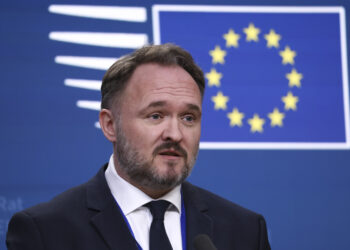
However, Brussels is making efforts to encourage states to make the necessary investments. “A truly interconnected and integrated energy system is the foundation of a strong and independent Europe,” emphasises Dan Jørgensen, Commissioner for Energy and Housing. For the EU to be truly competitive, “we need an energy infrastructure network of cables, pipes and grids that is up to date, fully interconnected, and that enables clean, affordable, homegrown energy to flow freely and securely to every corner of our Union.”

Make better use of what is there, and share the costs
The first imperative in the Commission’s strategy to be put to the test is to wait before starting site construction. One wants to first maximise the use of existing infrastructure before investing in new distribution capacity. Translated: first upgrade the networks already in place, then imagine their extension or new networks.
The second principle is to think more in terms of Europe and less in terms of single nations. In times of sovereignism, it is suggested that countries invest in cross-border projects for true integration. Here, the European Commission recommends voluntary pooling of cross-border projects of common interest and projects of mutual interest, with cost-sharing.
Money, and where to find it. Onwards with simplification
To create the European Union of energy and energy networks, money is needed. The European Commission estimates that 1.2 trillion euros will be needed for the EU’s electricity networks until 2040, of which 730 billion euros will be needed for distribution networks alone and 240 billion euros for hydrogen networks. “Significant” investments are therefore needed, the EU executive acknowledges, to ensure that the EU is really ready and can achieve climate neutrality by 2050.
How to respond to these needs? The European Commission hopes to mobilise private resources with the leverage effect of the 2028-2034 Multiannual budget. It is emphasized that a decision has been made to quintuple the budget for energy networks, rising from 5.8 billion euros to 29.91 billion euros. But this is just a proposal, moreover opposed by the Parliament and the Council, and these resources are the subject of broader negotiations that are only just beginning. The calculation is based on resources that are not yet available, but may materialize. However, the EU’s basic approach is co-funding with European resources, as in the case of support for trans-border projects announced in the spring.
In this context, the answer used for everything by now is “simplification.” The Commission is proposing to change the rules to speed up the issuance of permits and concessions for energy networks and charging stations, and to simplify the selection process for projects of common interest and projects of mutual interest. This will allow tapping private capital.
Energy highways, 8 corridors for the Energy Union
The Commission has, in its admittedly shaky strategy, an overview. The von der Leyen team decides to replicate for energy the mobility corridors systems envisaged by the TEN-T major network projects. Hence, the idea of eight energy highways, involving all of Europe.

Iberian Peninsula (electrical interconnections across the Pyrenees for better integration of the Iberian Peninsula), Marine inter-connector (to end the electrical isolation of Cyprus by connecting it to continental Europe), Harmonious Connection (to strengthen the electrical interconnection of the Baltic States),Trans-Balkan Pipeline (TBP, to reverse the flow of gas to increase the resilience of energy supplies in the Balkan region and the Eastern neighbourhood), Bornholm Energy Island (to transform the Baltic Sea into an offshore interconnection hub), South-Eastern Europe (for price stability and energy security in South-Eastern Europe, including through storage), SouthH2 Corridor (linking Tunisia-Italy-Austria-Germany), and South-Western Hydrogen Corridor (from Portugal to Germany). These are the major projects to work on together.
“This is exactly what we are proposing today,” emphasises Energy Commissioner Jørgensen. It is, he insists, “a common European energy project that supports affordable living, economic competitiveness, security and decarbonisation.” If things go as planned. Because, he adds, “560 billion euros can be saved between now and 2050 if states coordinate better in planning infrastructure projects.” If. The EU strategy is there, but it does not appear solid.
Teresa Ribera, Executive Vice President for a Competitive and Clean Transition, has no doubts: “With this package, households will benefit from more stable prices and cheaper bills.”
English version by the Translation Service of Withub