Brussels – During the second edition of the Annual Meeting of Connact, the events platform that promotes dialogue between private entities and institutions through networking opportunities, Italian government representatives met with European decision-makers in Brussels to discuss major issues for the future, ranging from CAP funds to defence investments, human rights, and technological competitiveness.
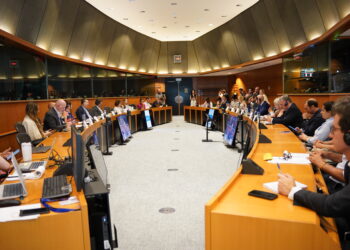
Nearly 50 companies, associations and third sector organisations, which together account for 44 per cent of Italy’s GDP, met with representatives of European, national, and regional institutions at 13 round tables—agri-food, circular economy, defence, democracy and rights, energy, finance, food, industry and markets, media, logistics, technology, pharmaceuticals, research and innovation—which summarise the priorities of the European agenda.
The speech by Antonella Sberna, Vice-President of the European Parliament, focused on the importance of opportunities for the productive system and politics to meet and exchange ideas: “Over a thousand people in one room means that the alliance between institutions, businesses, and citizens exists. We are now in the middle of the legislative term, working on budgets, but above all on how we want to change this Europe. All the parliamentarians present may have different visions, different perspectives, but this unites us. Europe is currently facing its most difficult challenge: connecting practicality with reality and vision to give our economic system a future.”
From Pina Picierno, Vice-President of the European Parliament, came an assessment of the first year and a half of the legislature: “We have faced truly momentous changes, and while the last term was marked by the pandemic crisis and the EU’s effective response to its citizens, the current term is marked by conflicts that are undermining all our established certainties. Atlantic relations are in crisis as never before, and we are seeing the re-emergence of protectionist practices. What we are facing is not a picture of prosperity and growth. We must be aware of what needs to be done to respond. We are not facing a crisis as usual, because the choices and decisions will have to be unusual. We do not need declarations of intent. For each issue discussed, we need to take action starting tomorrow.
The major challenges facing the EU were the focus of the video message from Raffaele Fitto, Executive Vice-President of the European Commission: “We live in a world undergoing constant and profound change, which is becoming increasingly rapid. Just a year ago, at this time of year, the global picture looked very different. Some of the dynamics that are now profoundly affecting the economic and geopolitical balance had not yet manifested with the same intensity. The President of the United States had just taken office, and talk of tariffs was beginning. The European Union found itself operating in a profoundly changed and constantly changing context. Armed conflicts on our doorstep, growing trade tensions, and increasingly intense global competition. This scenario forced us to review our priorities, tools and methods of intervention. Europe had to strengthen its commitment to security and defence, but above all to the competitiveness of its economic and productive system. And it was clear from the outset of this Commission that the status quo was not an option. It was necessary to adapt to the new context, respond to emerging priorities and, above all, change methods. That is why our efforts have focused on two key words: simplification and flexibility. Simplification to make the internal market more competitive, flexibility to use resources more efficiently and effectively.
On strategies to make our country increasingly competitive, Vincenzo Celeste, Italy’s Permanent Representative to the EU, said: “Eighty per cent of the activities here in Brussels, if not more, concern the interests of all of us, regardless of political positions. It is essential for us, who are involved in drafting legislation, to listen to our business community. There have been discussions about challenges, and the biggest one is undoubtedly competitiveness: we are in a period of significant challenges for the EU, and in a world where the system of rules is being called into question, it is essential to rethink the EU’s approach. On February 12, there will be a meeting between heads of state in Liège, where competitiveness will be discussed. Italy arrives at this meeting with clear ideas, backed by an increasingly solid financial assessment and political stability that has created the conditions for a new centrality and specific weight within the EU. We need more regulatory simplification, which means eliminating unnecessary rules, but it also means a different approach to the way new ones are written. We must achieve simplicity by design. We need innovation and a revitalisation of the traditional energy-intensive industries most affected by the crisis. The automotive sector is a key litmus test. We must reduce strategic dependencies.
Italian Ambassador to Belgium Federica Favi recalled the embassy’s commitment and willingness to promote opportunities for sharing: “The country system works in Brussels and can contribute to the great European project: we talk to each other and exchange different ideas at all levels.”
Carlo Corazza, Director of the European Parliament Office in Italy, emphasised in his conclusions that “at a time of unprecedented challenges since the post-war period, we need to strengthen our Union, as 89 per cent of European citizens are calling for. The way to do this is to invest more in our strategic autonomy to defend our democracies and our freedom. The dialogue between European decision-makers and businesses, promoted by Connact and the European Parliament in Italy, is key to building a competitive, innovative Union with a strong industrial base that can attract investment. The success of the initiative, as evidenced by the large turnout of business representatives, MEPs, and senior officials, demonstrates how valuable this dialogue is.
The meeting provided an opportunity to consolidate Italy’s presence in Brussels and strengthen dialogue with the institutions, thereby stimulating active, proactive collaboration that is essential for addressing future challenges and seizing emerging opportunities.
The Connact Annual Meeting is organised by Fondazione Articolo 49 in collaboration with the European Parliament Liaison Office in Italy. Under the patronage of: AGID, Conference of Regions and Autonomous Provinces, ANCI, ENEA, National Research Council, APRE, Belgian-Italian Chamber of Commerce, Autonomous Region of Valle D’Aosta, Basilicata Region, Autonomous Province of Bolzano, Calabria Region, Emilia Romagna Region, Lazio Region, Liguria Region, Lombardy Region, Molise Region, Piedmont Region, Tuscany Region, Umbria Region.
The event is promoted by A2A, Assonime, Autostrade per l’Italia, Barilla, Bracco, Centromarca, Gruppo Chiesi, CIA Agricoltori Italiani, CONAI, Confartigianato, Confcooperative, Confetra, Consiglio Nazionale del Notariato, Edison, ELT Group, Enel, Eni, Fastweb+Vodafone, Federalimentare, Federcasse, FederlegnoArredo, Federvini, Ferrero Group, FiberCop, Fincantieri, Generali, FS Group, Intesa Sanpaolo, INWIT, IP Gruppo api, ITA Airways, Leonardo, Menarini Group, MFE – Media for Europe, Open Fiber, Pirelli & C., Snam, Terna, TIM, WindTre. Scientific Partners: APRE, National Research Council (IBBA, ISPA, STEMS), ENEA, IAI Institute of International Affairs, Guglielmo Tagliacarne Chamber of Commerce Study Centre, Milan Polytechnic. Speakers also include AGCOM, ASVIS, Intersos, AVSI, Save the Children Italy, and UNHCR.
Agence Europe, ANSA, Eunews, Gea Agency, HuffPost, L’Infografica, Radio Radicale, TGcom24, and Vatican News are media partners of the initiative.
English version by the Translation Service of Withub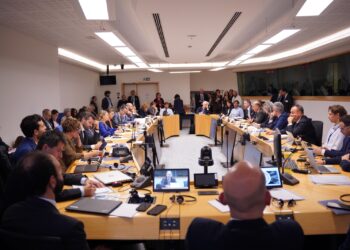



![[Copyright: European Union]](https://www.eunews.it/wp-content/uploads/2026/10/euco-261015-120x86.png)