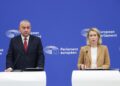

Brussels – Tax relief on labour, increased taxation on income and property, application of the “polluter pays” principle, and then the fight against tax evasion. The way to finance defence without burdening public finances or sacrificing social and welfare programmes is through the recipe that Commissioner for Economic Affairs, Valdis Dombrovskis, implicitly offers to national governments. Some of the clarifications may be found in the formula used to answer a parliamentary question filed by Greek MEP Nikolaos Anadiotis (NI), who is asking about the impact of triggering the clause that suspends the internal Stability Pact to finance defence spending.
Dombrovskis points out, first of all, that Member States are free to manage their own political agendas and that the temporary suspension of national expenditure control rules allows ensuring “a smoother transition to a structurally higher level of defence spending” without burdening public finances. To avoid worsening the budgetary situation, he suggests that “one avenue is to improve the quality of public finances, for example by shifting the tax mix towards sources that are less detrimental to growth“. This is where the guidance for governments lies.
Redefining the set of taxation policies as indicated by the Commissioner for the Economy may entail additional measures, such as reducing taxes on labour income and the tax burden on businesses, increasing taxes on real estate or property, and increasing green taxes for those who pollute the most. However, this is a slippery slope, as it exposes politicians to choices that could be considered unpopular and detrimental to their electoral prospects. However, Dombrovskis believes that this is the only way forward to “ease, in the short and medium term, budgetary pressures” on public service spending.
English version by the Translation Service of Withub