Brussels – Strengthening the competitiveness, sustainability and security of the entire European maritime sector. With these objectives in mind, two European Commission strategies for the maritime industry and ports were presented today (4 March). As such, the Strategies are not actual legislative initiatives and merely provide a vision framework to be followed up with more concrete action plans and legislative proposals.
“Europe is a maritime continent,” said Apostolos Tzitzikōstas, Commissioner for Sustainable Transport and Tourism, “and long before the development of motorways and railways, it was the sea that connected us Europeans with each other and with the rest of the world.” Even today, “three quarters of EU imports and exports are transported by sea, and even within the Old Continent, 30 per cent of commercial transport is maritime.” Despite these figures, according to the Greek politician, the European maritime industry is currently facing complex challenges—”from growing global competitiveness to intensifying geopolitical tensions”—and the two strategies drawn up by Brussels are designed precisely to offer suggestions on how to address them.
The first—on the maritime industry—concerns the shipbuilding and commercial maritime transport sectors. “The EU is a global leader in the construction of advanced technology ships and is one of the world’s leading providers of maritime transport services, accounting for over a third of global tonnage in all segments,” Tzitzikōstas pointed out. However, this strong position now seems increasingly threatened by “aggressive subsidy policies pursued by non-EU players, which distort market dynamics, and by the growing hostilities in the Middle-East, which undermine the sector’s resilience.” Against this backdrop, the Commission’s strategy proposes a series of measures to strengthen European leadership in shipbuilding and commercial transport, respectively. In the first case, the suggested actions are the creation of a European alliance of maritime value chains (to coordinate the activities of shipyards, shipowners, Member States and the Commission), the further development of high-tech shipbuilding and the launch of a new research and innovation programme for shipbuilding, called “Shipyards of the Future” and funded under the EU research fund, Horizon Europe.
As for the shipping sector, the Commission aims to increase its competitiveness by encouraging investors to choose EU flags for their ships (today, many European vessels fly the flags of other States) and by simplifying administrative procedures to reduce costs. Particular attention is also being paid to the sustainability of European ships in the future: Tzitzikōstas strongly emphasised the “need for fleet renewal and greater EU support for decarbonisation investments,” thus facilitating the use of clean and alternative fuels. As for how to obtain the money needed to finance the green transition, the Greek Commissioner referred to funds from the ETS (Emission Trading System)—the European CO2 emissions trading system—and on this point Tzitzikōstas did not spare national governments a rebuke: “ETS money must be returned to the sector that produced it (in this case the maritime sector, ed.) in order to facilitate decarbonisation. Unfortunately, I have to say that Member States are not doing this at the moment.”
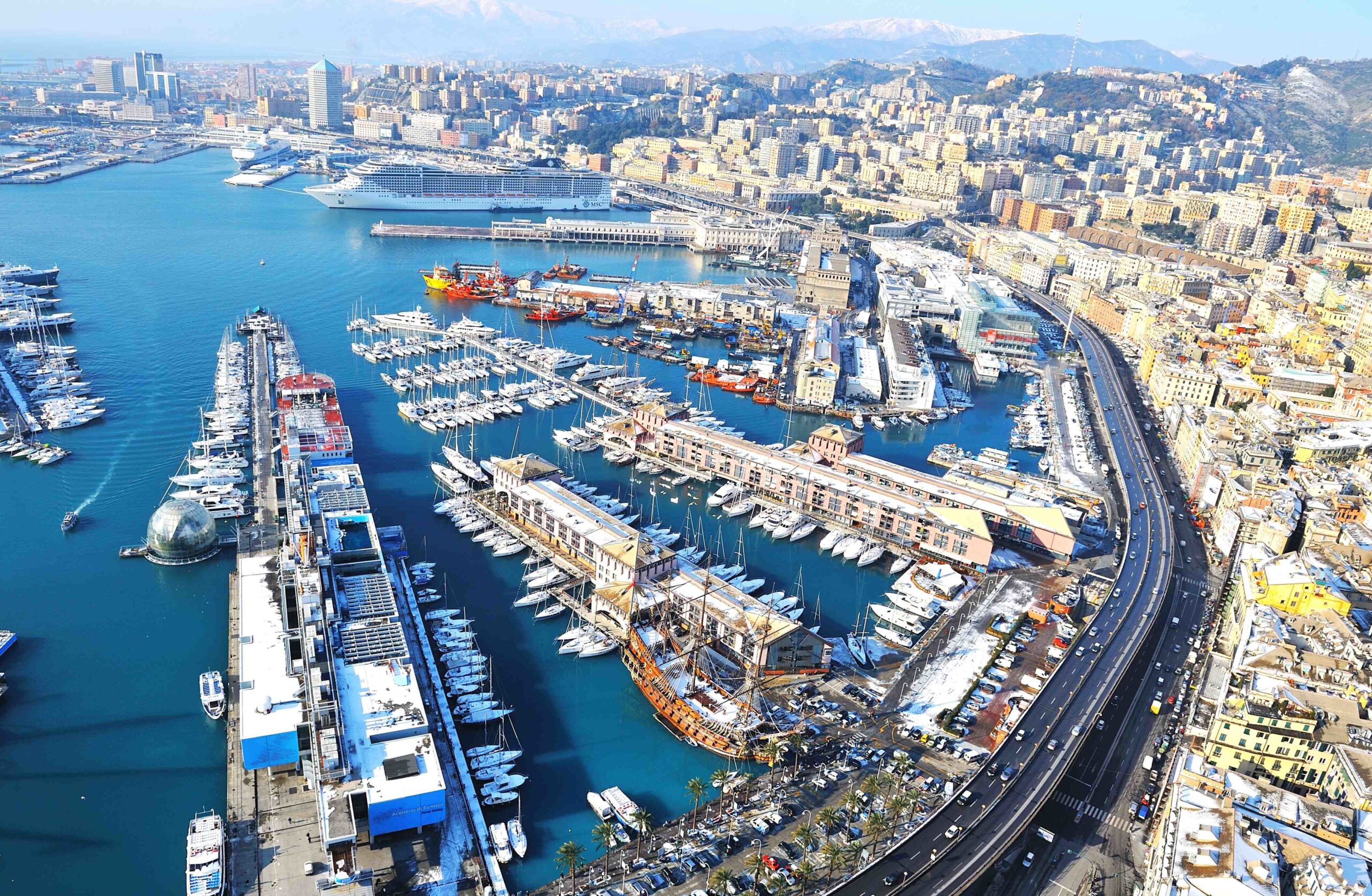
Ships are only half of what Tzitzikōstas calls “the maritime equation”. The other half is represented by ports, to which a second Strategy is dedicated: “Ports are the backbone of the European economy,” explained the Commissioner, pointing out that they handle 74% of the EU’s external trade, move over 3.4 billion tonnes of goods and welcome almost 395 million passengers every year. To further strengthen their competitiveness, the Commission proposes to encourage innovation, digitalisation, and integration with other transport infrastructure; develop stricter guidelines and controls on foreign ownership of European ports and EU investment in third-country ports; support their energy transition through measures such as the electrification of quays; and define a roadmap to make small and medium-sized ports more competitive.
But the most pressing issue, according to Tzitzikōstas, is security. “Ports are strategic entry and exit points, so they can be targets for external threats and organised crime,” warned the Greek politician. For these reasons—and even more so following the recent military escalation in the Middle East—the Commission proposes to strengthen EU legislation on combating maritime drug trafficking, intensify checks on the backgrounds of port workers to prevent criminal infiltration, establish a new forum for the exchange of best practices between cybersecurity services and port authorities, and introduce risk assessment and analysis systems for third-country ports.
“A world-class fleet requires equally excellent port hubs, and that is what the two strategies aim to achieve,” concluded Tzitzikōstas, whose enthusiasm was dampened right at the end. When the conversation turned to the Middle East conflict and a journalist asked him if he was concerned about the possible increase in transport costs as a result of the recent closure of the strategic Strait of Hormuz, the Greek Commissioner did not sugarcoat the pill: “Since the entire area has been declared a war zone, insurance costs will increase significantly and, yes, all this will create a very difficult situation to manage. For this reason, we are in constant contact with Member States and allies in the region.” The impression is that, on this issue, something more than a “simple” Commission Strategy is needed.
English version by the Translation Service of Withub