



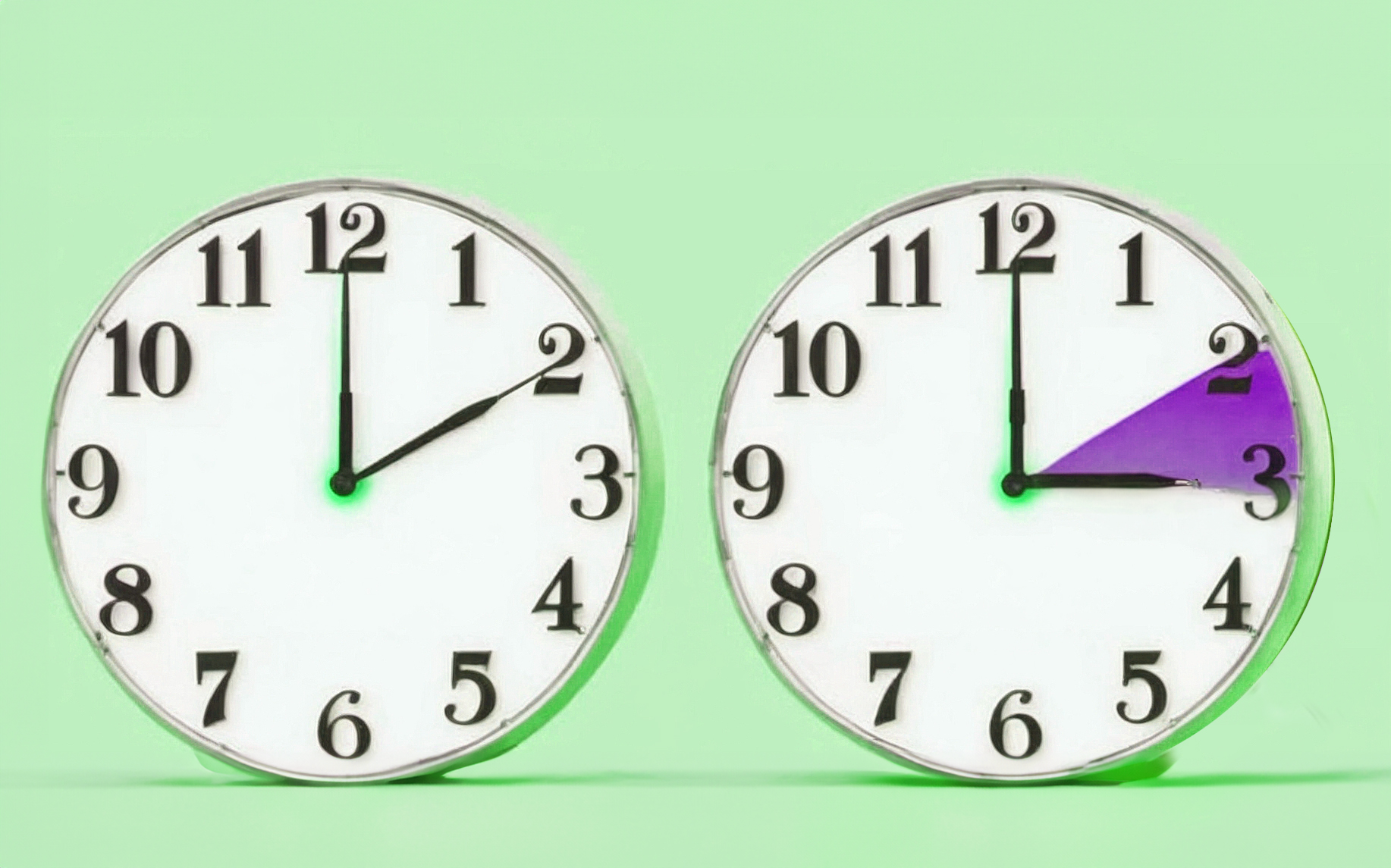

Brussels – On the night of Saturday, 25 to Sunday, 26 October 2025, people slept an hour longer because standard time returned. On the night of 28–29 March 2026, we will make up for that hour when daylight saving time returns. That night at 02.00, the clocks will go forward by one hour to 03.00. This will remain in place until the night of 24–25 October, when standard time will return.
For years, there has been debate within the European Union about abolishing this twice-yearly clock change. Spanish Prime Minister Pedro Sánchez was among the latest to speak out, stating in a social media video that “changing the clocks twice a year no longer makes sense,” and revealing that Spain has brought the issue to the attention of the EU Energy Council so that “the review mechanism can be put in place.”
In fact, in March 2019, the European Parliament approved a Commission proposal under which, by spring 2021, all European countries were to choose a time and stick to it, without any seasonal changes. However, the Parliament’s position subsequently got lost along the way, as governments never reached an agreement on its implementation.
What is certain is that the Nordic countries would benefit most from the abolition of daylight saving time, where summer days are long anyway and winter days short, with the alternation between light and dark being barely noticeable – or not at all – even if the clocks are moved forward or back by an hour. For southern countries, however, daylight saving time – by providing an extra hour of light in the evening and taking it away at dawn – enables significant energy savings for households and businesses, with a positive impact also on safeguarding the environment.
The Commission’s decision, and subsequently Parliament’s, had in fact raised some eyebrows, not least because it was based on a 2018 survey which found that 84 per cent were in favour of a “single” time zone. However, only 4.6 million of the 450 million European citizens took part in that survey, and 70 per cent of those surveyed were German.
According to some research, the twice-yearly clock change is a source of stress for many people, particularly among those living in Northern Europe. Switching from summer time to standard time makes winter days darker and shorter, which is thought to lead to depression.
By contrast, daylight saving time would upset the balance, because it suddenly increases the hours of light we are exposed to, destabilizing our metabolism.
In October 2024, a letter signed by 67 MEPs and promoted by the Irish member of the European People’s Party, Seán Kelly, called on Ursula von der Leyen to put an end to seasonal time changes back on the European Commission’s political agenda. A practice that “poses well-documented risks to health, safety and general well-being.” According to the signatories, several studies have shown that changing the clocks can “increase the risk of heart attacks and strokes, and lead to a spike in road accidents.”


