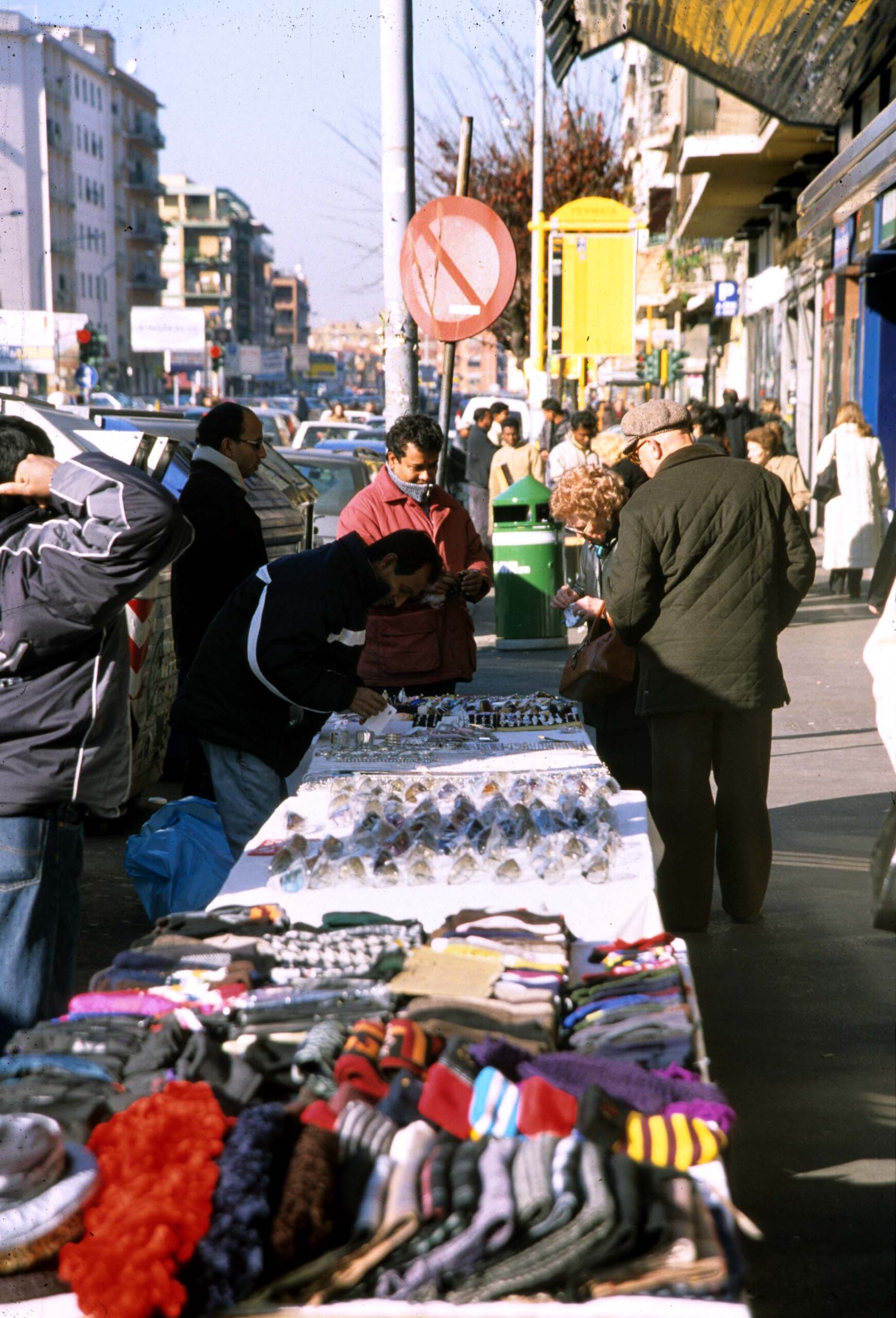
Brussels – The European Commission is in contact with the Italian authorities and is prepared to continue supporting them in their efforts to ensure that the licensing system for street trading complies with the Services Directive, better known as the Bolkestein Directive. However, it is up to Italy to find the best measures to ensure compliance with the rules. European Commission’s Executive Vice-President for Prosperity and Industrial Strategy, Stéphane Séjourné, reiterated this in a reply to a question from the PD MEP and Vice-President of the European Parliament, Pina Picierno, on Italy’s inefficiencies in mapping street vendor stands.
According to the MEP, “Italy is still facing troubling difficulties in managing its itinerant trade sector,” and “The crux of the matter is Italy’s failure to gather the data required to determine whether street vendor stands are an abundant or scarce resource.” This classification is important for compliance with the EU directive, which states that “where the number of authorizations available for a given activity is limited because of the scarcity of available natural resources or technical capacity, Member States shall apply a selection procedure to potential candidates which provides full guarantees of impartiality and transparency, including, in particular, adequate publicity about the launch, conduct and completion of the procedure.“
According to Picierno, however, “poor record-keeping has caused systemic administrative fragmentation and profound legal uncertainty, prompting many municipalities to protect themselves by launching public tenders when it is clear, even without official information, that street vendor stands are not a scarce resource.” For this reason, the Vice-President is calling for EU intervention “to provide the Italian authorities with support to enable an official mapping of these stands and proper implementation of the directive.”
In his reply, Séjourné explains that the EU executive “is in contact with the Italian authorities and is prepared to continue supporting them” in their efforts to align procedures to the Services Directive. He points out that “it is important that these licenses are assigned according to transparent selection procedures, in compliance with the principles of impartiality, non-discrimination, equal treatment and publicity, as duly recognized” by national law. However, “with respect to the ‘scarcity’ associated to street trade services, it would appear that, in the Italian system , authorisations are assigned based on selection among several candidates,” and “this creates a situation of exclusivity, as only the authorisation holders can provide services within the portion of municipal territory where street trade can be materially provided, with the exclusion of other operators.” However, “It is for the Italian authorities to identify the most adequate implementing national measures to ensure that the Services Directive is applied to this sector” and “In this vein, the Commission supports the objective of reforming and making the overall system more transparent and efficient, to the benefit of interested operators and consumers.”
English version by the Translation Service of Withub



![Da sinistra: il presidente del Consiglio europeo, Antonio Costa; il presidente dell'Ucraina, Volodymir Zelensky: la presidente della Commissione europea, Ursula von der Leyen [Bruxelles, 18 giugno 2024. Foto: European Council]](https://www.eunews.it/wp-content/uploads/2026/06/euco_ua260618-120x86.jpg)
![[foto: Saverio De Giglio/imagoeconomica]](https://www.eunews.it/wp-content/uploads/2026/10/cpt-120x86.png)