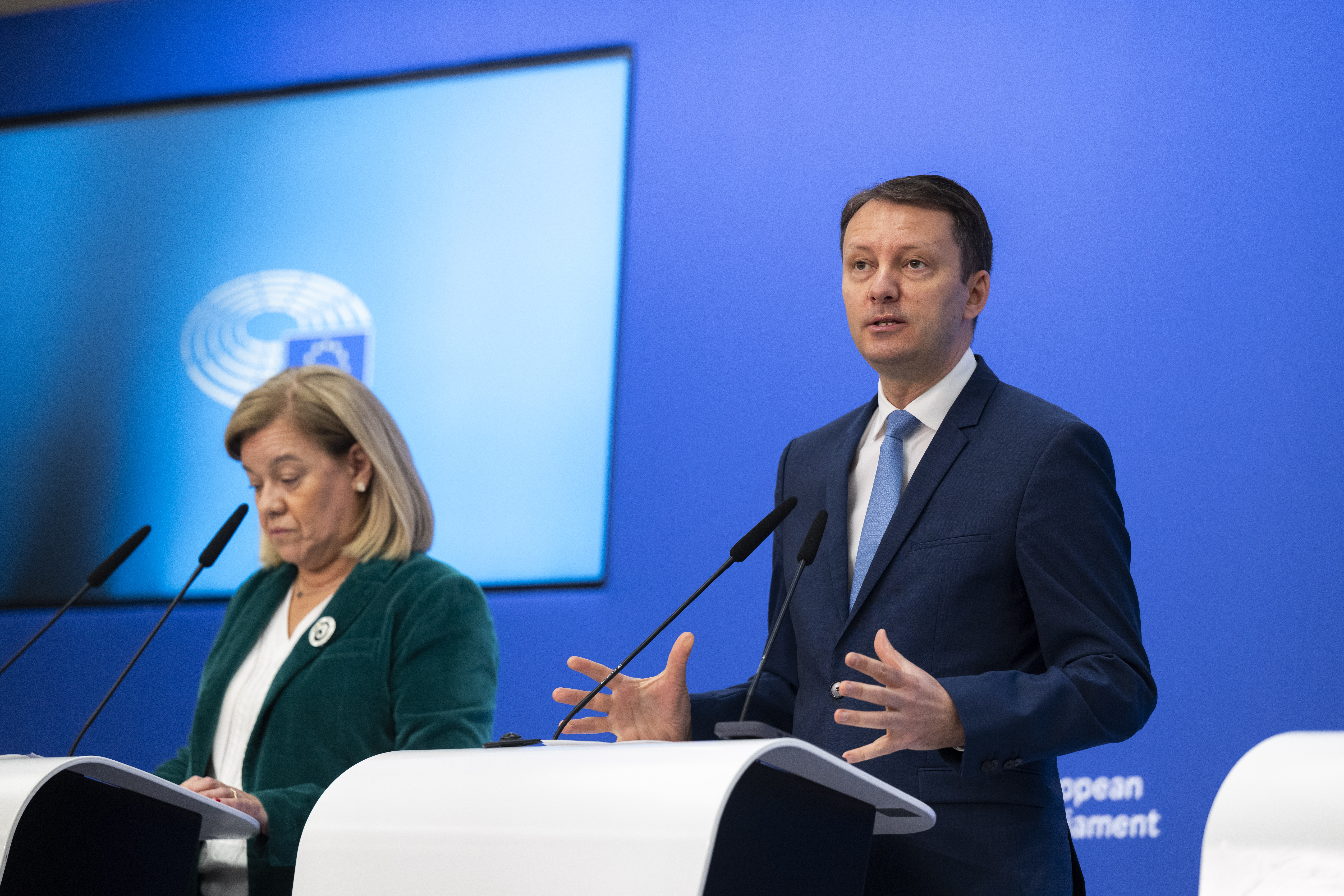
Brussels –At least an additional 200 billion euros, to be allocated outside the budget while maintaining the funding priorities of the 12-point agenda. The European Parliament has sparked debate on the EU’s next multiannual budget (MFF 2028–2034) with a proposed negotiating position bound to provoke controversy. “Our position effectively represents a 10 percent increase for beneficiaries compared to the Commission’s proposal,” states Siegried Muresan (EPP), co-rapporteur for the budget measure and member of Parliament’s Committee on Budgets. In its July proposal, the European Commission proposed 2 trillion euros and a 10 percent increase, meaning it would have to find resources for an additional 200 billion euros, bringing the seven-year budget to 2.2 trillion euros.
The request from the European Parliament relates to one of the European Union’s key challenges, namely the repayment of loans taken out on the markets to finance NextGenerationEU, the 750 billion euro post-pandemic recovery plan backed by the Recovery Fund. It is estimated that around 150 billion euros will be required to cover the loans, and the European Parliament wants to ensure that these funds are not deducted from the European Commission’s overall 2-trillion euro proposal. MEPs are therefore calling for NGEU to be repaid “well beyond the planned ceilings,” i.e., outside the budget.
This is probably the most contentious demand, given that in the Council, several governments have already made it clear that two trillion euros for the common budget is too much, and it is hard to imagine Parliament’s demands being met. Germany, the Netherlands, Finland, and Sweden have no intention of increasing their national contributions, but the European Parliament is pressing ahead: tomorrow (15 April), the Committee on Budgets will vote on the draft negotiating position, and the House will vote during the plenary session at the end of the month (27–30 April). “We will be the first institution to define its position,” Muresan said.
The Council’s reaction and position will therefore be awaited. Meanwhile, among the Parliament’s demands to be put to the vote tomorrow are maintaining spending levels for the Common Agricultural Policy (CAP) and cohesion, to be left unchanged from the levels in the current 2021–2027 MFF budget (386,6 billion euros and 392 billion euros), and the reintroduction of the program for the outermost regions, which the European Commission had removed from its proposal because, as Muresan explains, “in the current geopolitical context, these territories have taken on renewed importance.” The EU’s outermost regions are territories belonging to France (French Guiana, Guadeloupe, Mayotte, Martinique, Réunion, and Saint-Martin), Portugal (the Azores and Madeira), and Spain (the Canary Islands).
English version by the Translation Service of Withub