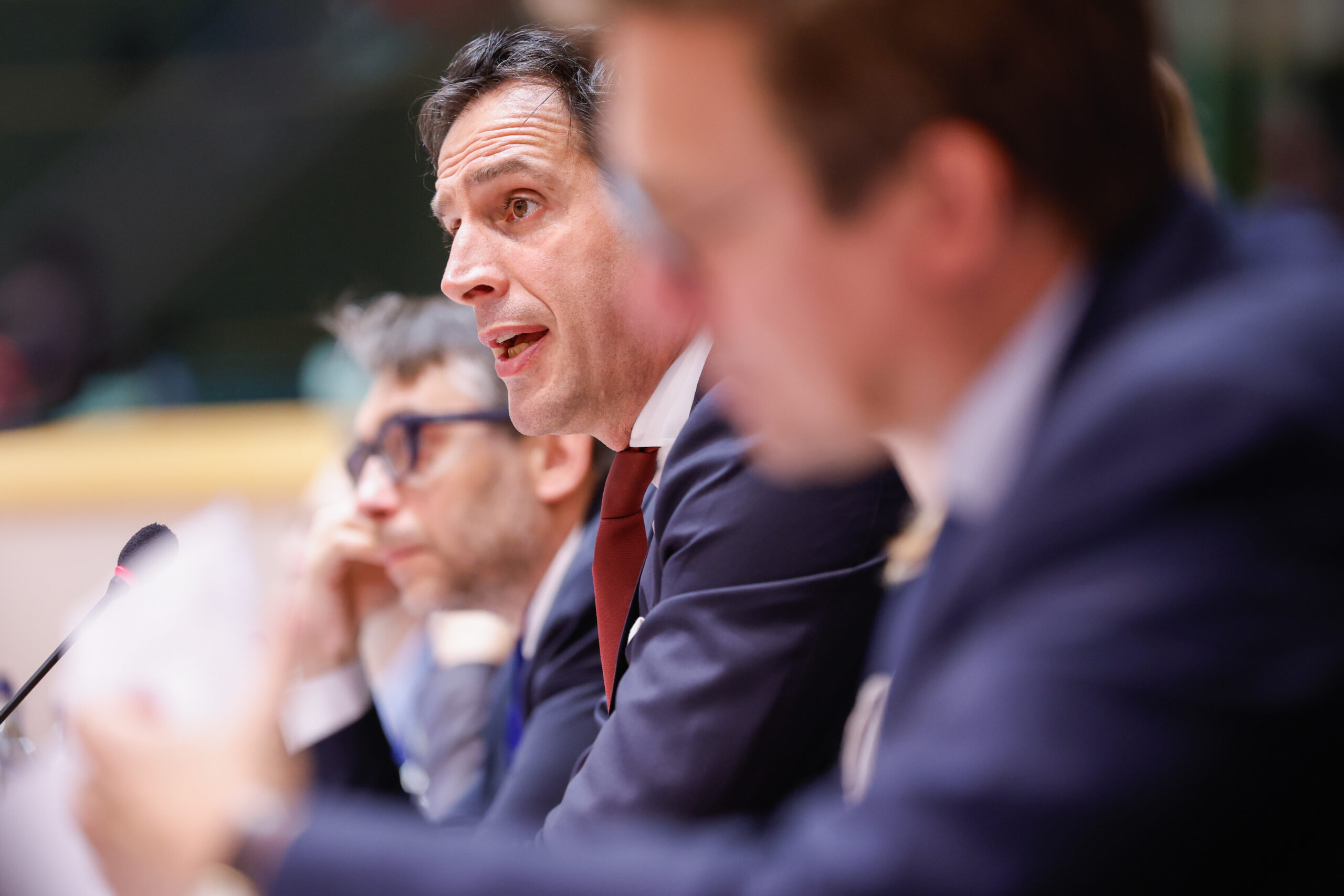
Brussels – The goal of climate neutrality by 2050 is slipping further and further away, in order to give industry some breathing space. “The ETS system has been working well” since 2005—the year it was launched—argues Climate Commissioner Wopke Hoekstra, during a hearing at the European Parliament, “it has almost halved emissions in the sectors it covers.” However, a review of the European emissions trading system is “scheduled for July,” which may include an “assessment for the more gradual phasing out of free allowances,” i.e. the CO2 emission permits allocated free of charge by the European Union to certain industrial sectors. This phasing out will prolong the timeframe for achieving carbon neutrality because “it will allow for emissions in 2040 and beyond.”
Initially, the aim was to phase out emissions from the market by 2039. Now, the European Commission is easing its stance. For Commissioner Hoekstra, the EU has nothing to reproach itself for; on the contrary, “Putting a price on carbon has massively reduced fossil fuel consumption and our dependence on imports. Without it, Europe would be consuming 100 billion cubic metres more gas today, making us even more vulnerable.” But innovation is needed. That is why the Dutch Commissioner announced to the Environment Committee of the European Parliament the review of the emissions trading scheme scheduled for 15 July. This review of the ETS is nothing new: the Commissioner had already signalled the intention to review the mechanism on the sidelines of the Council meeting in mid-March.
Among the measures announced is the inclusion of the ETS’s linear reduction factor in the 2040 climate target, which will leave “room for emissions in 2040 and beyond.” Furthermore, the integration of permanent carbon removals into the system is intended to “create further scope for sectors that are more difficult to decarbonise.” The Commissioner cited other measures to support industry, such as the new Industrial Decarbonisation Bank, which aims to provide €100 billion in funding to implement low-carbon solutions, and the ETS Investment Accelerator—another initiative expected in July—which, according to Brussels’ estimates, could mobilise up to $30 billion by 2028.
Against this backdrop, the reduction of 55 per cent emissions by 2030 and subsequent climate neutrality by 2050 seem to be becoming an increasingly distant mirage. Now, all eyes are on 15 July for the European Commission’s proposal on the new measures. But one thing is clear: the ETS is, and remains, a cornerstone of the EU executive, because the mechanism “will maintain a clear long-term signal whilst modernising the system.”
English version by the Translation Service of Withub
![Il vertice informale dei capi di Stato e di governo dell'UE [Nicosia, 23 aprile 2026. Foto: European Council]](https://www.eunews.it/wp-content/uploads/2026/04/euco-nicosia-350x250.jpg)




![[Copyright: European Union]](https://www.eunews.it/wp-content/uploads/2026/10/euco-261015-120x86.png)