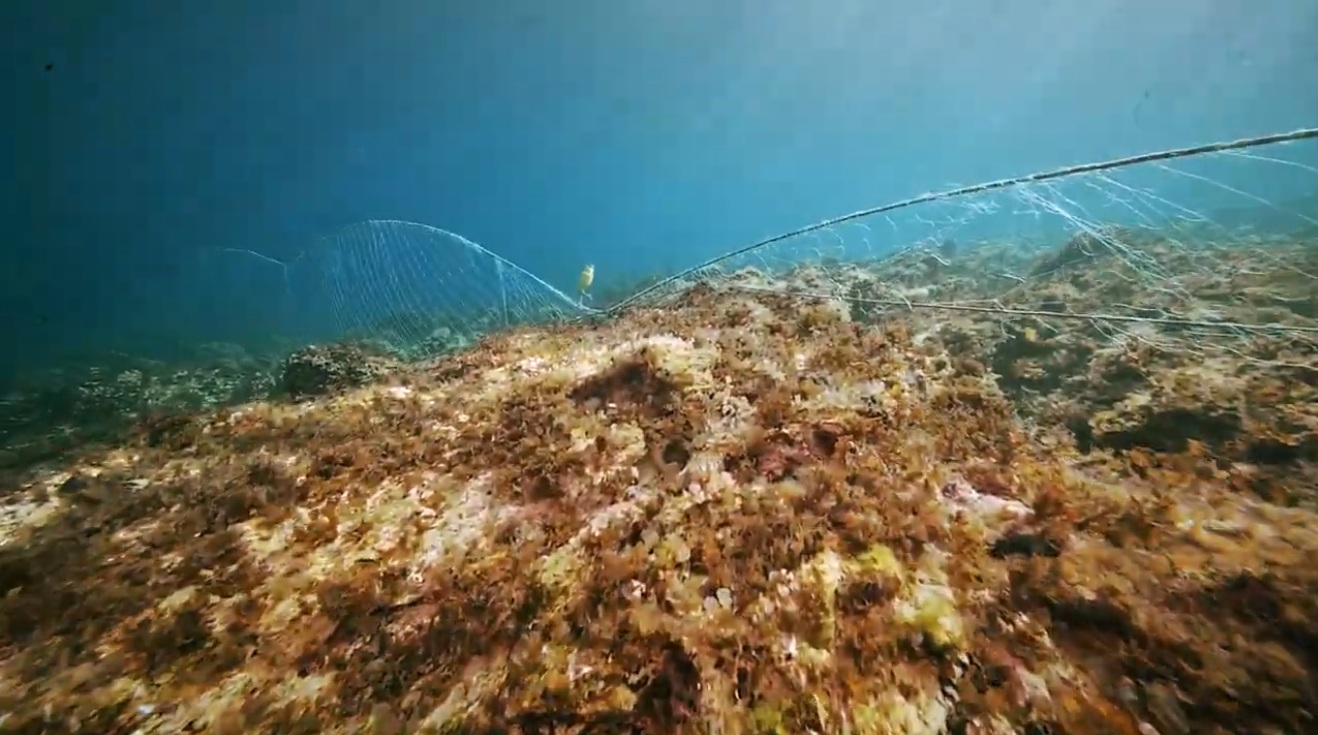
Rome – After 3 years of intense activities across Mediterranean and Atlantic fishing countries, the EU NETTAG+ project has reached its conclusion. Funded by the European Union, the project set out to prevent, reduce and mitigate the environmental impacts of abandoned, lost or otherwise discarded fishing gear and related marine litter, working in close cooperation with fishers, researchers, authorities and industry.
Throughout its lifetime, NETTAG+ tested and demonstrated a wide range of technical, operational and governance solutions, placing fishers at the centre of the response to marine litter. By combining innovative technologies, participatory approaches and policy dialogue, the project has contributed to repositioning fishers as key actors in tackling marine litter and protecting our ocean.
The results of this work are showcased during the NETTAG+ final event, on 14 and 15 April 2026 in Vila do Conde and Póvoa de Varzim, Portugal, organized by the project coordinator, the Interdisciplinary Centre for Marine and Environmental Research (CIIMAR), with the Association for Greater Safety of Seafarers (APMSHM).
Over two days, the final event brings together researchers, fisheries representatives, policy‑makers, maritime authorities, NGOs, businesses and members of the public to reflect on the project’s outcomes and explore how NETTAG+ solutions can be replicated beyond the project’s lifetime.
The first day, hosted at the Vila do Conde Municipal Auditorium, showcased scientific results and knowledge exchange. Researchers from NETTAG+ and other European initiatives discussed the scale and complexity of marine litter linked to fisheries, as well as strategies to prevent and reduce it at source.
On the second day, in Póvoa de Varzim, participants will experience hands‑on demonstrations of the tools and approaches developed by NETTAG+, featuring onshore presentations of technologies, educational tools, virtual reality experiences and policy recommendations, as well as offshore demonstrations aboard a fishing vessel, where acoustic tagging systems and robotic technologies for locating and recovering lost fishing gear were tested under real working conditions.
Endorsed by the UN Ocean Decade, the event highlights the importance of moving from pilots to implementation, and from isolated solutions to coordinated action at local, national and European levels.
A core message emerging from NETTAG+ is that tackling marine litter associated with fishing activities requires collaboration across sectors, with the direct and active involvement of fishers.
As underlined by Sandra Ramos, NETTAG+ coordinator and researcher at CIIMAR: “Marine litter is a complex challenge that cannot be solved by one sector alone. NETTAG+ has shown that engaging fishers as partners – not as part of the problem, but as part of the solution – is essential to developing effective, realistic and scalable responses.”
In Croatia and Italy, WWF helped translate NETTAG+ innovation into real‑world action, working closely with fishers, ports and local communities to test solutions on the ground. Stefania Campogianni, WWF’s Regional Manager on plastic pollution explained that “through NETTAG+, we co‑developed technological and policy solutions to tackle marine litter and prevent ghost gear. The key challenge now is to build on this knowledge and innovation by supporting uptake, strengthening policies and promoting more sustainable fishing practices.”
English version by the Translation Service of Withub

![Il bacino del mar Mediterraneo [foto: Wikimedia Commons]](https://www.eunews.it/wp-content/uploads/2025/05/mediterraneo-350x250.jpg)


![Da sinistra: il presidente del Consiglio europeo, Antonio Costa; il presidente dell'Ucraina, Volodymir Zelensky: la presidente della Commissione europea, Ursula von der Leyen [Bruxelles, 18 giugno 2024. Foto: European Council]](https://www.eunews.it/wp-content/uploads/2026/06/euco_ua260618-120x86.jpg)
![[foto: Saverio De Giglio/imagoeconomica]](https://www.eunews.it/wp-content/uploads/2026/10/cpt-120x86.png)