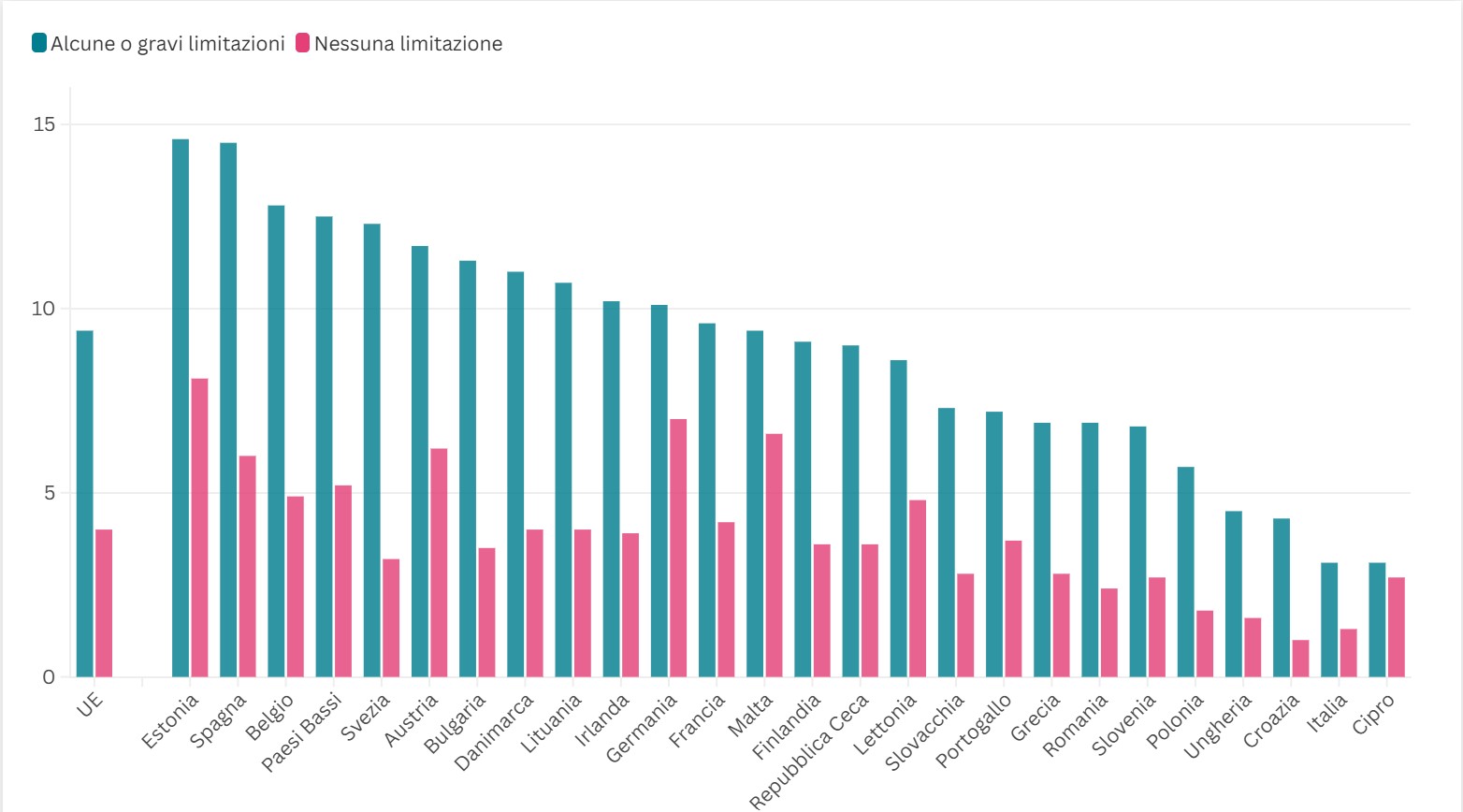

Brussels –In 2024, 9.4 per cent of citizens aged 16 or over with disabilities in the European Union felt discriminated against in their dealings with administrative offices or public services. This figure is more than double that recorded among people without disabilities, which stands at 4 per cent. At the national level, Italy is among the countries with the lowest rates, 3.1 per cent, alongside Cyprus. At the other end of the scale, discrimination is most commonly perceived in Estonia (14.6 per cent) and Spain (14.5 per cent). The data were released today (4 May) by Eurostat, the EU’s statistical office, to mark the start of May, European Diversity Month.
Discrimination affects various aspects of daily life. 8.2 per cent of EU citizens with disabilities reported having experienced discrimination when looking for accommodation, compared with 5.2 per cent of people without disabilities. This gap is also evident in public spaces, where 5 per cent of people with disabilities felt they had been discriminated against, compared with 3 per cent of other citizens. In educational institutions, the rate rises to 4.1 per cent, compared with 2.3 per cent among those without a disability.
In all EU countries, even those with the lowest figures, the proportion of people with disabilities who have felt discriminated against in public and administrative offices remains higher than that of the rest of the population.