
Brussels – The Arctic is no longer a quiet backwater of global geopolitics. It probably never was, but the world is only just realising this now. The disruptions caused by climate change have opened up a range of opportunities in terms of resources and new trade routes, and the world’s major powers seem prepared to fight tooth and nail to be the first to get there.
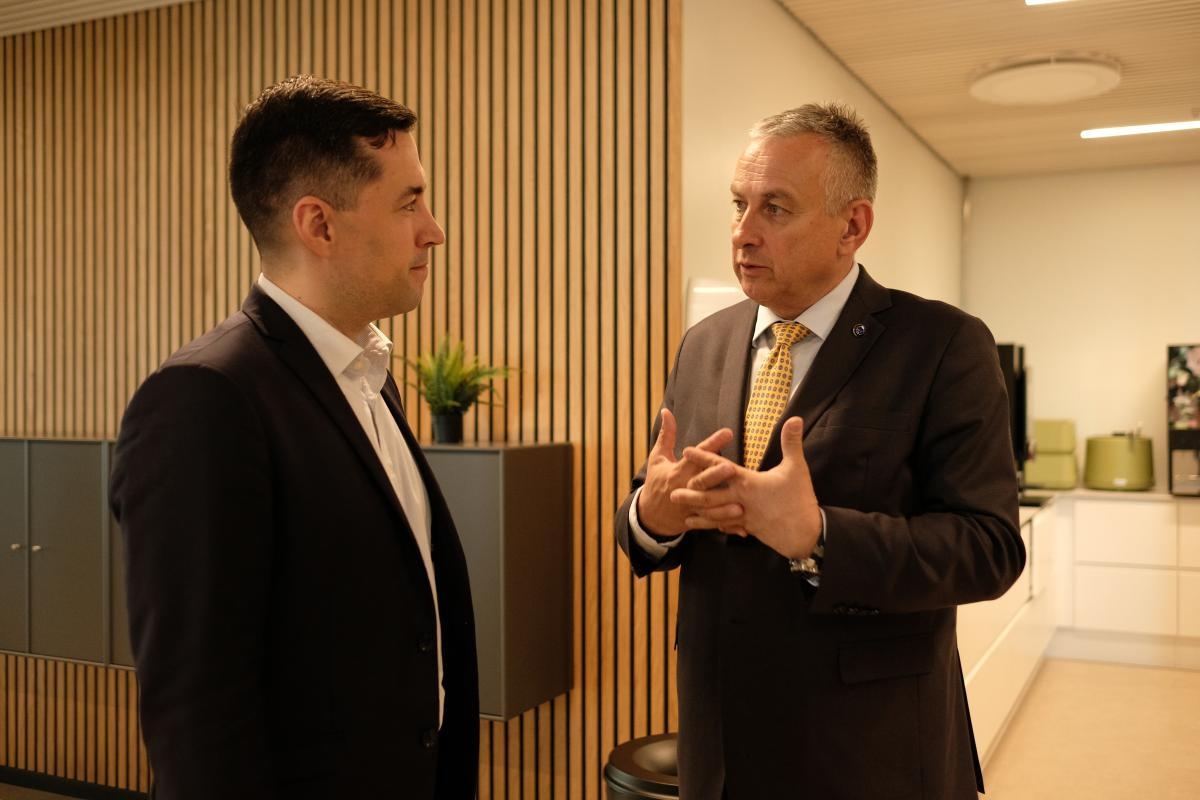
It is against this backdrop that the visit to Greenland by Jozef Síkela, European Commissioner for International Partnerships comes into the picture. The Czech politician landed yesterday (19 May) in the capital Nuuk and today met the country’s prime minister, Jens-Frederik Nielsen. But even in the days leading up to his arrival, he had summarised the reasons for his trip in a post on X. “
The Arctic has become one of the world’s most strategic regions. Greenlanders feel this reality every day,” he wrote, before adding that “Europe is matching this reality with action through investments and an updated EU Arctic Strategy.
During my mission to Nuuk, I am going to focus on exactly that.”
The EU’s financial contribution to Greenland: Sikela confirms the new commitments
In recent years, the EU’s economic involvement in Greenland has increased significantly. Under the current EU budget for the 2021–2027 seven-year period, the Arctic state has received a financial contribution of around €225 million, thus becoming the overseas country receiving the most funding from Brussels.
This already well-established framework is now set to be further expanded through the EU’s commitment. On 3 September, as part of a proposal to double EU funding for overseas countries from €500 million to €999 million, the Commission proposed increasing the share of resources allocated to Greenland to €530 million within the next 2028–2034 Multiannual Financial Framework (MFF).
During today’s press conference with Prime Minister Nielsen, Commissioner Síkela confirmed this commitment and revealed another. “We are preparing an investment package focused on areas where public intervention makes a difference, and President von der Leyen will present it later this year,” he announced. According to what the Commissioner himself had already stated to Euractiv last January, the total figure is expected to be around €50 million.
Speaking to the press, Síkela explained the reasons behind this growing financial commitment. “Climate change in the Arctic is occurring at a faster rate than in any other region on Earth, with temperatures rising four times faster than the global average,” he explained. And these changes, he added, are creating “a new strategic reality: new trade routes, new resources critical to modern industry, but also unprecedented security issues and external pressures.”
These new dynamics “will reshape the European economy for decades to come,” the former Minister for Industry in Prague emphasised, “and that is why the EU is stepping up its commitment to this region.”
Síkela’s pledge on the new EU Arctic Strategy: “We will draft it together with regional partners”
And it is precisely this new geopolitical prominence of the Arctic that has given rise to the other major dossier brought by Síkela to Nuuk: the review of the EU Arctic Strategy, the document through which Brussels aims to update its political, economic, and military stance in the region compared to the Arctic Policy of 2021.
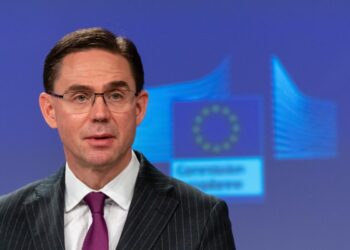
The new strategy—announced by von der Leyen in January during her speech at the World Economic Forum in Davos—aims to “strengthen the EU’s partnerships with Arctic nations and prepare Europe to address the region’s key role in the international geopolitical landscape, with a strong focus on security, sustainable growth, connectivity, and the well-being of local communities.” As proof of just how serious the EU executive is about this, on 13 April, Brussels announced that Sikela will be joined in drafting the new document by a particularly high-profile figure: the former Prime Minister of Finland and former Vice-President of the Commission, Jyrki Katainen, appointed EU Special Adviser for Arctic Relations.
With Nielsen by his side in front of the journalists’ microphones, Síkela sought to reassure the Greenlandic Prime Minister that the new approach would not be predatory in nature and “would not be drawn up exclusively in Brussels” because “this Strategy will be developed with partners in the region, it will not be imposed on them from above,” he explained. Furthermore, “the basis of our cooperation is as follows: Greenland’s future is a choice for the Greenlanders, and Europe’s role is to support it, through investment, standards, values, and a lasting partnership that benefits both parties,” he emphasised.
Interpreting Síkela’s words, therefore, the way in which Europe views Greenland would seem to be an attempt to distance itself from the more aggressive approach adopted by Donald Trump’s United States over the past year and a half. Brussels insists on the language of partnership, shared investment, and cooperation with local communities; Washington, by contrast, continues to operate within an openly strategic-military framework, in which the island is perceived primarily as a crucial piece in the global competition in the Arctic.
In light of all this, it is hardly surprising that, even though Jeff Landry, the White House Special Envoy for Greenland, also arrived in Nuuk at the same time as Síkela’s visit, the two have taken great care never to cross paths. No mean feat in a town with a population of just over 20,000.
English version by the Translation Service of Withub