Brussels – In response to the invasion of Ukraine and destabilising activities in Moldova, the European Union has imposed new sanctions against Russia while awaiting the 21st package of restrictive measures against Moscow, which are still under consideration and will take some time to finalise. The foreign ministers of the European Union Member States have chosen to maintain pressure on the Kremlin by expanding the blacklist of individuals and entities subject to asset freezes and entry bans within the EU.
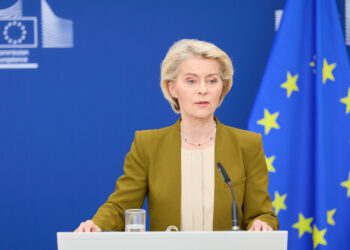
A total of 34 individuals and 47 companies have been sanctioned by the Foreign Affairs Council for activities supporting Moscow’s aggressive policy. “These measures strike at the heart of the Russian military-industrial complex, its shadow fleet, and the networks fuelling Moscow’s hybrid attacks against Europe,” says the EU High Representative for Foreign Affairs and Security Policy, Kaja Kallas, who adds: “At the same time, work is underway on the broader 21st package of sanctions,” which is more necessary than ever because “Russia is showing no sign of wanting to stop fighting, and is stepping up attacks on civilians.”
Specifically, the EU is targeting seven individuals and 21 entities that support the Russian military-industrial complex and its accomplices in third countries. These are manufacturers and suppliers of drones and other military equipment intended for the Russian armed forces, including JSC Lavochkin Research and Production Association, founded by the Russian state space agency Roscosmos. The list also includes Rustakt, LLC, ASFPV, LLC, IONOS, the Chinese companies Shenzhen Minghuaxin and Xinxiang Richful Lubricant Additive Company, ERA Military Innovation Technopolis, and the Foundation for Advanced Studies.
The EU has also taken action in the energy sector. The sanctions list approved today (15 June) includes two individuals (Tahir Garayev and Konstantin Rogach) and 24 entities linked to the shipment and export of crude oil or petroleum products from Russia, including via the Russian shadow fleet. These lists include
Lukoil-Western Siberia
and “numerous” companies based in Russia, Liberia, Turkey, the United Arab Emirates, Azerbaijan, and Hong Kong.
The decision to intervene in the energy sector is no coincidence. “Energy revenues continue to be a lifeline for the struggling Russian economy,” explains Kallas, and the aim is to weaken the Russian Federation even further. “Every measure reduces Russia’s room for manoeuvre, and the figures speak for themselves: Western sanctions have already cost Russia an estimated €1,000–1,300 billion.” In essence, “step by step, we are dismantling the foundations of the Russian war economy.”
In any case, Kallas insisted during the press conference held at the end of the proceedings, “sanctions against Russia also entail international isolation.” That is why the High Representative is calling for the Russian Federation to be excluded from all events, including sporting and cultural ones.