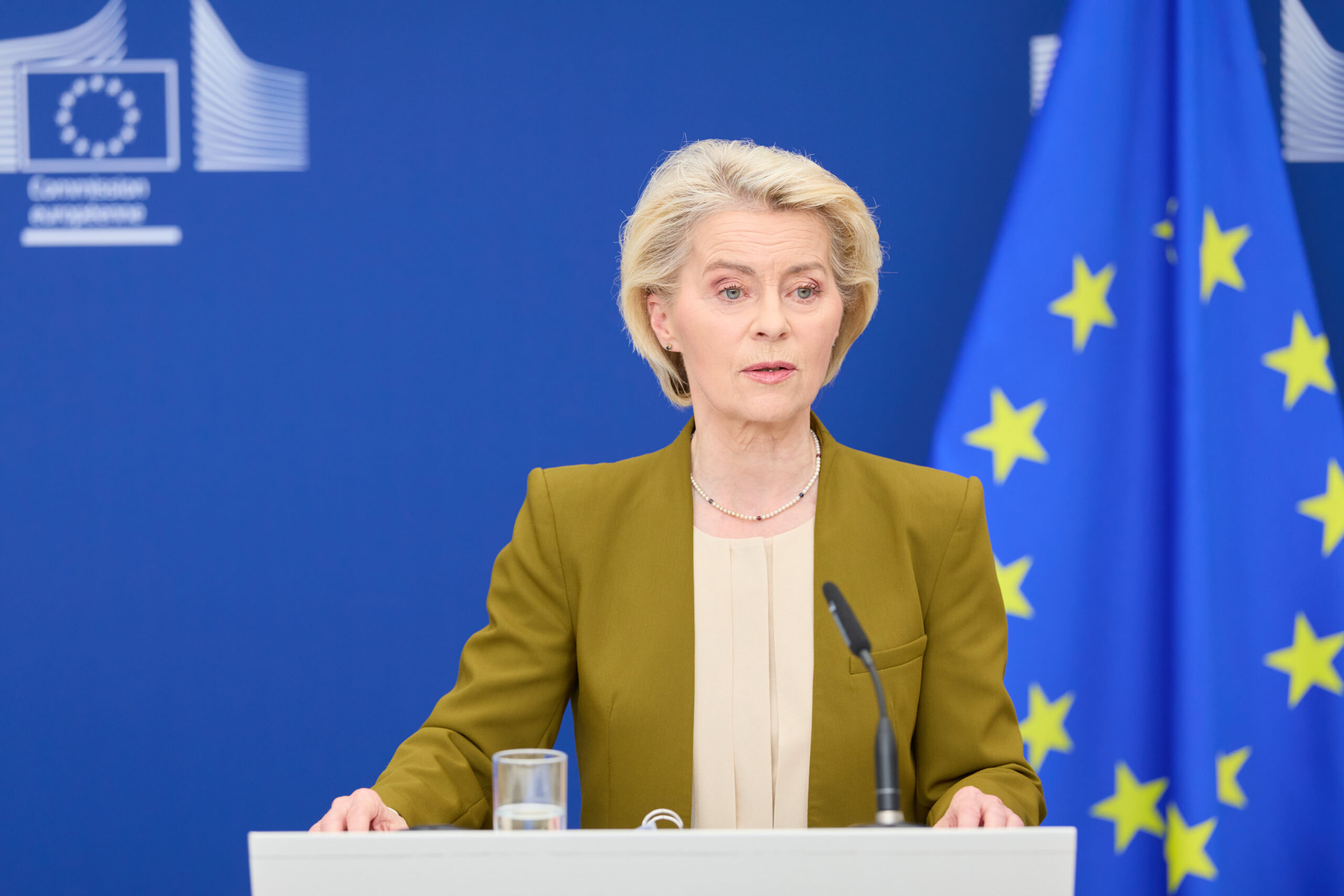
Brussels – The European Union is set to approve the twenty-first package of sanctions against Russia, in response to the ongoing war of aggression waged by Moscow against Ukraine. The new measure was announced directly by the President of the European Commission, Ursula von der Leyen, during a press conference held this morning (9 June) at the Berlaymont Building. “In this package, we are focusing on the sectors with the greatest impact: energy, financial services, and trade,” said the head of the EU executive, summarising the content of the new round of sanctions, before adding that “we are also proposing to ban former Russian combatants from entering the EU.”
It should be emphasised that the presentation made today by von der Leyen is merely an “introductory report” on the measure, which will now require the approval of all Member States in the Council of the EU to officially enter into force.
Energy chapter: end to automatic adjustment of the price cap on Russian oil
Since the start of the conflict, the core of the European sanctions regime against Moscow has been measures aimed at minimising the revenue Russia derives from the export of energy products, primarily oil.
“Although the conflict in the Middle East and disruptions to global energy supply chains have eased some of the pressure on Russia, we want to maintain the maximum intensity of the sanctions,” said von der Leyen. And the best way to do that, she added, “is to ensure that Russia’s profits from oil sales remain limited.”
For this reason, the first measure that German policy has focused on is the price cap on Russian crude oil. First introduced in December 2022, the measure stipulates that European companies may only participate in the transport of Russian oil if it is sold below a certain maximum price. Since last year, this threshold has been made “variable”, setting it at 15 per cent below the average market price.
However, as von der Leyen explained, “this automatic adjustment mechanism was not designed for market shocks such as that caused by the closure of the Strait of Hormuz,” following the outbreak of war in Iran. These developments have sent the average cost of oil soaring, potentially opening the door to significantly higher profits for Moscow than in the past. For this reason, the Commission has today proposed to suspend the adjustment until January next year, maintaining the cap at current level of 44.10 per barrel. “This will give the oil markets time to stabilise, while maintaining pressure on Russian revenues,” summarised the head of the Berlaymont.
The new package of sanctions will also affect Moscow’s energy sector in other ways. For example, a further 30 vessels will be added to the list of 632 ships in the so-called “shadow fleet” already subject to sanctions. This is a group of ships that Russia uses to circumvent Western sanctions and continue exporting oil by sea, often changing flags and switching off satellite-tracking systems. In this regard, von der Leyen emphasised that “for the first time, we will also target vessels that assist the shadow fleet, for example by supplying fuel or other services.”
Finance and Trade chapters: cryptocurrency platforms and (for the first time) fishing in the spotlight
The latest round of sanctions announced today proposes to extend the ban on transactions involving European entities to a further 31 Russian banks. A diplomatic source in Brussels has told Reuters, the British news agency, that the new package of measures against Moscow’s credit institutions could “increase the likelihood of a banking crisis,” thereby strengthening Putin’s willingness to negotiate a peace agreement with Ukraine.
According to von der Leyen, “the ban should also apply to 20 banks, companies or cryptocurrency platforms located in third countries,” should they have provided services to Russian individuals or entities already subject to sanctions or have helped to circumvent EU measures already in force.
The Berlaymont’s proposal on cryptocurrency firms is even more ambitious, suggesting the creation of a new legal instrument that would, in future, go beyond simply blacklisting individual platforms. The idea, explained the head of the European Commission, would be to “impose a total ban on crypto-asset services operating in third countries” in order to “act as a deterrent to those states hosting platforms that help Russia circumvent our sanctions.”
As for commerce, this is the aspect of the sanctions regime that most directly affects the Kremlin’s war machine, through restrictions on all goods and technologies used by the Russian military industry.
With the new package, von der Leyen said, “we are targeting further metals and alloys used in the aerospace and defence sectors” and “with a chapter dedicated to drones, we are proposing new export bans on ground support equipment, electronic jamming systems, and launch systems.” On the non-military front, trade sanctions will be introduced for the first time in the fisheries sector: von der Leyen announced “severe restrictions on imports of certain fish products and a total ban on others, such as cod.”
Finally, a specific provision in the new package addresses a request that the leaders of the Baltic states have been reiterating in Brussels for several months now: the imposition of a ban on former Russian soldiers entering European territory. For the first time, the Baltic Republics’ voice on this matter will be heard and “Europe will remain off-limits to anyone who has participated in the invasion of Ukraine,” von der Leyen emphasised.
What’s missing: from maritime services for crude oil transport to the case of Irish aluminium
Behind the triumphant tone with which the new round of sanctions was announced lies Brussels’ difficulty in taking even stronger measures against Moscow. In today’s edition of the newsletter Il Mattinale Europeo, David Carretta has listed the various instances of the EU backtracking in recent months.
One of the most significant examples is the total ban on maritime services for the transport of Russian oil. The idea had been put forward by the Commission earlier this year but was quickly shelved due to opposition within the EU Council from certain Mediterranean countries, led by Greece and Malta, which have highly developed shipping sectors.
Even more recent—and probably more striking— is the case involving Aughinish, an alumina plant (a key material in aluminium production) based in Ireland but owned by the Moscow-based multinational Rusal, controlled by one of the oligarchs closest to Putin: Oleg Deripaska. In recent days, it has emerged that, from 2022 to the present, the plant in Limerick County has continued to export alumina to Russia, thereby contributing to the manufacture of new weapons used in the war against Kyiv.
When asked about the matter on 29 May, the Irish Prime Minister, Michael Martin, rejected the idea of sanctioning Aughinish, arguing that “the impact of any measures would be worse for the EU” than for Russia. Words to bear firmly in mind, especially in view of Dublin’s imminent appointment as the six-month presidency of the EU Council.
English version by the Translation Service of Withub