
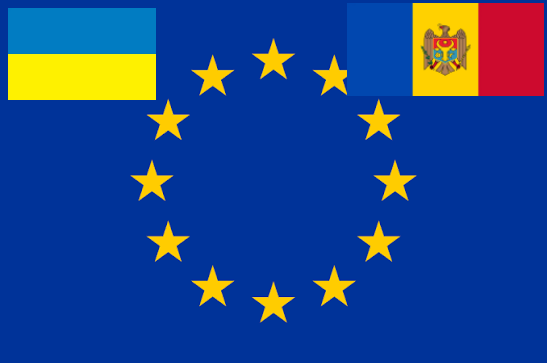
Brussels – 15 June 2026 is already a historic date: the EU has opened the first chapters of negotiations with Ukraine and Moldova, marking the official start of Kyiv’s accession process to the European Union. The Member States have overcome doubts, divisions, and vetoes, enabling them to achieve the unanimity required to proceed with the launch of a process that had been promised but was by no means a foregone conclusion.
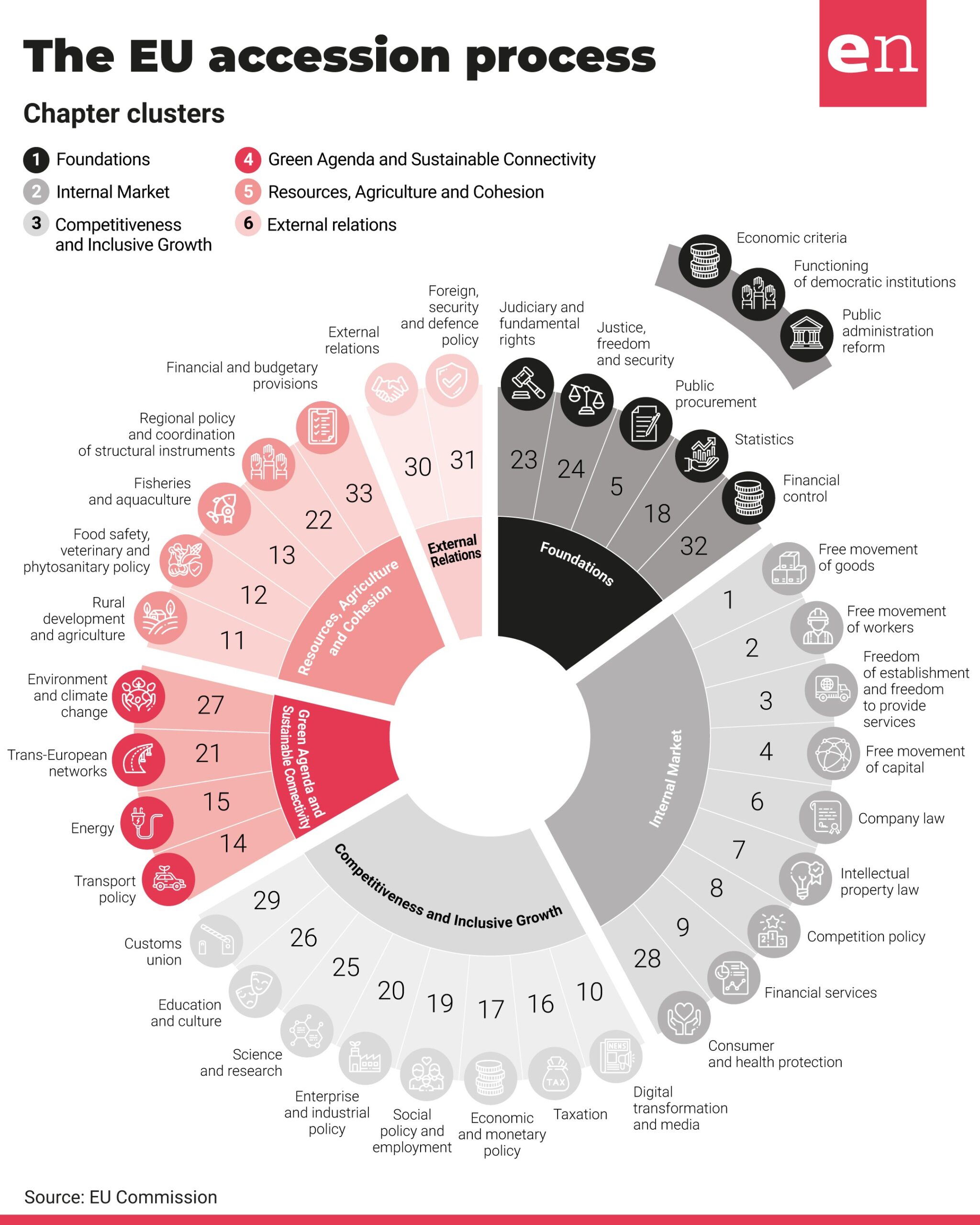
The accession process stipulates that, once a country has applied for and been granted “candidate” status, it must begin political negotiations on a total of 33 chapters, grouped into categories (clusters). It is customary to begin by discussing the so-called “fundamentals”, a cluster comprising Judiciary and fundamental rights (Chapter 23), Justice, Freedom and Security (Chapter 24), Public Procurement (Chapter 5), Statistics (Chapter 18) and Financial Control (Chapter 32). For Ukraine and Moldova, it is time to discuss these first five chapters. This marks the start of a process that first involves opening all negotiation chapters, then closing them. Once all negotiation chapters have been closed, the country can then become a Member State of the EU by right.
Rejoices Marilena Raouna, Deputy Minister for European Affairs of Cyprus, a country with the rotating presidency of the Council of the EU: “Today marks a historic moment for the Cypriot Presidency and sends a clear message: the future of Ukraine and its citizens is firmly anchored in the European Union.” Enlargement, she emphasises, “is not only a strategic opportunity for Ukraine, but also a strategic investment in a stronger, safer, and more united Europe.” This is the key political step in a process aimed at removing Ukraine and Moldova from Russian influence, as part of Europe’s ongoing advance into the former Soviet Union’s territories.
Above all, the EU is showing that it is honouring its commitments. The number of Member States, including Italy, calling for at least an initial round of negotiations on Ukraine to be opened in June had grown, and the EU is managing to do so without even having to call on its leaders (the meeting is scheduled for this Thursday, 18 June). The 27 had debated whether to open all the negotiation chapters, but in the end, they decided to proceed. A message, and above all, a demonstration of political reliability.


![Da sinistra: il presidente del Consiglio europeo, Antonio Costa; il presidente dell'Ucraina, Volodymir Zelensky: la presidente della Commissione europea, Ursula von der Leyen [Bruxelles, 18 giugno 2024. Foto: European Council]](https://www.eunews.it/wp-content/uploads/2026/06/euco_ua260618-120x86.jpg)
![[foto: Saverio De Giglio/imagoeconomica]](https://www.eunews.it/wp-content/uploads/2026/10/cpt-120x86.png)