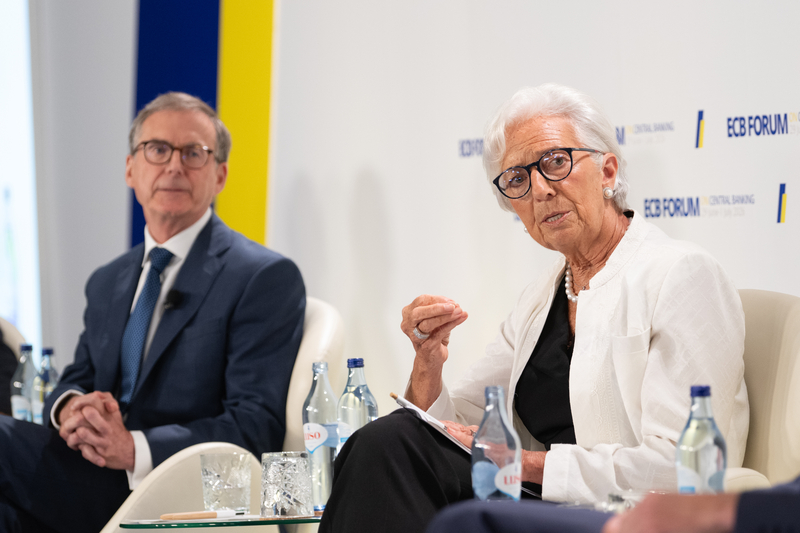
Brussels – “We raised interest rates because the conditions were ideal for doing so.” The President of the European Central Bank, Christine Lagarde, wants to be clear: the 0.25 per cent interest rate rise announced in June was a necessary move, made inevitable by data, trends, and the broader context. “When inflation prospects rise, core inflation also rises and underlying inflation indicators are also showing an upward trend, while a return to the 2 per cent target is not expected until towards the end of 2028: the decision was obvious,” she explains, speaking at the ECB Annual Forum in Sintra (Portugal). There was no other choice, she insists. The need to raise interest rates “was a decision so obvious that it was approved unanimously by the Governing Council.”
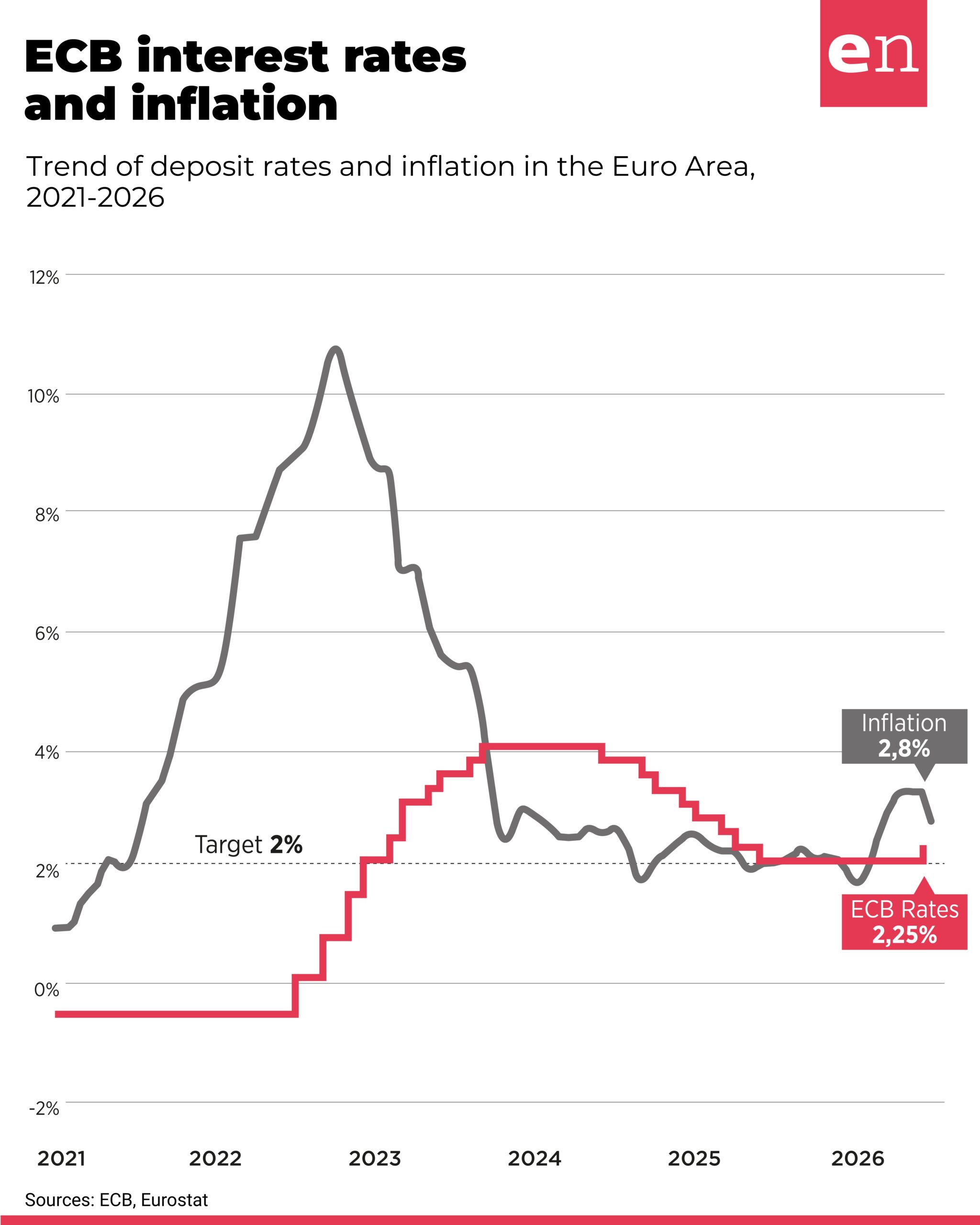
Lagarde is keeping her cards close to her chest when it comes to the future. This is partly because the data-driven, case-by-case approach remains in place, and partly because “things change quickly,” making everything more unpredictable and difficult to forecast, one way or the other. It is here that the ECB President seeks to reassure: “I think the risks are a little more balanced today than they were a few weeks ago,” she says, referring to the trend in crude oil prices, which have “rapidly” fallen from around $100 to $72 a barrel. Furthermore, “stagflation is a concept from the 1970s that refers to economic conditions we do not have today.”
The Governor of the Bank of Canada, Tiff Macklem, also confirms: “Stagflation means double-digit inflation and double-digit unemployment,” a situation that is in no one’s interest, least of all that of central banks, because “if we were to face such a situation, it would spell our failure.”
The President of the European Central Bank therefore reassures the public and the markets: As the ECB, “we are taking all necessary measures to ensure price stability,” and “we will not allow inflation to get out of hand.” In pursuing this course and fulfilling this commitment, however, the European Central Bank intends to operate more discreetly going forward. This means keeping its intentions under wraps. “We decided some time ago to abandon forward guidance,” Lagarde emphasises.
Forward guidance refers to information that the central bank may provide regarding its future intentions with regard to monetary policy, based on its assessment of the outlook for price stability. “If I have one regret, it is that I felt constrained by forward guidance.” From now on, therefore, financial operators and the markets “will have to do a little more work on their own, and will not be able to simply rely automatically on pre-established guidance.”
English version by the Translation Service of Withub



![[Copyright: European Union]](https://www.eunews.it/wp-content/uploads/2026/10/euco-261015-120x86.png)