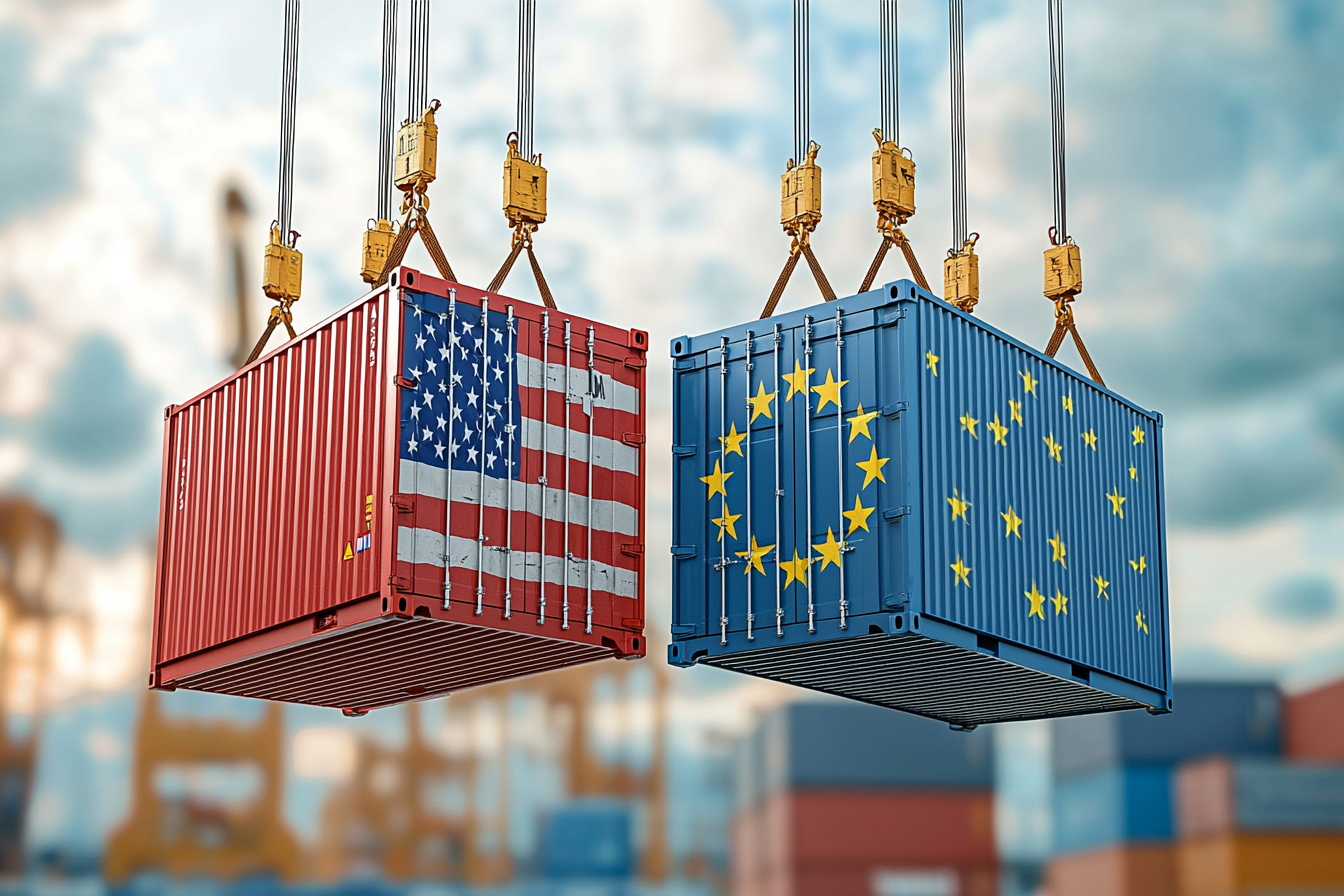

Brussels – Brussels is trying to see the glass as half full and make do. The new tariffs announced by the US, when it was night in Europe, are in line with the trade agreement reached in Scotland a year ago.
The US confirmed yesterday that it is introducing new tariffs against dozens of trading partners, including the European Union, as part of the investigation launched under Section 301 of the 1974 Trade Act into the failure to combat forced labour in supply chains. The new tariffs, which come into force today (24 July), set a rate of 10 per cent for the EU, the minimum level set by the US administration for countries deemed to have legislation against forced labour but accused of failing to enforce it effectively enough.
Section 301 allows the President of the United States to impose retaliatory trade measures following investigations into practices deemed discriminatory or harmful to US trade. Washington argues that, although the EU has approved the regulation banning the placing on the market of products made using forced labour – which comes into force in December 2027 – the implementation of the rules remains too slow, penalising US companies and workers.
For Brussels, however, the publication of the definitive measures also serves as confirmation of the commitments made by the United States under the EU-US joint statement reached last year. “We welcome the fact that this outcome is in line with the agreed tariff commitments,” said the European Commission’s spokesperson for Trade, Olof Gill.
In addition to confirming the 10 per cent generalised tariff rate, Washington has reintroduced certain tariff exemptions for European products, including cork and diamonds, which are on top of those already in place for aircraft and components, generic medicines and active pharmaceutical ingredients. Furthermore, the new tariffs remain within the 15 per cent ceiling set out in the bilateral trade agreement between the EU and the United States, a condition that Brussels had identified as essential to prevent an escalation in trade tensions.
The Commission points out that it has already “fulfilled its part of the agreement” by implementing the agreed tariff reductions from 1 July 2026. Regarding the US decision, it is seen as an encouraging sign for continuing the dialogue on further exemptions and other strategic economic issues, ranging from critical raw materials and economic security to artificial intelligence and digital technology.
At the same time, Brussels is calling on Washington to continue to fully honour its commitments, including in relation to any future Section 301 investigations. “This is essential to ensure that our markets have the stability and predictability they need,” Gill stressed, assuring that the European Commission will continue to engage with the US administration to ensure the full implementation of the agreement.
The new US measures exclude from the tariffs products already subject to tariffs on national security grounds, such as steel and aluminium, as well as certain agricultural goods, foodstuffs, fertilisers, and energy. This decision appears to reflect the White House’s attempt to maintain a hard line on trade without unduly increasing costs for American consumers and businesses.
For the Chair of the European Parliament’s Committee on International Trade (INTA), Bernd Lang, the situation could have been worse. “Following the fine imposed on Google and the constant threats regarding trade policy from Washington, we had braced ourselves for the worst. But that’s not how it turned out,” he commented. “The actual structure of the new tariffs on EU products is better than expected and has definitely positively surprised me,” he added. “If this impression is confirmed, Europe would actually find itself in a better position than under the ‘Scottish deal’” and this “would be a clear step forward, given just how unbalanced that agreement actually is. We can therefore afford to breathe a slight sigh of relief. But this is not yet the time to let our guard down. All the more so as numerous other investigations are currently under way,” Lang pointed out.
Less positive was the comment from the EU High Representative for Foreign Affairs and Security Policy, Kaja Kallas, who questioned Washington’s motives for imposing new tariffs on European products, stating that allegations of shortcomings in the bloc’s forced‑labour checks are unfounded. “The same cannot be said of the European Union,” Kallas told Reuters on the sidelines of the ASEAN summit in Manila. “If you compare our labour laws with those of the United States, we have paid vacations, we have very good labour conditions for our employees, so it’s not really grounded,” she added. Kallas said the EU would seek clarification from Washington, adding that it had honoured its commitments under the transatlantic trade agreement reached last year and regarded the new tariffs as a surprise. “We had an agreement with America, and we honoured it; we have kept our end of the bargain,” she said. “That is why it comes as an unwelcome surprise that this agreement is not being honoured,” she added.
Beijing, which has also been affected by the US measures, has taken a wholly negative view. “We oppose all forms of unilateral tariff measures,” said Foreign Ministry spokesperson Lin Jian during a briefing. “Tariff wars and trade wars are not in the interests of either side,” he added.