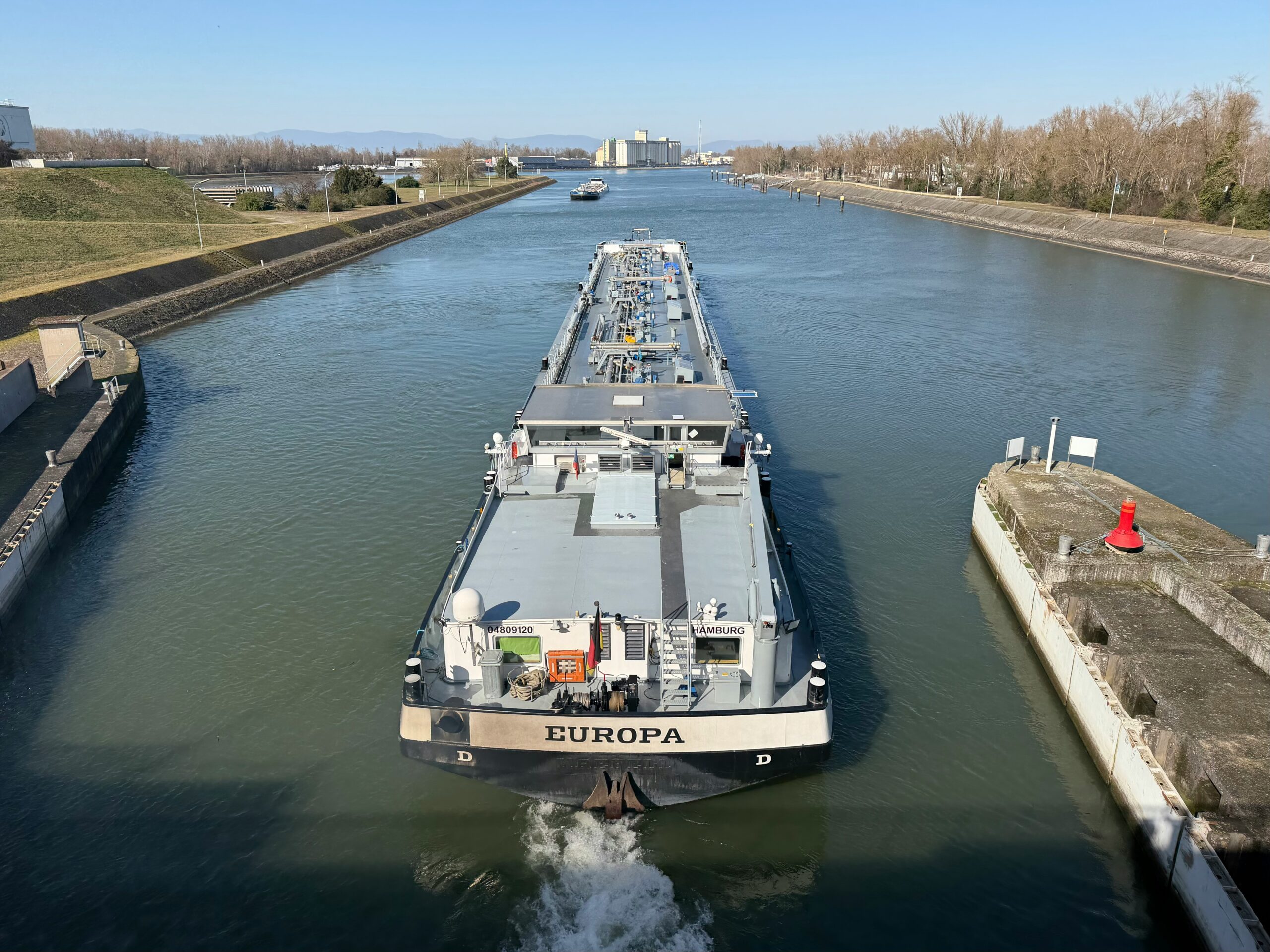

Brussels – European rivers and canals are carrying ever-decreasing volumes of freight. In 2025, traffic on the EU’s inland waterways declined by 3 per cent compared with 2024 and remained well below the levels recorded a decade ago. According to data published by Eurostat today (29 July), freight traffic in 2025 reached 118 billion tonne-kilometres (tkm), down from 121.6 billion in 2024. Following a period of stability between 2015 and 2017, the sector has been unable to return to previous levels: the low point was reached in 2023 at 116.4 billion tkm, followed only by a slight recovery the following year.
Germany and the Netherlands remain at the heart of European inland waterway transport, with 42.7 and 42.2 billion tonne-kilometres, respectively. Together, they account for almost 72 per cent of all traffic on the EU’s inland waterways.
Overall, according to the Statistical Office of the European Union, international transport accounted for more than half of total transport in 2025 (54.7 per cent), national transport represented 24.9 per cent, and transit transport 20.4 per cent. Austria has the highest share of international traffic (74 per cent), while the Czech Republic and Poland are driven almost exclusively by domestic transport.
Among goods, metal ores remain the main category (22.2 per cent of the total), followed by coke – a solid fuel and a carbon-rich residue – refined petroleum products (16.2 per cent) and chemicals (14.3 per cent). Compared with 2024, the sharpest decline was seen in agricultural products (-19.7 per cent), while coal and crude oil recorded the most significant increase (+21.3 per cent).
English version by the Translation Service of Withub