
- Europe, like you've never read before -
Friday, 7 August 2026
No Result
View All Result
  • it ITA
  • en ENG
Eunews
  • Politics
  • World
  • Business
  • News
  • Defence
  • Health
  • Agrifood
  • Other sections
    • Culture
    • Rights
    • Energy
    • Green Economy
    • Finance & Insurance
    • Industry & Markets
    • Media
    • Mobility & Logistics
    • Net & Tech
    • Sports
  • Newsletter
  • European 2024
    Eunews
    • Politics
    • World
    • Business
    • News
    • Defence
    • Health
    • Agrifood
    • Other sections
      • Culture
      • Rights
      • Energy
      • Green Economy
      • Finance & Insurance
      • Industry & Markets
      • Media
      • Mobility & Logistics
      • Net & Tech
      • Sports
    No Result
    View All Result
    Eunews
    No Result
    View All Result

    Home » Culture » Marcinelle, 70 years on: the story of Italian migration to Belgium as told by a former miner

    Marcinelle, 70 years on: the story of Italian migration to Belgium as told by a former miner

    On 8 August 1956, one of the worst industrial accidents in European history occurred at the Bois du Cazier coal mine. A miner from that time recounts the conditions in which they were forced to work

    Iolanda Cuomo by Iolanda Cuomo
    7 August 2026
    in Culture, Rights
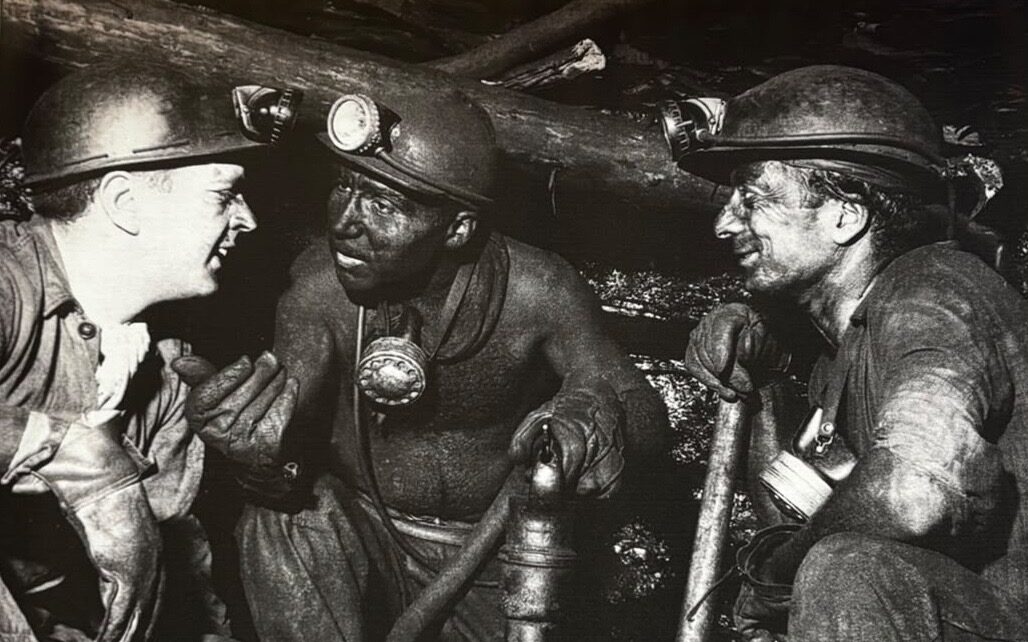
    Minatori che lavorano in Belgio. La foto è parte della mostra permanente del museo del Bois du Cazier. Crediti: Matteo

    Minatori che lavorano in Belgio. La foto è parte della mostra permanente del museo del Bois du Cazier. Crediti: Matteo

    Brussels – “I used to work two kilometres underground.” Valentino Di Pietro is from Abruzzo, is ninety years old and describes himself as one of the “last Italian miners” in Belgium. On Saturday 8 August, the 70th anniversary of the Marcinelle tragedy (Belgium) will be commemorated – the mining disaster in 1956 that claimed the lives of 262 miners of 12 different nationalities, including 136 Italians. As every year, an official ceremony will be held at the Bois du Cazier mine—which has since become a museum—to commemorate the victims. Italian authorities, the Italian Consulate and Embassy in Belgium, and a number of trade unions will also be in attendance. In 1956, Di Pietro was not present at Marcinelle, as he was working in a nearby mine. However, he is well aware of the conditions of such an extremely gruelling job.
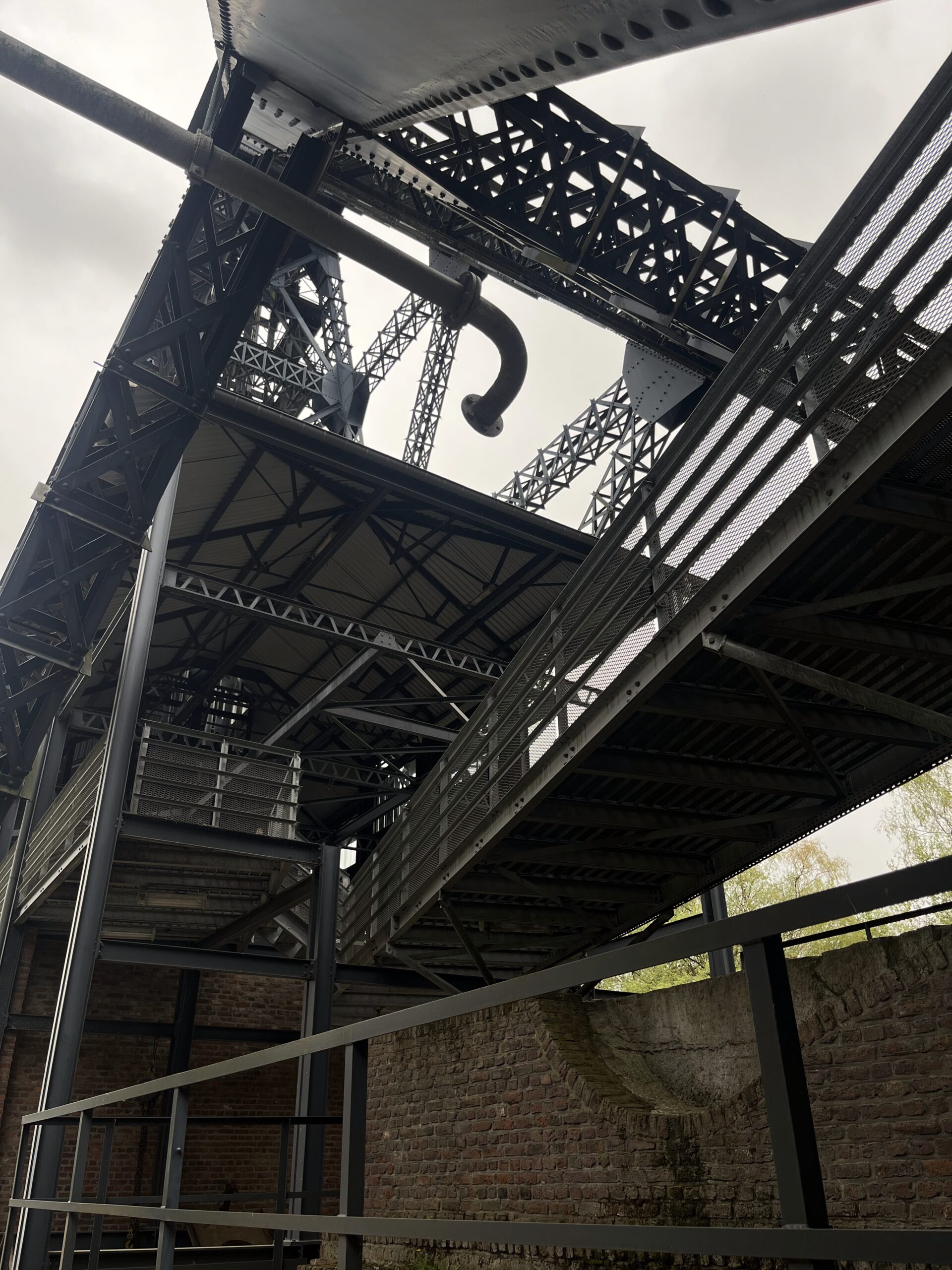
    Part of the former Bois du Cazier mine. Credit: Eunews
    Part of the former Bois du Cazier mine. Credit: Eunews

    The man says he left at the age of twenty because his region, Abruzzo, “had been completely destroyed by the Germans, who wanted to halt the American advance.” He emphasises that the reason he is one of the last remaining miners is purely a matter of age: the Italians who had arrived in Belgium were already 30 or 35 years old, while he was much younger. As post-war Italy was an extremely poor country, thousands emigrated in search of work. According to Di Pietro, this “was essential for the country’s reconstruction.”

    Italian immigration to Belgium

    On 23 June 1946, Italy and Belgium signed a bilateral agreement, known as the “man-coal accord”, which stipulated that, in return for sending workers to the Belgian mines, Italy would receive supplies of coal at a reduced price. More specifically, the requirement for Italian labour was set at 50,000 workers, meaning that 2,000 people had to be sent each week, aged 35 or under and in good health. By the end of 1954, the community of Italian workers in Belgium numbered 161,495 units.
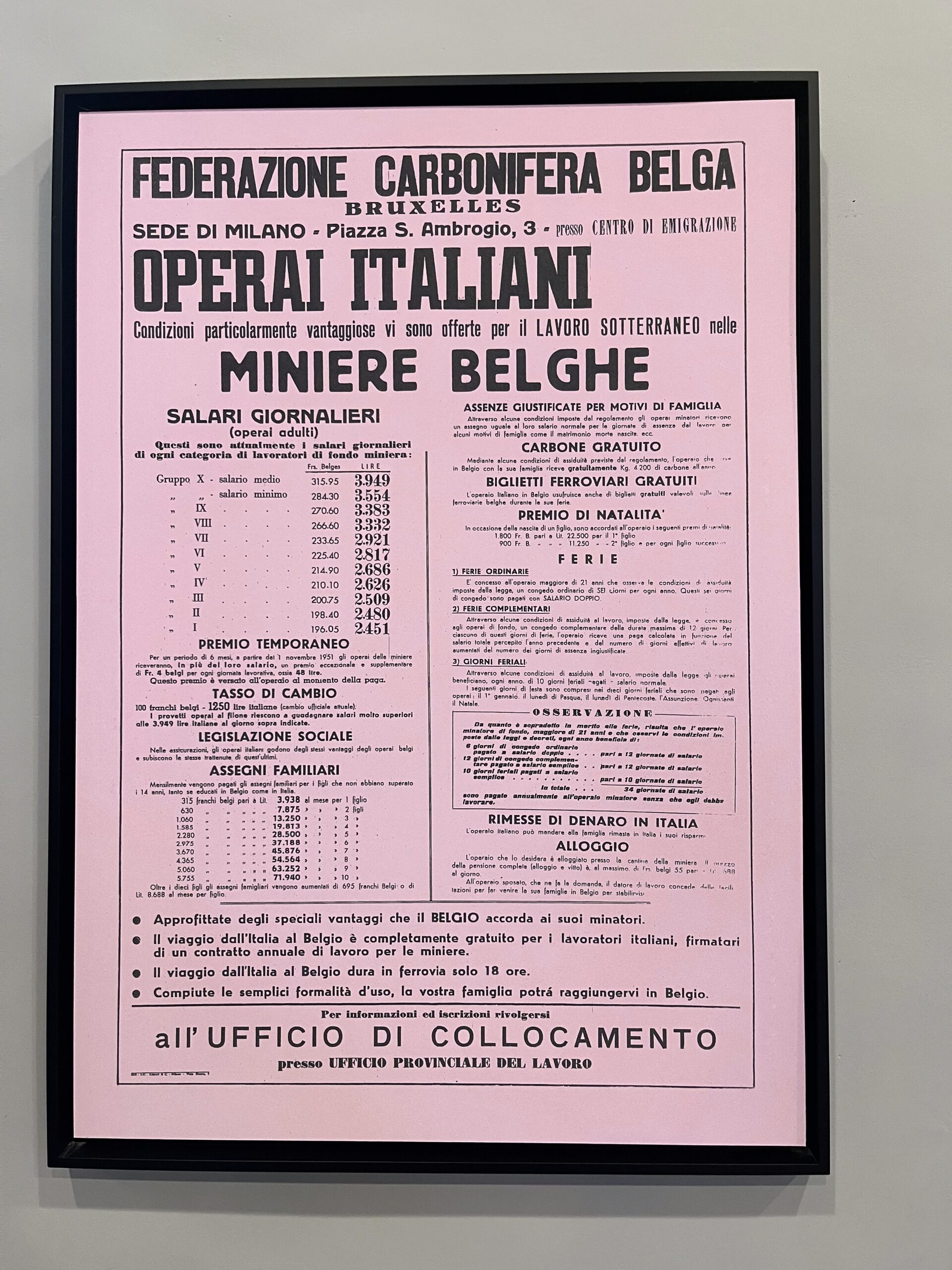
    Historic poster used to persuade Italians to leave for Belgium. The print forms part of the permanent exhibition at the Bois du Cazier. Credits: Eunews
    Historic poster used to persuade Italians to leave for Belgium. The print is part of the permanent exhibition at the Bois du Cazier. Credits: Eunews

    In the mines, the difficult working conditions and the lack of adequate safety measures led to a great many accidents and numerous disasters. However, as they were not as tragic as the Marcinelle disaster, they have been forgotten. Most of the sites in Wallonia had old and dilapidated facilities, to the extent that as early as the 1920s there had been discussions about the possible closure of the Bois du Cazier. Rising demand for coal and the arrival of cheap foreign labour prompted industrialists to exploit the facilities to the full, postponing their modernisation and safety upgrades. It was the miners alone who paid the price for this inaction. 

    Di Pietro recounts that, initially, the Belgians were hostile towards the Italian workers, accusing them of “stealing their livelihood,” even though the Belgians themselves were the first to refuse to work in the mines. He also adds that it was mainly Italians from the South who emigrated, as industrial activities in Northern Italy were already profitable and offered plenty of job opportunities. In the Marcinelle disaster, Abruzzo was the Italian region that lost the most lives. The incident still makes him angry, “because justice has not been done.”

    The Marcinelle trial and the importance of remembrance

    The trial to establish responsibility for the disaster and the safety failings at the mine began in May 1959 at the Charleroi court. With its first-instance judgement, handed down in October 1959, the court acquitted all the defendants, sparking fierce controversy and disappointment among the victims’ families and the emigrant communities. In 1961, an appeal judgement was handed down, in which the Court partially overturned the acquittal, sentencing the mine manager to a six-month suspended prison sentence and a fine of 2,000 Belgian francs (approximately €300 at current rates), while upholding the acquittal of the other defendants. 
    For this reason, Di Pietro emphasises the importance of keeping the memory of the disaster alive; to this end, he takes part in events and debates, to ensure, above all, that the younger generations, both in Belgium and in Italy, understand this history. The significance of this chapter in Italian and Belgian history has also been recognised by the European institutions. 

    On 22 July, the European Commission proposed that 8 August be designated as the European Day in memory of the victims of accidents at work and for the protection of workers’ dignity, an initiative to which the European Parliament had given its approval during the plenary session on 21 May.

    Despite everything, the former miner is proud of his hard work today, as it has enabled him to build a house in his home village, where he returns every summer.

    English version by the Translation Service of Withub
    Tags: abruzzoAmbasciata Italia Belgiobelgiumdopoguerraeuropean speakingmarcinelleminatoriminiereworld war ii

    Related Posts

    L'orologio della miniera di carbone di Bois du Cazier, fermo all'ora del disastro di Marcinelle (8 agosto 1956)
    In Brief

    The Commission is proposing 8 August as “European Day for Victims of Accidents at Work”

    22 July 2026
    Operai via Unsplash
    Rights

    EU Parliament approves 8 August as European Day in Remembrance of the Victims of Accidents at Work

    21 May 2026
    Mandatory Credit: Photo by Shutterstock (15557186p)
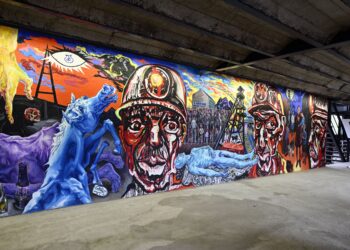
A wall painting pictured during a visit to Le Bois du Cazier industrial heritage site and former coal mine, in Marcinelle, on the second day of the official state visit of the Italian President, on Tuesday 21 October 2025, in Brussels. The Italian President and his daughter are on an official state visit to Belgium from 20 to 22 October 2025.
Belgium Italy State Visit Tuesday, Marcinelle, Belgium - 21 Oct 2025
    Business

    European Parliament proposes making Marcinelle a symbol for victims of workplace accidents

    6 May 2026
    L'orologio della miniera di carbone di Bois du Cazier, fermo all'ora del disastro di Marcinelle (8 agosto 1956)
    Politics

    Italy proposes August 8 as ‘European Day of Remembrance of the Victims of Accidents at Work

    13 May 2025
    map visualization
    Lezione universitaria via Unsplash

    Research and development: the EU is stepping up investment, with €130 billion allocated in 2025

    by Rodolfo Fabbri @ErreFabbri
    7 August 2026

    The figure represents an increase of 2.4 per cent compared with the €127.1 billion recorded in 2024 and a 60.5...

    Spagna - Italia - Schengen - Ceuta - migranti

    Spain issues an ultimatum to Italy over the migration crisis in Ceuta: “Reconsider the suspension of Schengen.” But Rome is not having it

    by Annachiara Magenta annacmag
    7 August 2026

    The Spanish government had given Italy until the end of Sunday 9 August to lift the temporary border controls it...

    Il mare di Torre Scissure a Gaeta, guardando a Nord, verso il Circeo

    The Eunews daily newsletter is taking a break

    by Redazione eunewsit
    7 August 2026

    It will be back at the start of September

    Visita dell'Alta rappresentante per la Politica estera e di sicurezza dell’UE, Kaja Kallas, al presidente dell'Ucraina, Volodymyr Zelenskyy, ottobre 2025. Crediti: Commissione europea

    War in Ukraine: the EU imposes sanctions on five individuals linked to the Russian military establishment

    by Iolanda Cuomo
    7 August 2026

    Brussels – “ As a response to the recent series of Russian airstrikes, the EU today adopted new sanctions listings...

    • Director’s Point of View
    • Opinions
    • About us
    • Contacts
    • Privacy Policy
    • Cookie policy

    Eunews is a registered newspaper
    Press Register of the Court of Turin n° 27


    Copyright © 2025 - WITHUB S.p.a., Via Rubens 19 - 20148 Milan
    VAT number: 10067080969 - ROC registration number n.30628
    Fully paid-up share capital 50.000,00€


    No Result
    View All Result
    • it ITA
    • en ENG
    • Politics
    • Newsletter
    • World politics
    • Business
    • General News
    • Defence & Security
    • Health
    • Agrifood
    • Altre sezioni
      • Culture
      • Rights
      • Energy
      • Green Economy
      • Gallery
      • Finance & Insurance
      • Industry & Markets
      • Media
      • Mobility & Logistics
      • Net & Tech
      • News
      • Opinions
      • Sports
    • Director’s Point of View
    • Draghi Report
    • Eunews Newsletter

    No Result
    View All Result
    • it ITA
    • en ENG
    • Politics
    • Newsletter
    • World politics
    • Business
    • General News
    • Defence & Security
    • Health
    • Agrifood
    • Altre sezioni
      • Culture
      • Rights
      • Energy
      • Green Economy
      • Gallery
      • Finance & Insurance
      • Industry & Markets
      • Media
      • Mobility & Logistics
      • Net & Tech
      • News
      • Opinions
      • Sports
    • Director’s Point of View
    • Draghi Report
    • Eunews Newsletter

    Attention