
![[foto: MPD01605/Wikimedia Commons]](https://www.eunews.it/wp-content/uploads/2026/08/European_flag.jpg)
Brussels – It’s not just Iceland. The 29 August vote, which rejected the resumption of EU accession negotiations, effectively blocking the integration project, is not the only vote against the idea of a united Europe; it is merely the latest in a long series of referendums which, in some countries, have highlighted a disconnect between the public and the political class, as well as criticism of the EU and the idea of embracing it.
The European referendum: a history spanning more than 50 years
The first referendum held on European matters dates back to 1972: on that occasion, the issue at stake was the first enlargement of the then European Economic Community (EEC). There were four candidate countries: Denmark, Ireland, Norway, and the United Kingdom. The vote took place in these four countries plus France, the only founding members of the EEC (Italy, France, West Germany, Belgium, Luxembourg, and the Netherlands) to be granted a genuine right of veto: a French “no” would effectively have blocked any new accession. The French “allowed” the candidate countries to join, and they did so, except Norway. The Norwegians’ “no” to EEC membership was the first rejection of a European integration project in history.
Of all the candidate countries, only the United Kingdom did not call its citizens to the polls. However, in the wake of the energy and oil crises that followed the Yom Kippur War between Israel and the Arab states, the UK’s economy was affected, and the country held a referendum to decide whether to remain in the EEC. The British voted “yes”. It was 1975. Meanwhile (in 1972), Switzerland approved trade agreements with the EEC via a referendum. This marked the beginning of Switzerland’s path towards closer ties with a united Europe, albeit in a hybrid capacity.
Greenland’s secession and Denmark’s “no” to economic rules: the 1980s
It was not only the United Kingdom that called the EU integration project into question. Denmark’s accession in 1972 was marred by a “no” vote from the electorate of Greenland, an autonomous territory of the Kingdom of Denmark. When the Eurosceptic Siumut party won the local elections in 1979, the Greenlandic government held a referendum to ask whether Greenlandic voters alone wished to remain part of the EEC: the vote on 23 February 1982 marked the first instance of withdrawal from the European Union.
However, as a counterweight to Greenland’s withdrawal, the 1980s saw popular support for the Single European Act – the treaty aimed at moving beyond the EEC’s focus on coal and steel and creating a genuine single European market. In February 1986 and May 1987, voters in Denmark and Ireland respectively gave their approval. On 18 June 1989, it was the Italians’ turn to say “yes” to a new vision of Europe: the consultative referendum calling for “the transformation of the European Communities into a genuine Union, with a government accountable to Parliament, and entrusting the European Parliament itself with the mandate to draw up a draft European Constitution to be submitted directly for ratification by the competent bodies of the Member States” received 88 per cent “yes” votes. This is the first – and so far the only – national policy-oriented referendum in the history of the Italian Republic.
The 1990s: between euro-enthusiasm and further rejections
The 1990s saw further referendums on the integration project: in 1994, the EU’s latest enlargement took place, following “yes” votes in referendums in Austria, Finland, and Sweden. But in the same year, Norway rejected the idea of joining the European Union for the second time: on 28 November 1994, 53 per cent of eligible voters closed the door on the EU. This “no” vote followed the Danish “no” on 2 June 1992, when citizens rejected the Maastricht Treaty and its rules on public finances (deficit and debt limits). Fears of an excessive loss of sovereignty prevailed, and amendments and new information campaigns were needed to secure approval – again by referendum – a year later (18 May 1993). The Maastricht Treaty itself was put to a referendum in France and Ireland (1992), where it passed the test at the ballot box.
In 1997, Switzerland also rejected the idea of a European Union: its citizens called for accession negotiations not to be opened, thereby scuppering any possibility of the Swiss Confederation joining the EU. The EU could take some comfort from the 1998 referendums in Ireland and Denmark, which approved the Treaty of Amsterdam and the changes introduced regarding political integration.
“No” to the euro, “no” to the EU Constitution and further enlargement: the 2000s
The story of “yes” and “no” to the EU continued into the following decade: on 28 September and 14 September 2003, Denmark and Sweden held referendums on adopting the euro, and both countries rejected the single currency. On 29 May and 1 June, 2005, however, electoral “rejections” came from the citizens of France and the Netherlands, founding members of the EU, of the idea of a European Constitution (which, however, passed the referendums in Spain and Luxembourg that same year). The “no” votes in France and the Netherlands forced the project to be shelved and revised at the EU level: this was the genesis of the 2007 Treaty of Lisbon, an intergovernmental agreement which, however, did not prevent a referendum in Ireland. After being rejected in 2008, a second referendum in 2009 led to its approval and ratification.
However, 2003 saw the citizens of Estonia, Latvia, Lithuania, Malta, the Czech Republic, Slovakia, Slovenia and Hungary vote in favour of EU accession, in what would become the great enlargement of 2004. A significant event that redrew borders and reshaped the political landscape.
The row with Greece, immigration in Denmark and Brexit: the 2010s
Citizens also voted on the European Union in the following decade, with Denmark once again taking centre stage. The referendum on 3 December 2015 rejected the possibility of waiving the opt-outs on justice and home affairs. The Danes remain in “control” of their own criminal justice and immigration policies. This vote was preceded by the referendum in San Marino on EU accession (20 October 2013), which did not go in the European Union’s favour.
The most significant “no” votes, however, came in Greece and the United Kingdom: on 5 July 2015, the Greeks voted against the agreement on international loans aimed at overcoming the economic crisis, thereby exacerbating the political crisis with their European partners, while on 23 June 2016 the referendum on the UK’s continued membership of the EU failed, marking the first time in the history of the integration process that a Member State has left the Union. The successful referendums on Croatia’s accession (2012) and on Ireland’s accession to the fiscal compact (2012) pale into insignificance compared to the rejections.
Recent years: votes driven by convenience
So far, it is easy to see how the history of referendums on the EU is linked to specific national circumstances: over the years, the popular vote has been driven by economic, political, and strategic interests rather than by a sense of European identity or pro-European sentiment. The EU was born out of a desire to create something new, more prosperous and safer, from a world devastated by the world wars. Countries sharing this same desire joined the founding members. In a nutshell, the EU has always been viewed as an opportunity. Those enjoying greater economic prosperity and greater internal security have often chosen to remain outside the EU. This is the case with Norway, Iceland, San Marino and, most recently, Iceland too. It is also the case with the United Kingdom, which has decided to say “farewell”, convinced that it no longer needs the EU.
Enlargement to the east occurred for historical and political reasons: the former satellite states of the USSR emerged from the collapse of the Soviet system with underdeveloped economies and a desire for greater independence and security. It was poverty and insecurity that drove governments and peoples, just as they have in recent years: Moldova’s 2024 referendum on EU membership can be explained by the desire to free itself from Russian interference and to receive generous European funding to aid economic and social recovery. The referendum held in Denmark on 1 June 2022, in which they decided to waive the opt-outs from participation in the common foreign policy, can be explained by the changed international context characterised by new tensions and growing uncertainties.
English version by the Translation Service of Withub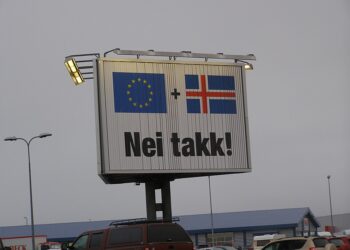
![Proteste per la brexit [Foto: Unsplash]](https://www.eunews.it/wp-content/uploads/2026/06/alexander-andrews-qDni9uoarQ-unsplash-350x250.jpg)


![[foto: MPD01605/Wikimedia Commons]](https://www.eunews.it/wp-content/uploads/2026/08/European_flag-120x86.jpg)