
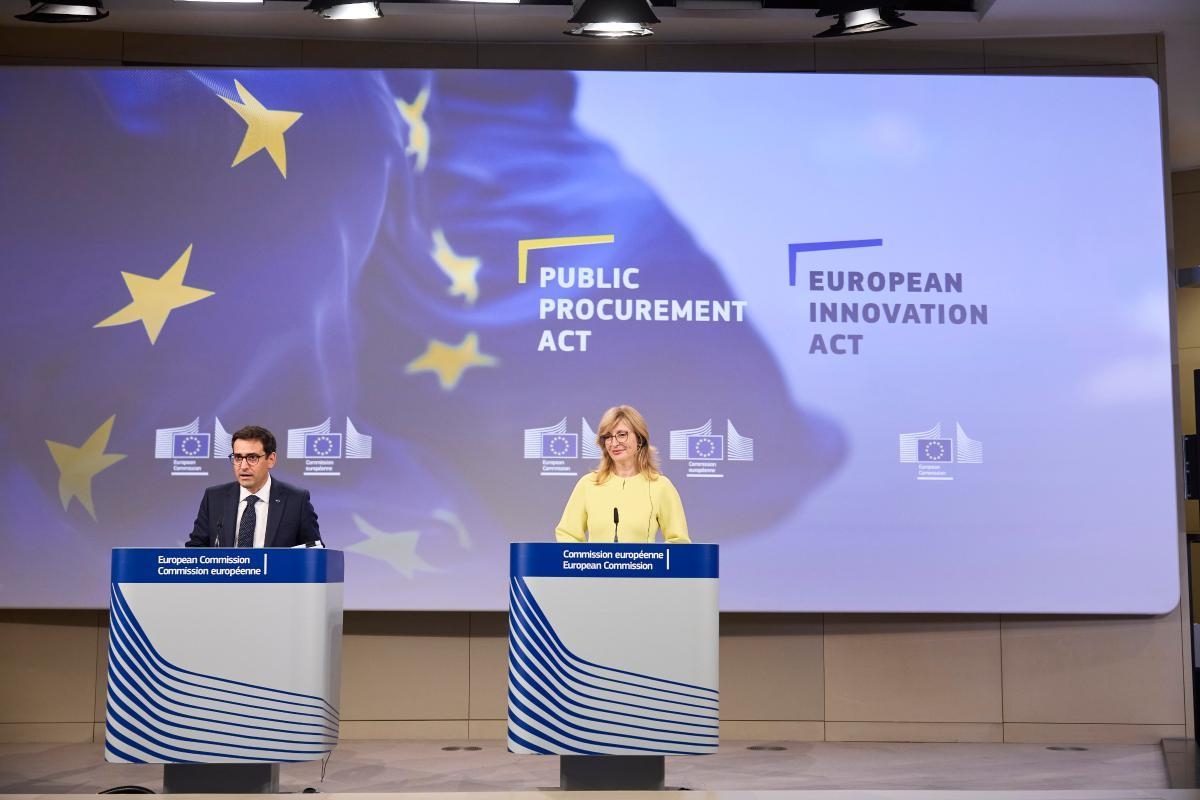
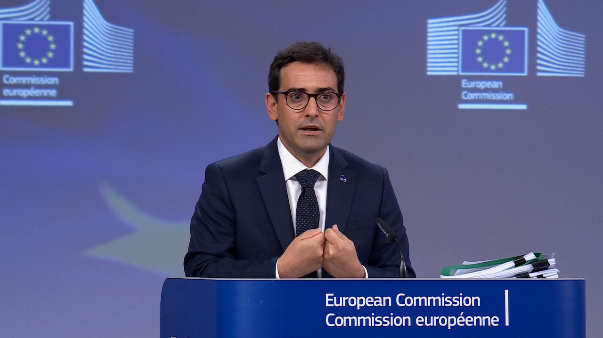
Brussels – Too many rules, too many steps, too many barriers to entry: public procurement is a jungle, and the Commission intends to bring order to a sector seen as key to attracting investment and capital. The Public Procurement Act, the regulation designed for this purpose, aims to reform the sector with a view to simplification and greater competitiveness. The initiative, according to the Executive Vice-President for Industrial Strategy, Stéphane Séjourné, “will help complete the single market for public procurement”, which is worth around 2,500 billion euros and accounts for approximately 15 per cent of the European Union’s GDP.
The proposed revision of the public procurement rules aims to safeguard and revitalise the sector through comprehensive simplifications, which the European Commission estimates will generate up to 649 million euros in savings, including a reduction in administrative burdens for contracting authorities (€80 million) and for economic operators (€570 million). Savings that can be reinvested elsewhere.
A single European platform for all public procurement
The main new feature is the proposal to create a single European online portal for every individual tender. For the European Commission, the key to simplification and the reduction of administrative burdens lies in creating an integrated digital market for public procurement, comprising interconnected and interoperable “e-procurement” platforms across Member States. Digitising procedures and records will result in a faster, more immediate system, without the risk of process duplication.
European Commission estimates suggest that the digital procurement market could generate recurring annual savings of 220 million euros for public purchasers (€4,700 per public procurer or €700 per procedure).
Less flexibility for Member States
In fact, the main change concerns the political nature of the measure: the draft bill on public procurement aims to make the rules simpler and clearer through a reorganisation that removes Member States’ room for manoeuvre, consolidating the three existing directives on the subject into a single regulation. So, farewell to Member States’ discretion, in the name of competitiveness. The “extensive” consultations with public procurers, businesses, trade unions and civil society held over recent months explain this decision. In short, Brussels is attempting to put the other capitals’ backs against the wall and move towards more European, less national regulations.
Better terms – it’s no longer just about the price
The Single Regulation on Public Procurement introduces the standard award method based on the Best Price-Quality Ratio (BPQR). What has changed compared with the current rules is that “it is no longer just the price that counts”, Séjourné said. Environmental or social quality criteria will therefore account for at least 30 per cent of the contract value, rising to 50 per cent for labour-intensive contracts. The successful tenderer may deviate from these thresholds, provided that sustainability is ensured in another way – for example, through minimum quality requirements – but only after giving notice and providing evidence.
It is in this context that the condition of reciprocity applies, particularly to operators from non-EU countries: should the commitments made or EU rules not be complied with, the Commission could prohibit access to the single market and exclude operators from the foreign country from the procurement sector. “With this reform, we are cutting bureaucracy, giving public buyers more flexibility and making it easier for our SMEs to compete across the Single Market,” Séjourné added.
Sensitive and strategic procurement: the security clause
Finally, there will be safeguards for those tenders for key infrastructure projects: the proposed single regulation on public procurement allows, and in some cases requires, public procurers to address risks relating to the security and public safety of the Union or Member States, sensitive information, cyber security and undue influence from third countries.
The new provisions on security of supply would apply to contracts involving entities linked to critical infrastructure and are aimed at supporting the diversification of supply chains, security of supply and crisis preparedness.
English version by the Translation Service of Withub



![Il ministro dei Trasporti, Matteo Salvini [Bruxelles, 5 dicembre 2024. Foto: Emanuele Bonini per Eunews]](https://www.eunews.it/wp-content/uploads/2024/12/salvini241205-120x86.jpeg)