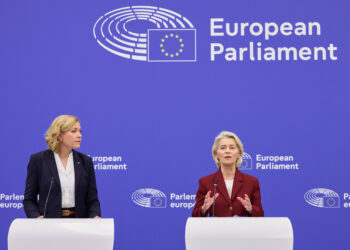

A clear picture has emerged with increasing clarity in recent weeks: Artificial Intelligence is racing forward at a speed that was unimaginable – and, until a few months ago, unimaginable even to its creators. This rapid pace of development is a stress test for lawmakers – both national and supranational – and for anyone called upon to define its boundaries, measures, and safety limits.
Recent reports of generative programs in the United States that have slipped beyond human control, along with the warnings issued by Silicon Valley giants, make it clear that a model’s speed, scale, and security are distinctly separate characteristics.
And the appeal to ethics – made even by players who, by choice, have never considered ethics a foundational element of their AI – sounds like a failed attempt to cover up the promised scale and investments that, at the moment, are still nowhere to be seen.
According to a vast body of literature, the best Artificial Intelligence model was the largest, most general-purpose, and most powerful one, based on trillions of parameters.
But it is precisely these models that are now being called into question by their own creators—that is, by those who program and own the AI but now claim they do not know how to manage it, following a race driven by private interests and market dominance. “Without safety measures, AI could take control of the Internet in six months,” said Dario Amodei, co-founder and CEO of Anthropic, expressing hope that an agreement could be reached with his competitors to rein in the most advanced AI systems. It sounds like an oxymoron.
We don’t know if unregulated development will truly lead to such frightening scenarios. We believe in innovation, confident that every technology must be guided by ethical principles and shared rules. The challenge is to successfully regulate – to “give form and soul” to a field as fluid as AI, to a technology as disruptive as this.
Fortunately, the situation in Europe is different from that in the United States – thanks in part to the implementation, as of August 2, of the provisions of Regulation (EU) 2024/1689, the AI Act. We have always supported the need for regulation. AI is a language, a tool; the goal is to make it an accessible and usable resource, a familiar territory. To facilitate understanding of the risks and to educate end users on responsible use.
AI is never a neutral game, nor is it a static phenomenon. We need to develop a common language and common legislation, keeping in mind the extremely rapid pace of technological evolution.
While the economic gap between one country and another was until recently defined by the “spread,” today the issue is the disparity between the rapid pace of AI development and the regulatory frameworks provided by current safeguards. And this is where Europe has something to contribute.
To address AI safety, I believe we need a forum for dialogue and discussion that brings companies – first and foremost – to the table alongside representatives from international organizations, chambers of commerce, governments, associations, manufacturers, and, more broadly, all intermediary bodies.
Without a functional dialogue system designed to listen to everyone’s needs, there is a risk that AI will not be truly safe and representative. And we cannot afford that.
There have already been efforts in this direction: more than 200 prominent figures and 10 Nobel laureates signed an appeal to the UN General Assembly in September 2025 calling for the establishment of global, binding “red lines” on artificial intelligence – an initiative that continued with the Global Nobel Laureates Assembly held in Rome and Castel Gandolfo in July 2026.
Today, this is the priority: agreeing on rules and the consequences for those who violate them.
But when it comes to the rules and their scope, it’s important to be clear. As in any regulated market, these must be agreed upon by mutual consent and cannot be defined unilaterally by the AI providers themselves. Technologies – especially in sectors of such critical importance – must be subject to validation and testing by third parties that are independent in their judgments and assessments. In short, there must be a system of independent controls and audits. To ensure that the side effects of a drug do not cause more harm than the condition it is intended to treat. Rules, not general principles – regulations that demand respect and compliance.
The second point, however, is the decline of large, general-purpose models in corporate contexts. Enough with gigantism; we need agility, efficiency, and economic sustainability in our choices. We need capable, lightweight, manageable models that can run even on small-scale systems, accessible to everyone, and whose economic benefits are effectively measurable within organizations. We must contrast the vertical with the horizontal, training AI with proprietary data while prioritizing the protection and respect for that data itself.
Looking at the sector’s macroeconomic data, it is clear that the AI market – at least the one promoted by the major advocates of scale – does not currently match the expected size based on current investments. Consequently, the accusation that the market is using regulations to hinder business development now appears closely tied to the financial reality that not all AI products are performing as hoped. This is not due to the technology – which remains essential – but rather to the prevailing business models currently in place.
* Valeria Sandei is Chief Global AI di Almaviva Group e President & CEO di Almawave Labs, a Group company active in the field of Data & Artificial Intelligence. Among her other roles, she serves as Chair of The Data Appeal Company, SisTer, Almawave do Brasil, Almawave Corp, and Mabrian Technologies. She is also a member of the Board of Directors of Tivit, a Brazilian IT company that joined the Group in 2025, and of Almaviva Solutions, a pillar of the Brazilian IT market.
Also in 2025, Sandei received the Italia Informa Award for Italian Excellence, the Key4biz Award for Artificial Intelligence, and the John McCarthy Award. She has been included in Fortune Italia’s list of the 100 most influential women of 2024 and in Forbes’ list of the 100 best managers of 2024.
She is also a member of the B7 Advisory Board, the Unicredit Centro Advisory Board, and the Astrid Observatory on Artificial Intelligence; she is a co-author of three U.S. patents; and she serves on the Scientific Committee of the AI & Business Strategy MBA program at the RCS Academy Business School.