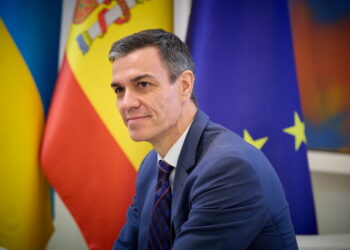
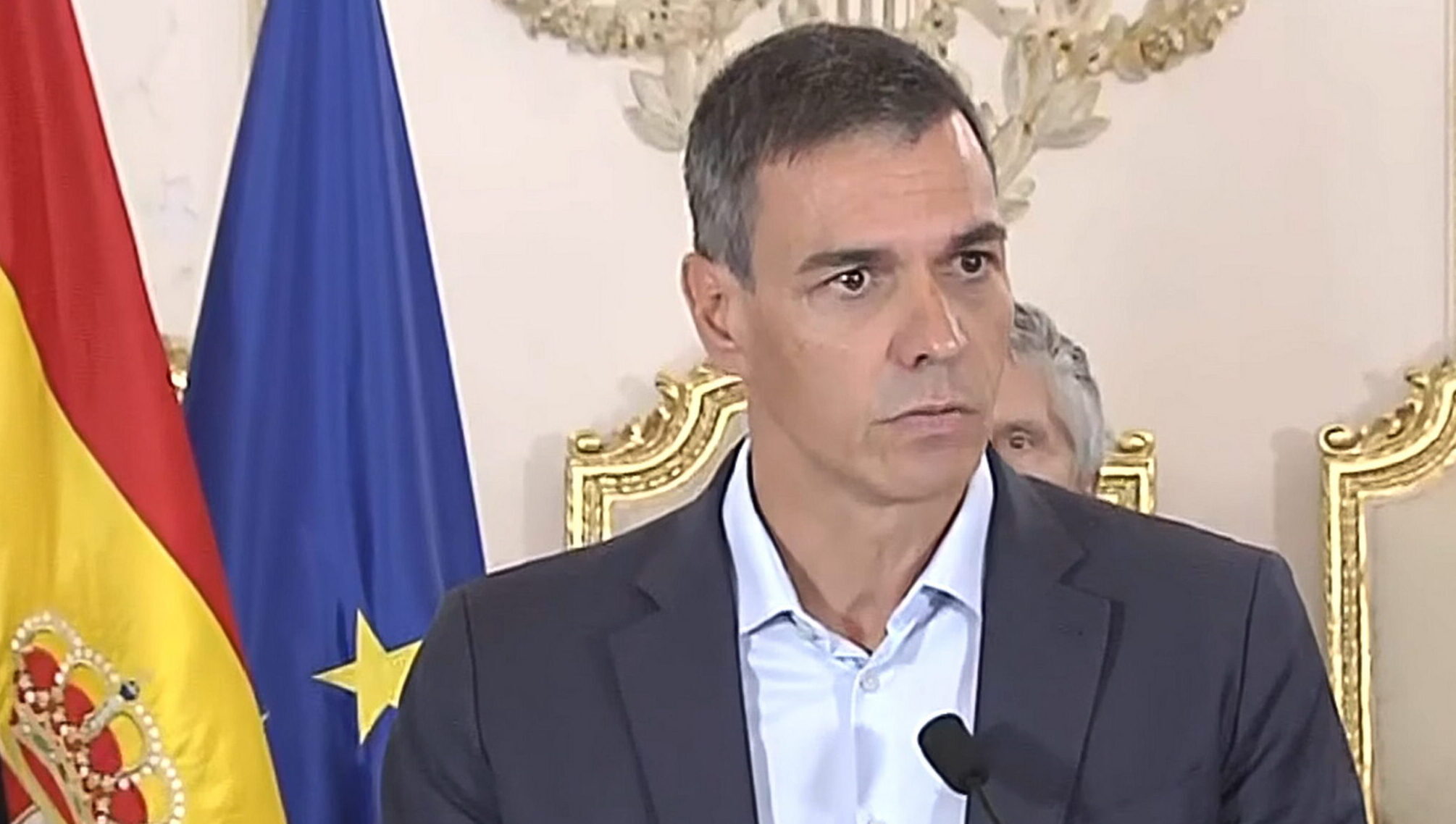
Brussels – Spain is set to go to the polls on 29 November for snap elections announced by Prime Minister Pedro Sánchez, who is calling on citizens to vote to openly challenge the People’s Party, a political group in the EPP family in Europe. Sánchez did not announce his resignation – a word he never uttered during his speech, which lasted around 15 minutes – but he did announce the convening of “an extraordinary meeting of the Council of Ministers” to work on the election campaign: “Let the Spanish people now choose which path Spain should take: that of the far right, which seeks to curtail social rights for the benefit of a privileged minority, or that of a bastion of progressivism.”
This is the challenge issued to what he describes as “the worst opposition in democratic history, devoid of any sense of institutional responsibility.” An accusation directed at the Spanish People’s Party, which has been at the forefront of the campaign to have the government’s decrees on tackling the housing crisis in Spain rejected in Parliament. On the one hand, the vote triggers a government crisis—with Sánchez losing the support of the Catalan separatists; on the other hand, it has sparked popular protests, with street demonstrations and strikes, as well as Sánchez’s counteroffensive, as he now calls on citizens for a broader mandate: “Parliament must have a broader progressive majority” to advance an agenda focused on social rights, he stressed.
Sánchez is seeking the support of the masses, stressing that those who have said ‘no’ to greater housing rights and, ultimately, to easy evictions are those who own two or more properties. The outgoing prime minister is rallying people against this Parliament and these political parties, especially the People’s Party and Vox: “There are social injustices to be rectified and social objectives to be achieved,” he insists. This requires a clear mandate from the electorate, which Sánchez is calling for in the 29 November vote.
The Socialist leader recalls what the government has achieved over the past three-year term of office (Sánchez’s third term): “We have supported Ukraine, denounced genocides while others looked the other way, tackled crises and responded to unilateral decisions.” He makes no direct reference to specific issues or individuals. Still, criticism of Donald Trump’s United States and the conduct of Benjamin Netanyahu’s Israeli government is implicit in his speech, as is criticism of European allies over the Ceuta crisis, which also implicates Italy. “We are among the fastest-growing countries; we have accelerated the use of NextGenerationEU funds and brought social inequality down to its lowest level since records began,” he claimed.
Sánchez is going all out to win over Spain and establish himself as an alternative to the far right, both in Europe and, above all, in today’s world. He fires another shot at the Spanish People’s Party when he points out that the central government, the one he presides over, “has allocated funds to local governments which have then privatised healthcare.” This is the Spanish opposition that “has proposed nothing” but “has merely boycotted our work at local level.”
Social problems in France too
It is open warfare in a Europe where the rollback of social rights is fueling heated debate—and more. While in Madrid the rejection of the housing decrees has led to demonstrations and strikes, in France students are rioting in the city streets, driven by youthful discontent stemming from unaddressed issues regarding the right to education, including a shortage of teachers and overcrowded classrooms. This protest is overshadowing the demands of public-sector workers, who complain of wages that are too low in the face of an excessively high cost of living, and of firefighters, who call for more staff and equipment.
English version by the Translation Service of Withub