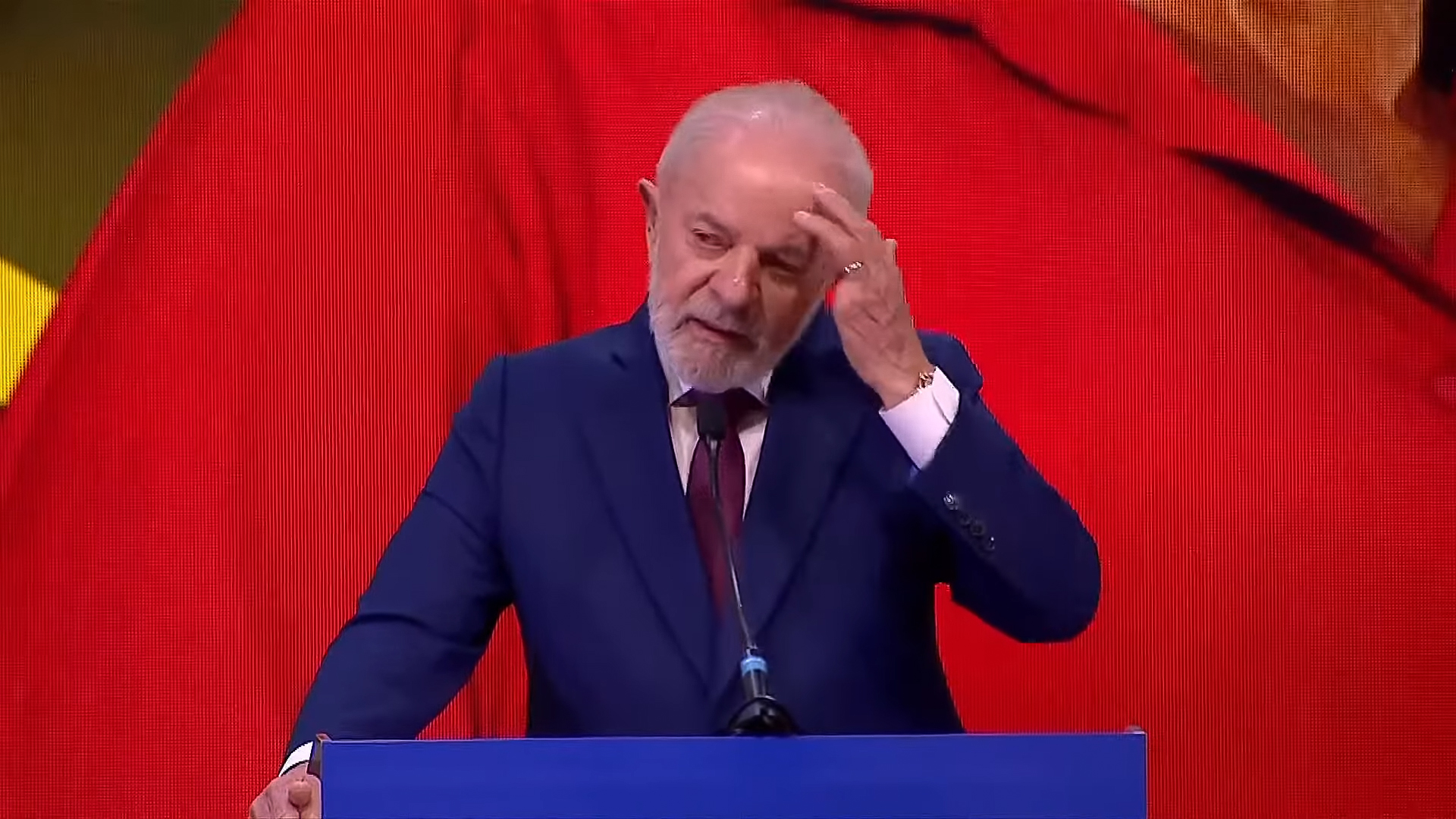
Brussels – Lula again, or Bolsonaro once more – but the younger one? Brazil will need a run-off to choose its president, in an election dominated by low turnout (21 per cent of voters abstained in the first round) and irregular behaviour on social media, which has sparked an outcry in Europe. The day of reckoning will be 25 October, when the second round will determine whether Brazil remains under Labour leadership or whether power returns to the far right.
In Brussels, the day after the first round, questions are being raised about the resilience of democracy and the role of social media. Flavio Bolsonaro is leading in the polls (47 per cent) ahead of the outgoing president, Luiz Inácio Lula da Silva (45 per cent), a result likely influenced by the decisions of Meta, the internet giant owned by Mark Zuckerberg, which controls the well-known platforms Facebook and Instagram – a situation criticised by Sandro Ruotolo (PD/S&D), a member of the Special Committee on the European Shield for Democracy.
“Ten days before the first round of the Brazilian presidential elections, Meta suddenly disabled the adverts on the Facebook page of President and candidate Luiz Inácio Lula da Silva,” the MEP reports and laments. Lula’s team “lodged an appeal and, just a few hours later, the adverts were reinstated”.
But that’s not all, because, as the MEP himself reports, “on the same day Meta also suspended an Instagram account that had shared a video which went viral about a corruption scandal involving Flávio Bolsonaro, a presidential candidate and Lula’s main rival.” It transpired that subsequently “the account was reactivated and Meta apologised, citing an internal error.” Still, in the meantime, these events ended up undermining the Workers’ Party candidate and instead benefiting the national-conservative one.
https://www.eunews.it/en/2026/05/14/barbero-censored-by-meta-over-justice-referendum-eu-we-monitor-platforms-compliance-with-regulations/
“In the midst of an election campaign, a private company had the power to suspend one of a presidential candidate’s communication channels unilaterally and to censor political content concerning his main opponent,” continues Ruotolo. The PD’s delegation leader in the European Parliament, Nicola Zingaretti, asks: “How free are our democracies if a handful of private platforms can decide who can speak, to whom and when?”
The issue raised brings the topic of foreign interference – all of it from the US – in the elections of independent and sovereign countries back into the spotlight. First it was Elon Musk, owner, among other companies, of the social media platform X, who had openly sided with the far right in Germany. Now it is Zuckerberg who has ended up meddling heavily in the Brazilian election.
Not only that: In Romania, due to pro-Russian propaganda on TikTok, the November 2024 elections were declared invalid, and the European Commission did not hesitate to welcome the initiative with satisfaction. Now, however, there is complete silence.
English version by the Translation Service of Withub