Brussels – Albania is moving towards the European Union and has secured the closure of yet another chapter in the accession negotiations. This milestone was reached yesterday (13 October), when Tirana and the EU agreed to the provisional closure of Chapter 20 on industrial policy and enterprise during an intergovernmental conference held in Luxembourg. This achievement follows the closure, last July, of the chapters on science and research, education and culture, and external relations. “This achievement reflects our commitment to advance Albania’s EU integration path,” said Thomas Byrne, the Irish Minister for European Affairs and Defence, who is chairing the conference under the Irish Presidency of the Council of the EU. Byrne called on Tirana to continue with the key reforms needed to make progress in the coming months.
The closure is provisional and does not mean the conclusion of the entire negotiation process: agreements on individual chapters only become final once an overall agreement has been reached on all areas of the EU acquis. The EU also retains the option to revisit chapters that have already been closed, if necessary. In general, the EU accession process provides that, once candidate status has been requested and granted, the country concerned begins political negotiations on a total of 33 chapters, grouped into six categories (clusters): fundamentals; the internal market; competitiveness and inclusive growth; the Green Deal and sustainable connectivity; resources, agriculture and cohesion; and external relations. Once all the negotiation chapters across the six clusters have been closed, the country automatically becomes an EU Member State.
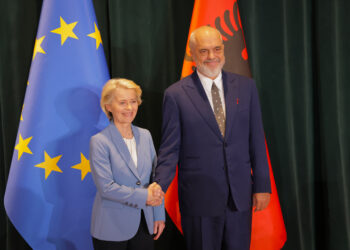
Yesterday’s progress confirms Albania’s position among the candidate countries closest to accession. During her visit to Tirana on 30 September, the President of the European Commission, Ursula von der Leyen, described the country as “one of the frontrunners” in the enlargement process, while stressing that “there is still work to be done.” Among the priorities that Brussels identified are reforms to the judicial system, the electoral framework and environmental protection. “It is not enough to adopt new laws,” von der Leyen warned: “It is also necessary to ensure they are effectively implemented and to bring about tangible changes for citizens.”
The progress Tirana is making runs parallel to that of Brussels, which must prepare for a larger Union. The European Commission is working to adapt its institutions, policies, and budget to the accession of new members. Brussels’ proposals include greater flexibility in the negotiation process and the gradual integration of candidate countries into certain European policies before accession.
The aim remains to link the pace of enlargement to the results of the reforms, while ensuring the Union is prepared for the consequences of the future accession of new Member States. Albania, Montenegro, Ukraine, and Moldova are the four countries considered furthest along the path. For Albania, the closure of Chapter 20 represents a further step forward, but the path to accession remains contingent upon the completion of negotiations and compliance with European criteria.
English version by the Translation Service of Withub