Brussels – Recovery, investment opportunities and “concrete steps for the future”: these are some of the objectives of the
Syria Partnership Coordination Forum
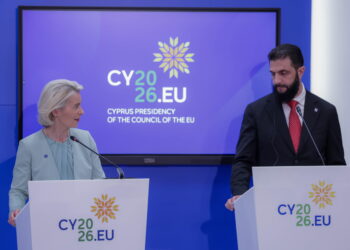
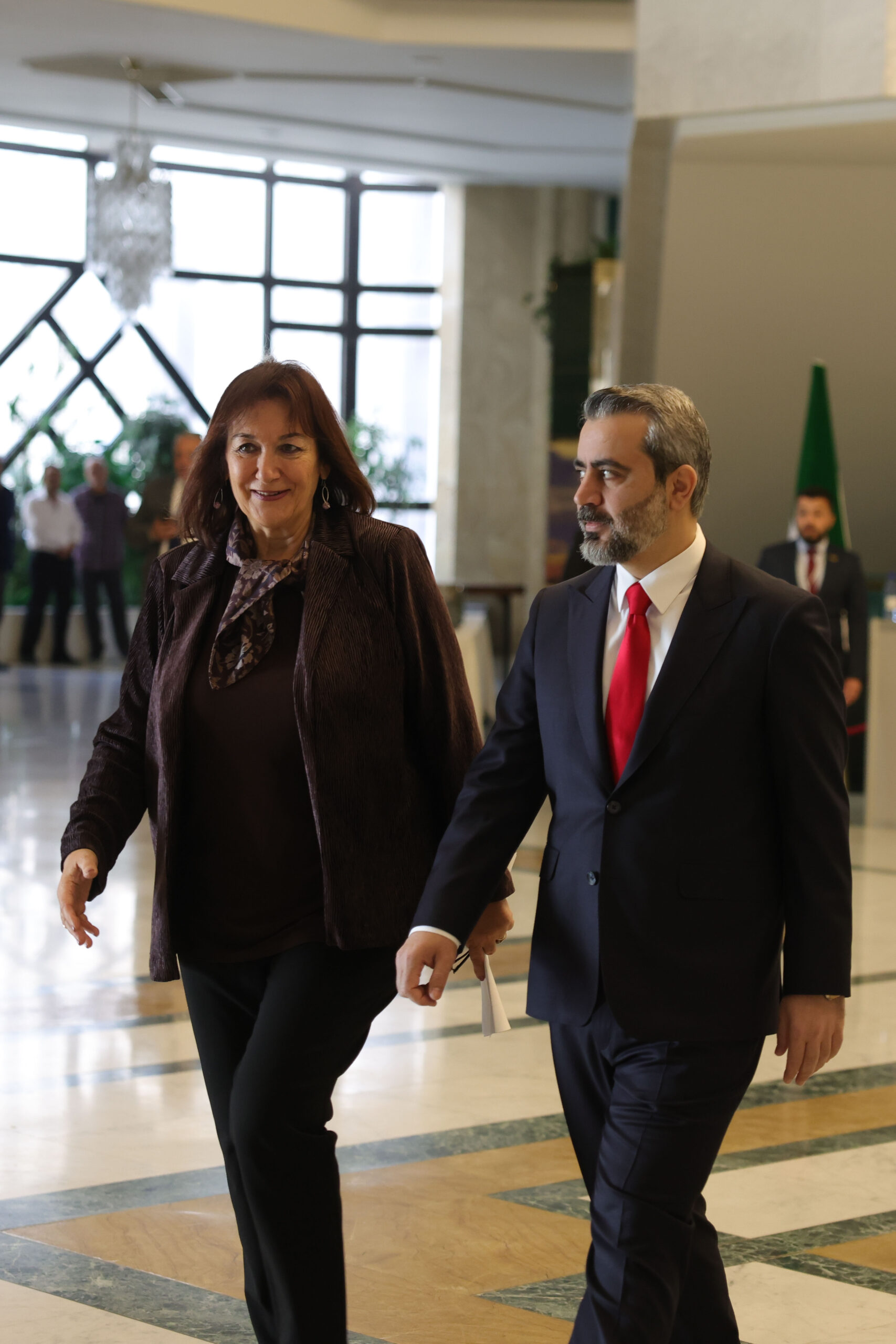
(SPCF), which met today (17 November) for the first time in Damascus. Co-chaired by Syria and the EU, the initiative brought together representatives from EU Member States, G7 countries, other states on the Arabian Peninsula, the United Nations and international financial institutions such as the World Bank, the European Investment Bank (EIB), the European Bank for Reconstruction and Development (EBRD), and the Islamic Development Bank (IDB). They were also joined by representatives from civil society. “The forum focused on coordinating international support and attracting private investment in line with Syria’s priorities, so that businesses can reopen, people can find work, and social services can recover,” stated the Commissioner for the Mediterranean, Dubravka Šuica, who opened the forum alongside the Syrian Foreign Minister, Assaad Al-Shaibani. The Commissioner held “a very productive meeting” with the Minister, during which they also discussed respect for human rights and the protection of minorities, which “are fundamental to our relationship with Syria” because “all Syrians must be able to have their say on the future of their country.”
Last week, European sources close to the matter explained that the European Union now intends to “move beyond a purely humanitarian approach” in its relations with Damascus. Specifically, it aims to pursue “two parallel tracks: on the one hand, to continue providing humanitarian assistance and, on the other, to devote concrete resources and commitment to the reconstruction of Syria, supporting the Syrian authorities in this process.” And today, Šuica reiterated this. The Commissioner pointed out that in May 2025 the EU “lifted economic sanctions, while maintaining the measures adopted for security reasons and those directed against Assad and his associates.” Furthermore, “we have fully reinstated the 1978 EU–Syria Cooperation Agreement, paving the way for trade between the two sides” and “we are ready to take EU–Syria relations a step further by working towards the conclusion of an Association Agreement”, as agreed yesterday by the EU Foreign Affairs Council. Brussels’ stance towards Damascus is clear: “The EU intends to deepen political dialogue, strengthen trade and economic cooperation, and support Syria’s reintegration into the Euro-Mediterranean area. Syria is an integral part of our Mediterranean pact,” added the Commissioner.
In line with the above, Šuica today officially inaugurated the Technical Assistance Centre for Syria, an initiative designed to support Syrian institutions in strengthening their capacities and advancing fundamental reforms to “restore confidence, attract responsible investment, and foster a sustainable economic recovery.” She also attended the signing of new EU-funded contracts to support the country’s recovery and reconstruction, focusing on the rule of law, the creation of a business-friendly environment and support for small and medium-sized enterprises. According to the Berlaymont Building, “these initiatives will help to revive the economy, strengthen public institutions, and improve living conditions for the population.” Furthermore, “by facilitating access to credit and business growth, the projects will promote job creation and improve the investment climate” and will contribute “to improving access to justice, supporting a recovery process that benefits the entire Syrian population.” The aim “is to develop capacity at both local and central levels,” explained an official who organised the Commissioner’s visit.
An EU official explained that the Commission is devoting considerable effort to the country’s banking sector to help it re-enter international economic circuits following the lifting of sanctions against Bashar al-Assad’s regime. This is proving to be a challenging phase, to the extent that, for example, “there are still no correspondent banks to facilitate the transfer of funds from Europe or the United States to Syria.” For this reason, “we are providing specialist expertise directly to the ministries in Damascus, including the Central Bank and the Ministry of Finance,” the official said. Work is therefore underway “with European banks and those from other countries to clarify the current situation and, at the same time, to allay fears regarding the perceived excessive risk involved in handling correspondent banking operations or investments in Syria.” However, this does not mean that the Syrian side should not “take significant steps: the banking sector requires adequate reform and regulation,” the official warned. “Under the Assad regime, in fact, the banking system did not operate according to normal standards. It is therefore necessary to take substantial action to regulate economic activities. And these aspects will constitute an absolute precondition for any major investment in Syria,” the official emphasised.
In addition to economic cooperation, during the bilateral meeting between Al-Shaibani and Šuica, the Syrian Minister formally undertook to adopt the EU system for registered exporters – this is a system for certifying the preferential origin of goods based on self-certification by economic operators, enabling them to draw up certificates of origin (or declarations of origin) directly on the invoice or other commercial document. Thanks to this commitment, Syrian products will be able to benefit from preferential access to the EU market, opening up new opportunities for Syrian exporters and supporting the country’s economic recovery.
Commissioner Šuica then visited the Deir Ali power station, accompanied by the Syrian Deputy Minister for Energy, Ibrahim Al-Adhan, and the Vice-President of the EIB, Gelsomina Vigliotti. The aim of the visit was to highlight the importance of restoring Syria’s energy infrastructure for economic recovery and to explore opportunities for future EU engagement in the energy sector – in collaboration with other international partners.
Following the fall of the Assad regime in December 2024, and after the ninth Brussels conference “Standing with Syria: meeting the needs for a successful transition” in March 2025, Syria and the EU established the SPCF. It operates through periodic plenary meetings at senior official level, as well as regular meetings at operational level. During her first visit to Damascus in June 2025, the Commissioner announced an allocation of €175 milion to support the rebuilding of Syrian institutions, promote transitional justice, and revitalise the country’s economy. In January 2026, the President of the European Commission, Ursula von der Leyen, announced further EU support amounting to approximately €620 million for the 2026–2027 period. This coming December, again in Damascus, a “Day of Dialogue” will be held for the second time, organised by the Syrian authorities, Syrian civil society, and the EU. “All Syrians must be able to have their say on the future of their country. The next Day of Dialogue, scheduled for December here in Damascus, will bring together Syrian civil society and the authorities to discuss how Syrian civil society can play a greater role in the transition,” said Šuica regarding the event.
English version by the Translation Service of Withub